

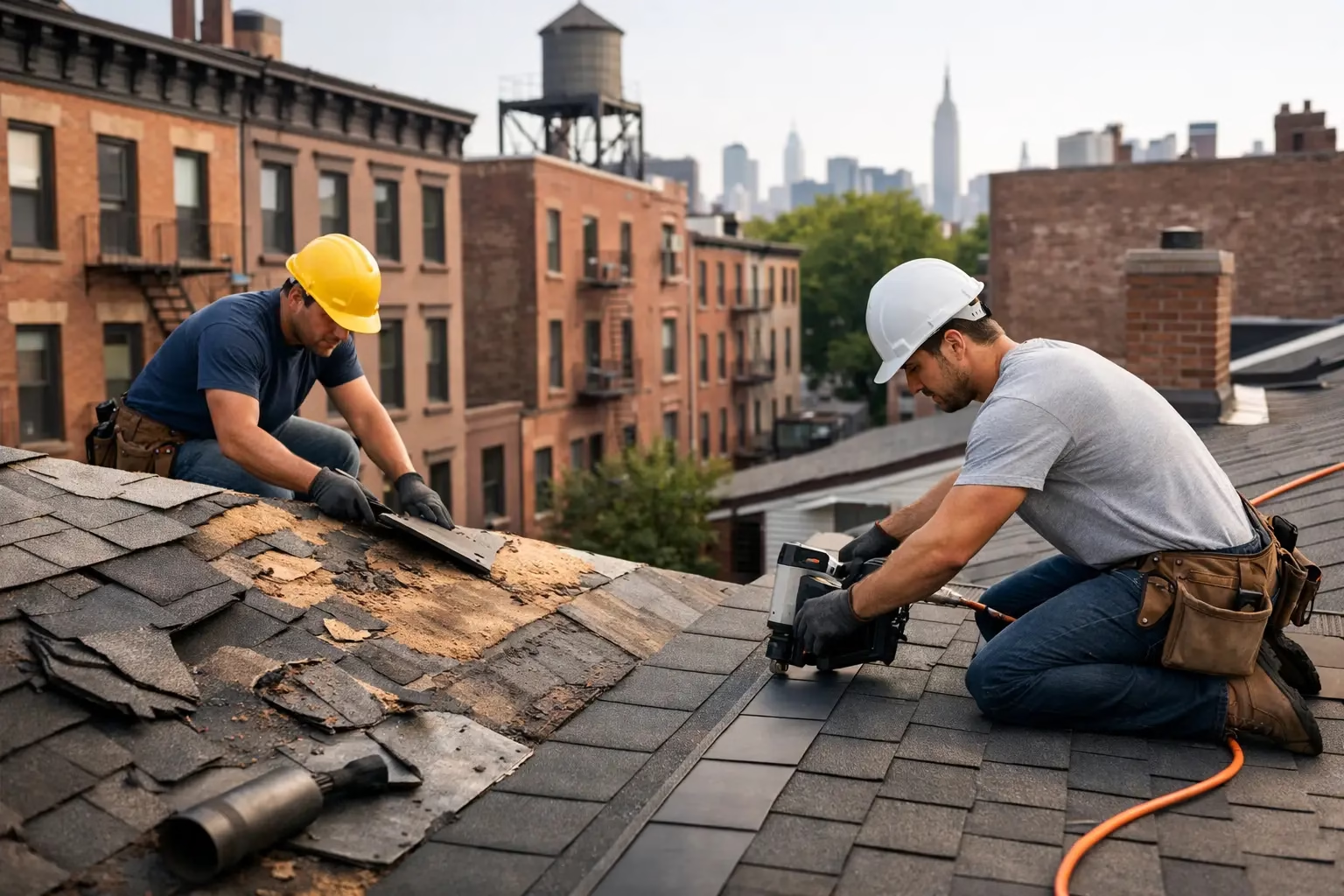
A roof problem rarely shows up at a convenient time. Usually it starts with a ceiling stain after hard rain, missing shingles after wind, or a tenant calling about water around a top-floor window. That is when the real question hits – roof repair vs replacement. For New York City property owners, the right choice depends on the roof’s age, the extent of damage, the building type, and whether a quick fix will actually hold.
In Brooklyn brownstones, mixed-use buildings, and older row houses, roofs take a beating. Ponding water, flashing failure, cracked masonry at parapet walls, and years of layered patchwork can all turn a simple leak into a bigger structural issue. The cheapest option upfront is not always the most affordable one over time.
Roof repair vs replacement: start with the roof’s condition
The first thing to look at is not the leak itself. It is the overall condition of the roofing system. A local repair may make sense if the problem is isolated, the roof is still within its expected service life, and the surrounding materials are in solid shape. If the field of the roof is failing in multiple areas, the membrane is brittle, or water has been getting under the surface for a while, replacement becomes the smarter move.
That distinction matters on NYC buildings because many roofing issues are not just surface-level. On flat and low-slope roofs, water can travel before it shows up inside. A stain in one room may trace back to open seams, failing flashing, clogged drains, or deterioration around penetrations several feet away. If a contractor only chases the visible leak without looking at the full roof system, you end up paying for repeat visits.
Age is another major factor. If your roof is nearing the end of its useful life, repairs tend to become temporary. You may stop one leak and get another six months later. On an older building, that cycle can get expensive fast.
When repair is the better choice
Roof repair is often the right call when the damage is limited and the roof still has good years left. That might mean a small puncture in the membrane, a section of lifted flashing, minor storm damage, or leaks around a vent or skylight. In these cases, a targeted repair can restore performance without the cost of a full tear-off.
Repair also makes sense when you catch issues early. A few failed seams or a localized area of moisture is very different from widespread saturation under the roofing material. Early intervention is where owners save money.
For many Brooklyn and Manhattan properties, repairs are also practical when the roof structure is sound and drainage is working as it should. If the insulation below is dry, the deck is in good shape, and the problem has a clear source, there is no reason to replace the whole system just because there is one leak.
That said, repair only works when it is done honestly. Patching over recurring problems without addressing the cause is not savings. It is delay.
Signs a repair may be enough
A repair is usually worth considering when leaks are limited to one area, the roof is under 15 to 20 years old depending on material, and there is no major sagging, soft spots, or broad membrane failure. It also helps if previous maintenance has been consistent. Roofs that have been neglected for years rarely respond well to one more patch.
When replacement is the smarter investment
Sometimes replacement feels like the bigger decision because of the upfront cost, but it can be the more cost-effective move. If the roof has repeated leak history, widespread deterioration, trapped moisture, or visible structural concerns, replacing it may save you from interior damage, mold issues, and ongoing repair bills.
This is especially true on aging NYC buildings where roofing problems often connect to other exterior conditions. A failing roof may be tied to parapet cracks, deteriorated coping, damaged cornice lines, or poor waterproofing transitions along walls. In that case, replacement gives you a chance to correct the full assembly instead of treating symptoms.
If your property has already had several repairs in recent years, that is a red flag. Once patching becomes routine, you are usually paying for uncertainty. A new roof gives you a clean starting point, more predictable performance, and fewer emergency calls.
Replacement is also worth considering before a major interior renovation. If you are investing in top-floor apartments, office improvements, or ceiling work, it makes little sense to leave an unreliable roof overhead.
Signs replacement is likely needed
You are probably beyond repair if leaks happen in multiple rooms, the roof has standing water, materials are cracked or separating throughout, or the deck feels soft underfoot. Extensive interior staining, wet insulation, and recurring leaks after prior repairs also point toward replacement. On flat roofs, widespread blistering or open seams across large areas are not small issues.
Cost matters, but so does timing
Most owners start with price, and that is reasonable. Repair costs less today. Replacement costs more today. But the real financial question is what you will spend over the next three to five years.
If a repair buys you several solid years, it can be the right budget decision. If it buys you one winter and another round of leaks, it was not cheap at all. You paid for labor, materials, possible emergency service, and maybe interior repair on top of it.
Timing also affects cost. Planned replacement is almost always easier on the budget than emergency replacement after major water intrusion. Once leaks damage plaster, electrical systems, insulation, flooring, or tenant spaces, the total job grows. That is why property managers often choose replacement before failure gets severe. It gives them control over schedule, scope, and tenant disruption.
For owners balancing affordability, transparency matters. You want a contractor who can tell you whether a repair is a real fix or just a short-term measure. There is nothing wrong with choosing a temporary repair if that is what your budget allows right now, as long as you know exactly what it is.
NYC roofs have their own set of complications
Roof repair vs replacement is not the same in New York City as it is in a suburban development with newer homes. Many local buildings are older, attached, and built with details that require experience. Brownstones and row houses often have parapet walls, masonry transitions, roof penetrations from added systems, and drainage issues that need more than a quick patch.
Access is another factor. Limited staging space, neighboring structures, occupied units, and DOB requirements can all affect how roofing work is planned. On some properties, a simple repair is truly simple. On others, the condition of surrounding exterior elements changes the scope.
That is why a roof should not be evaluated in isolation. If water is entering through failed flashing tied into masonry, or if roof leaks are being worsened by facade cracks and poor waterproofing, the lasting solution may involve more than roofing material alone. This is where working with a licensed and insured contractor who understands full-building envelopes makes a difference.
What a proper inspection should tell you
A real roof evaluation should answer a few direct questions. Where is the water getting in. How far has the damage spread. Is the insulation or deck compromised. Are drainage and flashing part of the problem. And if repaired, how long is that repair realistically expected to last.
You should also get a straight answer on value. Not every old roof needs immediate replacement, and not every leak deserves another patch. The point is to know what condition the system is in now, not what you hope it is.
At Best Budget Construction, that practical approach matters because owners are trying to protect buildings without overspending. In neighborhoods like Park Slope, Brooklyn Heights, and Bed-Stuy, where older structures need both preservation and performance, roofing decisions should be based on actual building conditions, not pressure.
The better question is not repair or replacement
The better question is what solves the problem without wasting your money. Sometimes that is a focused repair done at the right time by the right crew. Sometimes it is replacement before the roof causes bigger damage to the rest of the property.
A good contractor will not push one answer for every building. They will look at age, leak history, visible wear, drainage, structure, and the cost of waiting. If your roof still has life in it, repair can be the smart move. If you are paying again and again for the same trouble, replacement may finally be the affordable option.
If you are seeing leaks, stains, bubbling paint, or signs of roof wear, now is the time to get clear answers. A careful inspection today is a lot easier to deal with than another storm finding the weak spot first.
