

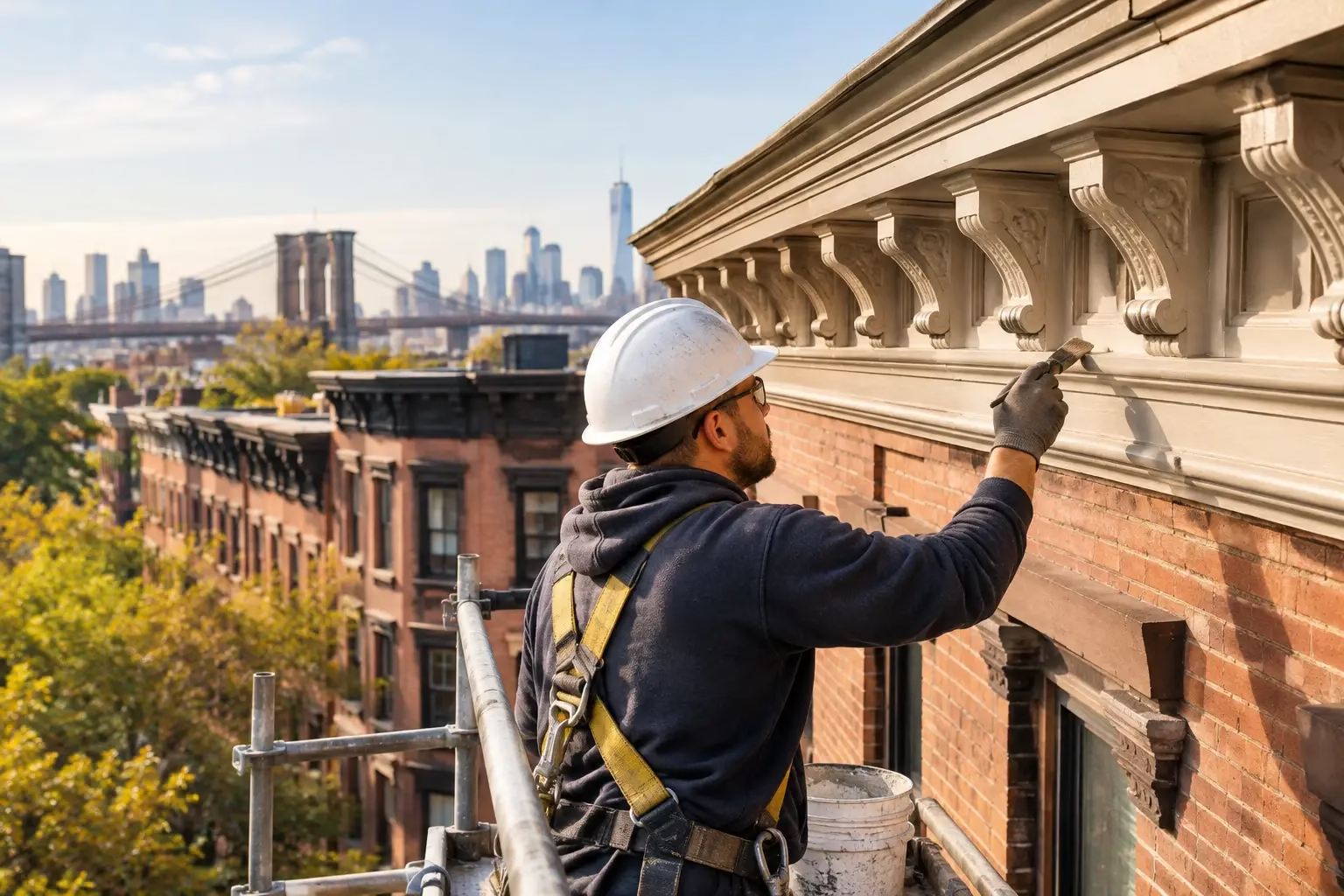
A cracked, sagging, or rust-stained cornice is more than an eyesore on a Brooklyn building. It can allow water into the facade, loosen overhead material, damage masonry, and create a safety concern at the sidewalk below. Brooklyn cornice restoration addresses those risks before a localized repair turns into a larger facade project.
For brownstone owners, landlords, property managers, and small commercial property owners, the right approach is not to cover damage with paint and hope for the best. A cornice needs a close inspection, a realistic repair scope, proper materials, and a contractor who understands how NYC weather affects older exterior details.
What a Damaged Cornice Can Tell You
Cornices sit at a building’s roofline, where they receive direct exposure to rain, snow, ice, heat, and wind. On Brooklyn’s older brownstones, row houses, and masonry commercial buildings, they may be made from sheet metal, galvanized steel, copper, wood, terra cotta, cast stone, or decorative plaster components. Each material fails differently, but water is usually part of the story.
Peeling paint, orange staining, open seams, cracked brackets, bulging metal, loose ornament, and dark moisture marks below the roofline are all signs worth taking seriously. A damaged gutter, failed roof flashing, blocked leader, or roof drainage issue often sends water behind the cornice. If the source is not corrected, even a well-finished repair can fail early.
A homeowner may see one small crack from the street and assume it is cosmetic. Up close, that crack may connect to rusted metal, rotted wood backing, or weakened fasteners. Conversely, surface paint failure does not always mean the entire cornice needs replacement. The condition behind the finish determines the right scope.
Brooklyn Cornice Restoration Starts With the Cause
Good restoration work begins with access and assessment. From a ladder, scaffold, lift, or other appropriate setup, the contractor should inspect the cornice face, returns, brackets, joints, roof edge, flashing, gutters, leaders, and the masonry below. The goal is to identify what is loose, what is deteriorated, and where water is entering.
A practical scope may include removing failed paint and rust, cutting out damaged metal, rebuilding wood substrate, fabricating replacement sections, repairing seams, resetting loose decorative elements, repointing adjacent masonry, and priming and painting the completed work. When damage is extensive, selective replacement may be safer and more cost-effective than repeatedly patching material that has already lost its integrity.
Repair, partial replacement, or full replacement?
The best choice depends on the extent of deterioration, material type, historic appearance, access conditions, and budget. Localized repair often makes sense when the surrounding cornice is stable and the damage is limited to a few seams, small holes, or isolated trim sections. It preserves more original material and can control costs.
Partial replacement is often the sensible middle ground for buildings with a failed section near a gutter, corner, or return. The new work can be fabricated to match the existing profile while avoiding the expense of replacing sound sections.
Full replacement becomes the better investment when widespread corrosion, rot, repeated patching, or detachment affects the cornice across a large area. It costs more upfront, but continuing to patch a failing system can create higher labor costs and more disruption over time. A clear site inspection is the only honest way to recommend one option over another.
Protecting Brownstones and Historic Street Character
In neighborhoods such as Park Slope, Brooklyn Heights, Cobble Hill, Carroll Gardens, Bed-Stuy, and Clinton Hill, a cornice is often one of the details that gives a building its character. The work has to protect the building while respecting the existing proportions, ornament, and relationship to the facade.
That does not mean every project requires an expensive museum-level reproduction. The right level of restoration depends on the building, visible elevation, material condition, and any applicable local requirements. For many properties, the priority is a durable repair that matches the existing profile closely, sheds water correctly, and looks appropriate from the street.
For more detailed architectural cornices, measurements and templates help ensure replacement brackets, moldings, and metal sections align with the original design. Rushing this stage can lead to a repair that functions but looks noticeably out of place. Careful fabrication and finishing matter, especially on a prominent front facade.
Why Drainage and Roofing Must Be Part of the Scope
A cornice repair should never be treated as a separate problem when the roof edge is leaking. Water moving behind flashing or overflowing from a clogged gutter can keep saturating the cornice structure, the top masonry courses, and the interior wall below. The visible damage may be at the cornice, but the source can be above it.
This is where using one contractor for cornice work, roofing repairs, waterproofing, masonry, brick pointing, and painting can simplify the project. Instead of one company repairing metal and another company addressing the drainage issue later, the scope can be coordinated from the start.
A responsible contractor should explain what is included and what requires separate work. For example, repairing two rusted cornice panels may not include rebuilding a failed roof curb or replacing an entire gutter system unless those items are identified in the estimate. Clear scope language prevents surprises and helps property owners compare proposals fairly.
License & Insurance Credentials for All Services
Exterior work above a sidewalk requires planning, trained labor, and proper protection for residents, pedestrians, neighboring properties, and the crew. Do not choose a contractor based only on the lowest number. Ask whether the company is licensed and insured, how access will be handled, what protection will be used, and whether the estimate identifies the repair materials and finish work.
Best Budget Construction brings hands-on NYC renovation and exterior restoration experience to projects where coordination matters. For an owner or manager, that means dealing with a contractor who can inspect the visible issue, identify related conditions, and provide a workable plan rather than selling a one-size-fits-all patch.
A professional estimate should distinguish between confirmed repairs and possible concealed damage. Once failing metal, wood, or masonry is opened, additional deterioration can occasionally be found. That is normal on aging buildings. The important point is that any change in scope should be communicated clearly before additional work moves forward.
100% OSHA Guidelines Compliant Jobsite Practices
Cornice repairs can involve ladders, scaffold, lifts, overhead debris, metal cutting, and work near public sidewalks. Safe access is not an optional extra. It affects the quality of the work, the protection of the public, and the contractor’s ability to inspect and repair the entire damaged area correctly.
100% OSHA guidelines compliant work practices include using appropriate fall protection, securing work areas, managing debris, and maintaining safe access for the crew. Depending on the building and job conditions, sidewalk protection, permits, or other site measures may also be needed. These details should be reviewed before work begins, not improvised after a crew arrives.
For occupied buildings, communication also matters. Residents and tenants should know when exterior access equipment will be installed, where work will occur, and whether there will be temporary noise or sidewalk restrictions. Organized jobsite management keeps a necessary repair from becoming an unnecessary inconvenience.
How to Keep a Restored Cornice in Good Condition
After restoration, regular maintenance can extend the life of the work substantially. Most problems develop slowly, then accelerate after repeated freeze-thaw cycles and heavy rain. A quick seasonal visual check can catch early warning signs before they become expensive.
Pay attention to these recurring conditions:
- Clogged gutters or leaders that overflow onto the cornice
- Peeling paint, open seams, or newly visible rust staining
- Cracked masonry or missing pointing near the roofline
- Water marks on upper interior walls or ceilings
- Loose pieces, movement, or debris found at the sidewalk below
If you notice loose material or suspect an immediate overhead hazard, keep people away from the area and arrange a prompt professional inspection. Do not attempt to pull down or reattach a loose cornice section from a window or ladder.
Free Estimate Call (917) 674-9488
A useful cornice estimate starts with a real look at the building, not a guess from a single photo. The condition of the material, roof drainage, building height, access needs, and surrounding masonry all affect the repair method and price.
For Brooklyn cornice restoration, choose a contractor who will explain what has failed, what needs to be corrected now, and what can reasonably be monitored. A sound repair protects the facade, preserves the building’s appearance, and gives you a clearer path forward before weather and time make the job larger.
