

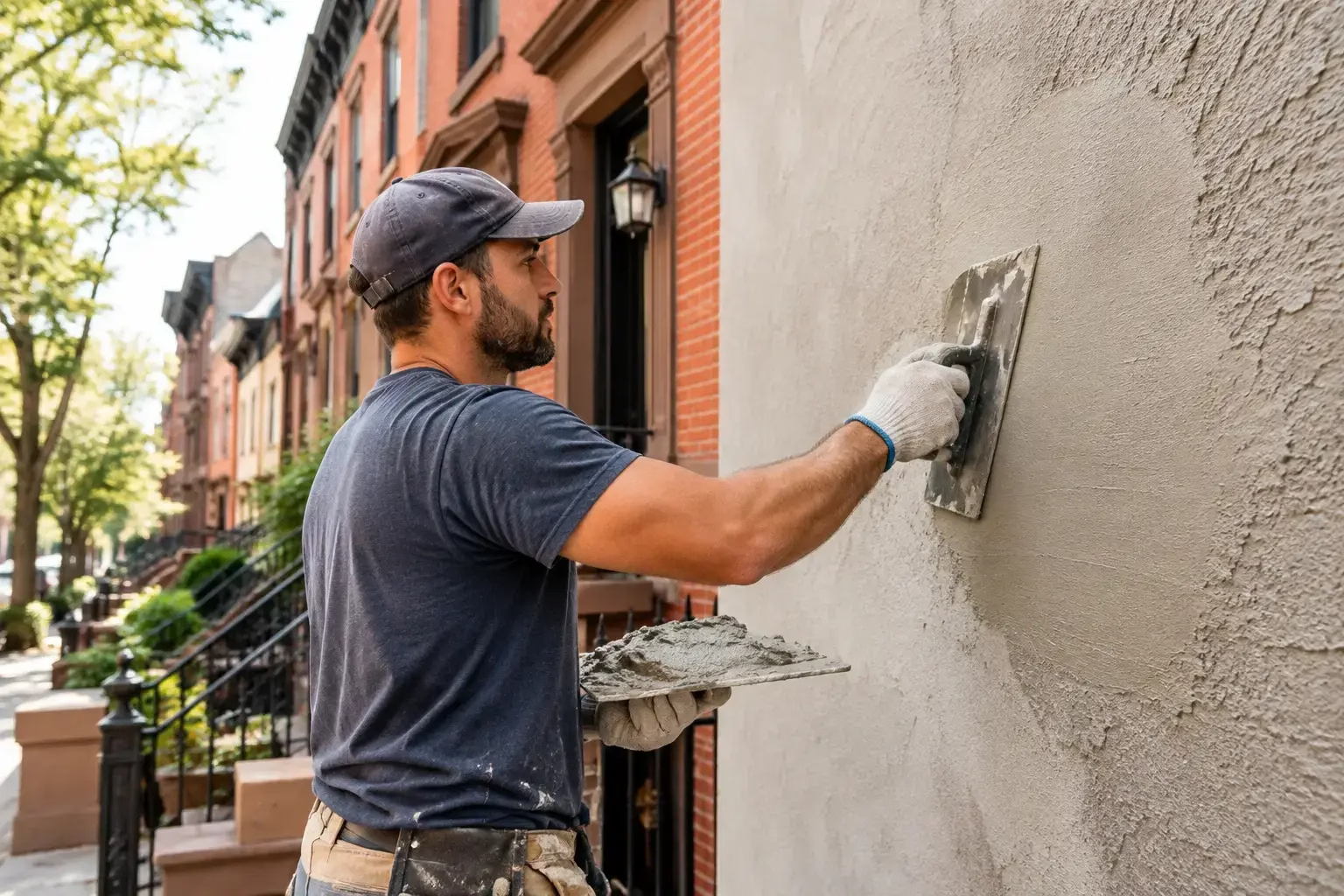
A rear wall can look like the least urgent part of a Brooklyn property because tenants, neighbors, and pedestrians rarely see it. That assumption gets expensive fast. Rear wall stucco repair Brooklyn work often starts after a small crack, loose patch, or stained interior wall has already allowed water behind the finish. By then, the problem may involve saturated masonry, damaged framing, peeling interior paint, or a compromised window opening – not just cosmetic stucco.
Brooklyn’s older homes, multifamily buildings, and brownstones deal with hard weather cycles, rooftop runoff, close-set neighboring structures, and years of previous repairs layered over original materials. A proper repair has to identify where water is entering, remove failed material, rebuild the wall correctly, and protect it from the next storm.
When a Rear Stucco Wall Needs Repair
Stucco does not always fail in one obvious spot. Hairline cracks can be normal as materials expand and contract, but cracks that widen, run diagonally from window corners, or appear with staining deserve a closer look. Hollow-sounding areas, bubbling paint, white powder on masonry, crumbling edges, and loose stucco are also warning signs.
Interior symptoms matter just as much. If a rear bedroom, kitchen extension, stairwell, or basement wall shows recurring dampness after rain, the exterior wall should be inspected before another coat of paint is applied. Paint can hide a moisture problem for a short time. It cannot stop water moving through failed stucco, open joints, flashing gaps, or cracks around windows.
On attached Brooklyn homes, access can affect both the repair method and cost. A narrow yard, a rear extension, fencing, decks, and neighboring structures can make staging more involved. That does not mean the job should be delayed. It means the contractor should plan access, protection, debris removal, and waterproofing before work begins.
Why Rear Wall Stucco Repair Brooklyn Is Different
Rear walls receive less routine attention than front facades, yet they often carry more moisture risk. Gutters may overflow unnoticed. Roof drains can discharge too close to the wall. Air-conditioning lines, old vent penetrations, and improperly sealed additions can create small entry points that become larger failures over time.
Brooklyn properties also have a wide range of wall assemblies. One building may have cement stucco over masonry, while another has stucco over block, terra cotta, or framed construction. A brownstone or historic property may require greater care around original details and transitions. The right repair depends on what is behind the finish.
This is why patching only the visible crack is rarely a complete solution. If moisture is coming from a defective coping, roof edge, window sill, parapet, or adjoining masonry joint, the patch may fail again after the next freeze-thaw season. Good exterior work starts with diagnosis, not a bucket of coating.
The Difference Between a Patch and a Lasting Repair
A limited patch can be the right choice when damage is isolated, the surrounding stucco remains firmly bonded, and the water source has been corrected. It is a cost-conscious option for property owners who need to address a contained area without replacing sound material.
A broader repair is necessary when stucco has separated from the substrate, cracking is widespread, or moisture has affected the wall behind it. In those cases, loose material should be removed back to solid edges, the substrate repaired, and the new finish built in compatible layers. The goal is not simply to make the wall look new on the day work is completed. The goal is to give the wall a stable, weather-resistant surface.
Matching texture and color also takes real field experience. Fresh stucco naturally looks different from an aged wall at first. A contractor should discuss realistic finish matching, paint options where appropriate, and whether a larger section should be refinished for a more uniform appearance.
A Practical Repair Process for Brooklyn Properties
The process should begin with a hands-on inspection of the rear elevation, roofline, windows, penetrations, and visible masonry. A reliable estimate identifies the damaged areas, likely water source, access needs, and scope of repair. If there is uncertainty behind the stucco, limited exploratory removal may be needed before giving a final recommendation.
Once the scope is confirmed, failed stucco is carefully removed. The crew checks the base wall for soft, cracked, loose, or deteriorated material. Damaged masonry, joints, mesh, lath, or substrate are repaired as needed before new stucco is applied. Skipping this preparation is one of the main reasons inexpensive repairs crack or detach prematurely.
The repaired area then needs correct curing time. Rushing from wet base coats to finish coats, or painting too early, can trap moisture and reduce the life of the repair. Weather matters as well. Cold temperatures, heavy rain, and extreme heat can change scheduling and curing requirements. A dependable contractor explains these trade-offs rather than promising a timeline that ignores site conditions.
Water management should be part of the conversation. That may include repairing flashing, addressing failed caulk at window perimeters, correcting gutter discharge, repointing adjacent brick, or sealing penetrations after the wall is restored. One contractor who can coordinate masonry, roofing, waterproofing, and painting helps avoid the gaps that occur when several trades each address only one piece of the problem.
License & Insurance credentials for all services
Exterior repairs create real liability. Workers may be operating from ladders, scaffolding, or elevated platforms while removing loose material and handling cement products. Property owners should not accept vague assurances about coverage or qualifications.
Ask for a written scope, proof of appropriate coverage, and a clear explanation of what is included. The estimate should distinguish between surface patching and deeper substrate repair. It should also state whether related items such as flashing, window sealing, masonry pointing, cleanup, and final coating are included or excluded.
Best Budget Construction brings second-generation experience dating back to 2001 to residential and commercial repair work across Brooklyn and NYC. The focus is practical: identify the cause, recommend the right scope, protect the property, and complete work with workmanship that holds up.
100% OSHA guidelines compliant
Safety is not an extra line item. It is part of responsible exterior construction. Proper site protection helps protect workers, residents, neighboring property, landscaping, windows, and walkways. For occupied buildings, the crew should also coordinate access and work hours so repair activity causes as little disruption as possible.
This matters especially in tight neighborhoods such as Park Slope, Brooklyn Heights, Cobble Hill, Bed-Stuy, and Williamsburg, where rear yards and shared property lines leave little room for mistakes. A clean, organized site is usually a sign that the work itself is being managed with the same discipline.
What Affects the Cost of Rear Wall Stucco Work?
There is no honest flat price for every rear wall. Cost depends on the size of the damaged area, height and access, the condition of the material beneath the stucco, whether water damage has spread, and the type of finish required. A straightforward ground-level patch is very different from a full rear elevation repair requiring scaffold access, masonry restoration, and waterproofing corrections.
The lowest quote can become the most expensive choice if it covers only surface appearance. Before comparing estimates, make sure each contractor is pricing the same repair depth, preparation, materials, protection, cleanup, and warranty expectations. Transparent pricing means knowing what is being repaired and why.
Owners can help control costs by acting early. Addressing a loose area before it opens into a larger water path can prevent interior repairs, mold remediation, rotted wood, and more extensive masonry work. It is usually more affordable to repair a developing failure than to rebuild after several seasons of neglect.
Free Estimate Call (917) 674-9488
If your rear wall is cracked, staining inside, shedding stucco, or showing signs of moisture after rain, get it examined before another temporary patch covers the evidence. A clear site assessment can tell you whether the issue is isolated or connected to roofing, masonry, windows, or drainage.
The right repair is the one that respects your budget without pretending that water damage is only cosmetic. Call (917) 674-9488 for a free estimate and a straightforward plan for protecting your Brooklyn property.
