

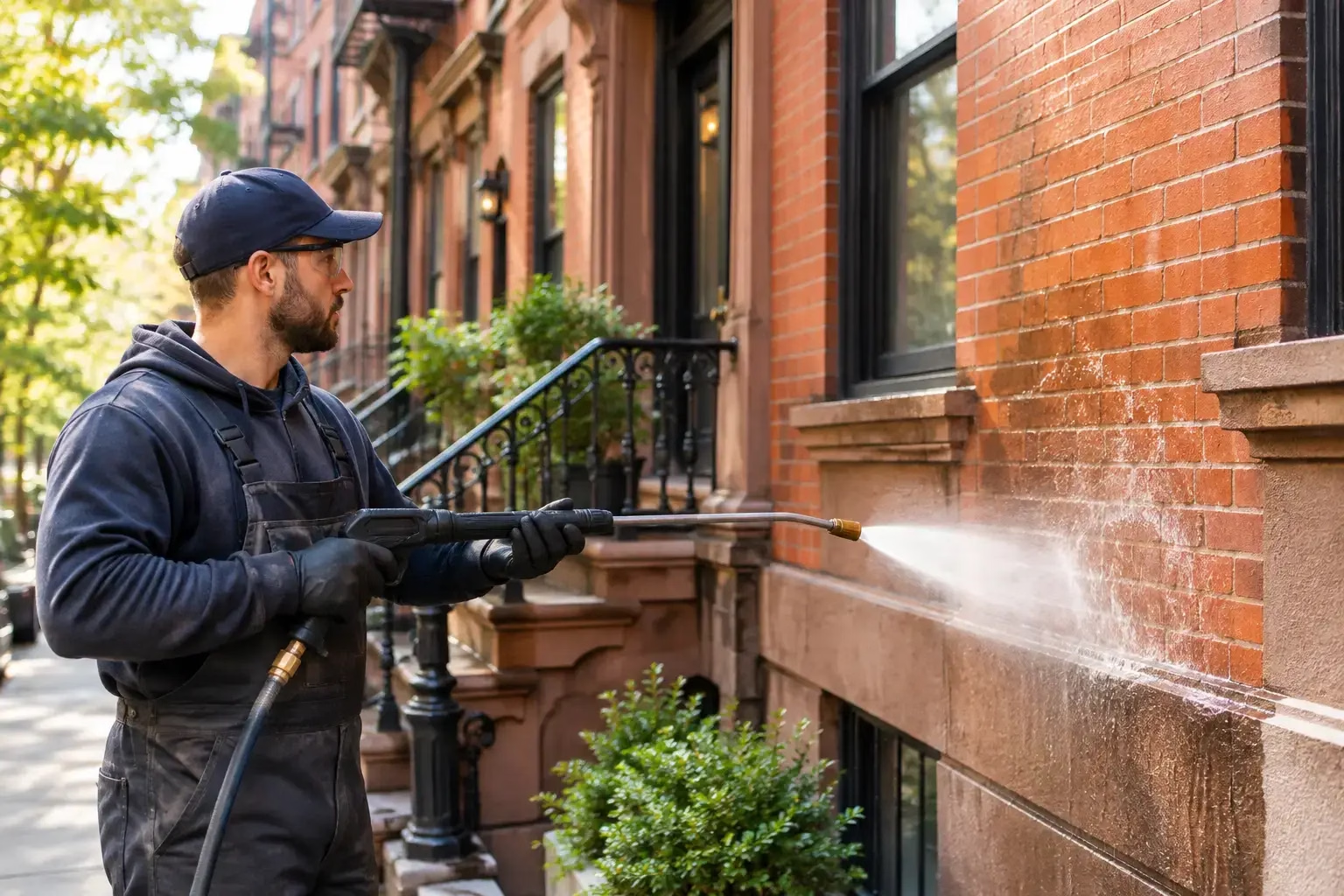
A historic brick facade can look dirty for several reasons: traffic soot, algae, failed mortar, water runoff, paint residue, or years of patch repairs. Those problems do not all receive the same treatment. This historic brick cleaning guide is written for NYC owners who want a cleaner building without stripping away the aged character or causing expensive masonry damage.
On Brooklyn brownstones and older mixed-use buildings, brick cleaning should never be treated as a quick pressure-washing job. The wrong pressure, abrasive media, or chemical can scar the face of the brick, open its pores, weaken old mortar, and create a bigger water problem behind the wall.
Best Budget Construction in Brooklyn & NYC
Historic masonry requires a practical inspection before any cleaning begins. A contractor should identify the brick type, mortar condition, stains, prior coatings, and moisture source. In neighborhoods such as Park Slope, Brooklyn Heights, Bed-Stuy, Cobble Hill, and Carroll Gardens, it is common to find facades that have been repaired over many decades. One section may be solid historic brick while another has been patched with newer material or covered with paint.
Cleaning the entire facade before addressing loose mortar, cracks, failed flashing, leaking gutters, or deteriorated cornice work can be a waste of money. If water is still entering the wall, the staining will return. Worse, trapped moisture can cause brick faces to flake during winter freeze-thaw cycles.
A good job starts with a close visual review from the sidewalk and, where needed, from a scaffold or lift. We look for powdery mortar, spalling brick, efflorescence, rust stains below metal elements, biological growth, and white haze left by past cleaning attempts. This tells us whether cleaning is appropriate now or whether brick pointing, waterproofing, masonry repair, or facade restoration should come first.
What Makes Historic Brick Different
Older brick is usually softer and more absorbent than modern face brick. Many historic NYC buildings were built with lime-based mortar that was intentionally softer than the brick itself. That relationship matters. The mortar should manage minor movement and moisture without forcing the brick to crack.
Hard cement-rich patch mortar can trap moisture in surrounding old brick. High-pressure water can do the same kind of damage by driving water deeper into the wall. Once the surface is harmed, there is no cleaner that restores the original fired face of the brick.
The goal is not to make a 100-year-old facade look newly manufactured. A properly cleaned historic wall should still have natural color variation, weathering, and character. It should simply look cared for, structurally sound, and free of unnecessary buildup.
Start With the Least Aggressive Method
For most historic brick, the safest approach is controlled low-pressure water, appropriate masonry cleaner, hand brushing, and a thorough rinse. Small test areas are essential. A test patch shows how the brick reacts, whether the stain is actually removable, and whether the cleaning process changes the color.
Water pressure should be low and directed carefully. The contractor should avoid aiming water into open joints, window edges, flashing transitions, or damaged mortar. Soft natural-bristle or nylon brushes can help release surface dirt without grinding away the brick face.
Some stains need specialized treatment. Rust may require a different cleaner than soot. Organic growth may need a mild biocide. Mineral staining or efflorescence often points to an active moisture issue, meaning cleaning alone is not the fix. The product and dwell time must match the stain, then be fully rinsed so chemical residue does not remain in the masonry.
Methods That Can Damage Old Brick
Sandblasting and other abrasive blasting methods are usually a poor choice for historic brick. They can remove the protective fired surface and leave the wall rough, porous, and vulnerable to water absorption. Even if the result looks clean on day one, the facade may weather faster afterward.
Uncontrolled power washing is another common mistake. It can blow out soft mortar joints, erode brick edges, and force water into the wall cavity. The risk is especially high around brownstone trim, window lintels, decorative masonry, and already cracked areas.
Acid washing also deserves caution. The wrong acid or concentration can burn brick, damage mortar, discolor metal, and harm nearby landscaping. Strong chemicals may have a place in limited stain removal, but only after testing and only with proper containment, rinsing, and protection of adjacent building materials.
When Cleaning Must Be Paired With Repair
A clean facade makes defects easier to see. That is a benefit, but owners should budget for the possibility that cleaning exposes failed joints, loose brick, prior patchwork, or cracks hidden by soot and paint.
Brick pointing is often the most valuable repair to perform before or alongside cleaning. Failed mortar joints allow water to enter the wall and may loosen individual bricks. Proper repointing involves removing deteriorated mortar to an appropriate depth, matching the mortar strength and color, and finishing joints to suit the building’s existing profile.
If bricks are spalling or fractured, they may need selective replacement. Matching replacement brick is not always simple. Size, color, texture, and absorption all matter, especially on a street-facing historic facade. A slightly imperfect match is often less noticeable than a broad section of new-looking brick that does not belong on the building.
Painted brick creates another decision point. Paint removal can be labor-intensive and may not always produce a uniform result. If paint is failing and trapping moisture, removal may be worth considering. If it is sound and the building has long been painted, careful repainting may be the more affordable and protective choice. Each facade needs its own evaluation.
License & Insurance credentials for all services
Facade work in New York City involves more than a bucket, brush, and pressure washer. Safe access, protection of pedestrians, debris control, permit requirements, and compliance with building rules all matter. Owners and property managers should ask who will be on site, how the work area will be protected, and whether the contractor carries the proper coverage for exterior masonry work.
Best Budget Construction provides License & Insurance credentials for all services so property owners can move forward with clearer expectations. For larger or elevated facade work, the scope should also identify access needs, repair areas, cleaning methods, surface protection, and how the finished masonry will be reviewed.
Transparent planning helps prevent a common problem with low-price cleaning quotes: the price covers only surface washing, then necessary repairs appear after work has started. A detailed estimate should separate cleaning from pointing, replacement brick, waterproofing, paint removal, or cornice repair when those services are needed.
100% OSHA guidelines compliant
Exterior work is not the place to cut corners. Scaffolding, ladders, lifts, fall protection, sidewalk protection, and controlled work zones protect workers, residents, neighbors, and pedestrians. A contractor should plan for the actual height and condition of the building rather than improvising access once the job begins.
Best Budget Construction is 100% OSHA guidelines compliant, with safety practices built into how exterior restoration work is performed. For owners, that means less disruption, better site control, and a team that respects the risks of working on active city streets and occupied properties.
Maintenance That Keeps Brick Cleaner Longer
After proper cleaning and repair, the best maintenance is often simple. Keep gutters and roof drainage working so water does not run down the facade. Repair leaking parapets, coping, flashing, and window seals before they stain brick below. Trim vegetation that holds moisture against the wall, and address small mortar failures before they become open joints.
Avoid applying a waterproof coating just because the wall looks old. Some masonry sealers can reduce a wall’s ability to dry, particularly if moisture is already entering from the roof, windows, or interior side. A breathable water-repellent may be appropriate in specific conditions, but it should follow a diagnosis, not guesswork.
For many buildings, an annual visual check from the sidewalk is enough to catch early changes. Look for new dark streaks, loose mortar, white deposits, cracked bricks, rust marks, or areas where the facade stays wet after rain. Early repair is generally more affordable than waiting for a larger facade issue.
Free Estimate Call (917) 674-9488
If your brick looks stained, worn, or unevenly patched, do not assume aggressive washing is the answer. A careful inspection can determine whether your facade needs gentle cleaning, brick pointing, waterproofing, replacement masonry, or a coordinated restoration plan. Call (917) 674-9488 for a free estimate and get a practical recommendation based on the actual condition of your NYC property.
