

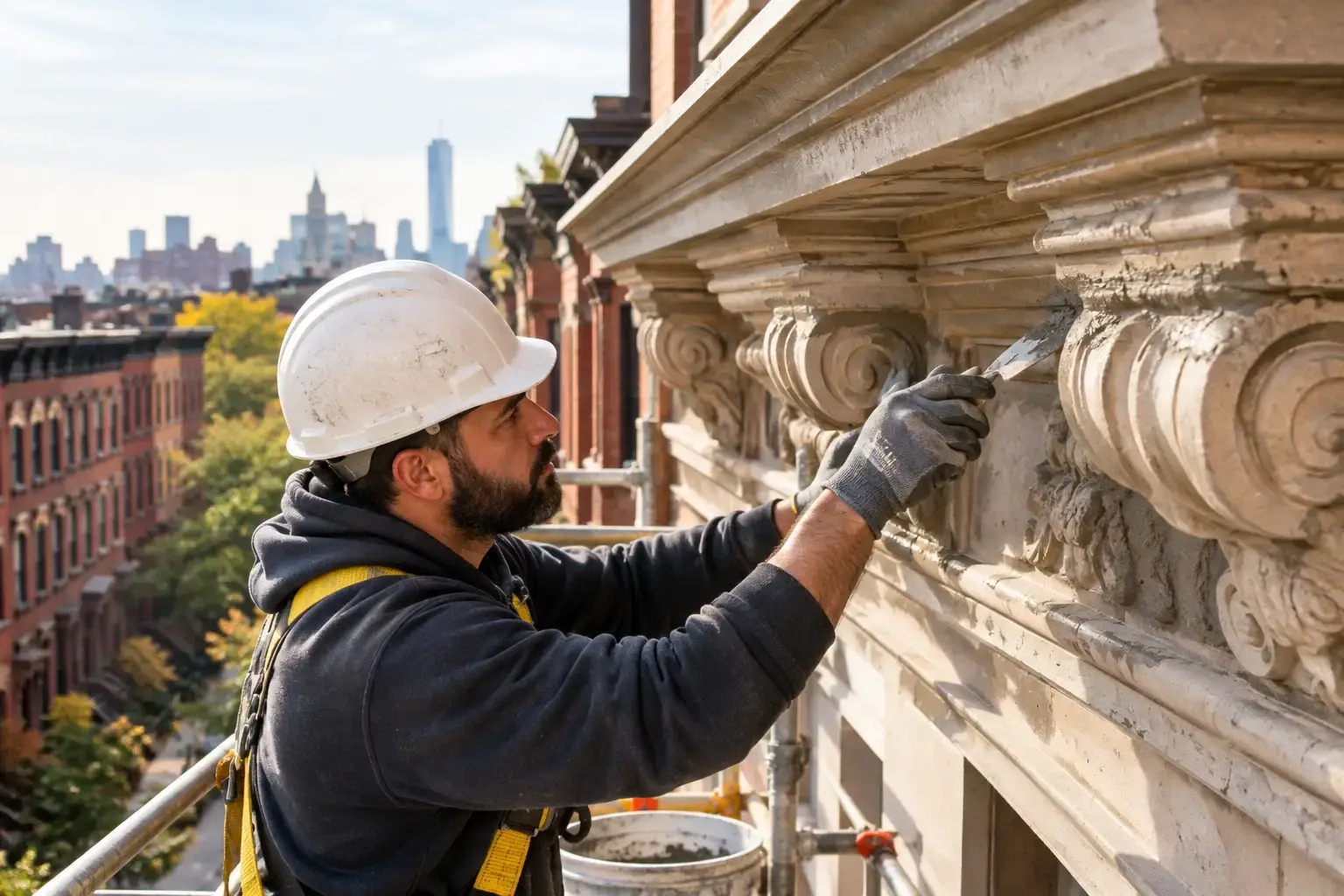
A loose bracket, missing decorative piece, or rust stain below the roofline can be the first visible sign that ornamental cornice repair is needed. On Brooklyn brownstones, mixed-use buildings, and older commercial properties, cornice damage is rarely just a cosmetic problem. Water gets behind failed joints, metal begins to corrode, wood decays, and weakened sections can become a serious sidewalk safety concern.
The right repair starts with a close look at the entire cornice, not just the piece that looks damaged from the street. A practical scope should identify where water is entering, what material has failed, and whether the supporting structure behind the ornament needs work before a new detail is installed.
Ornamental Cornice Repair: More Than a Cosmetic Patch
Cornices are exposed to every NYC weather cycle. Rain collects at seams, snow sits along flat or poorly pitched surfaces, and summer heat expands metal and dries out old coatings. Over decades, those conditions create small openings that grow into major deterioration.
Many historic Brooklyn properties have sheet-metal cornices over a wood framework. Others have wood, terra cotta, cast stone, or decorative cement components. Each material needs a different repair approach. A painted patch over rusted sheet metal may look acceptable for a season, but it does not stop corrosion underneath. Replacing a cracked cement ornament without correcting the water path above it can produce the same crack again.
A lasting repair usually addresses three connected items: the decorative face, the flashing and seams that shed water, and the framing or masonry that carries the assembly. This is where experience matters. The goal is to retain sound historic material whenever possible while replacing sections that can no longer be safely repaired.
Signs Your Cornice Needs Professional Attention
Property owners often wait until a piece falls or a violation notice arrives. That is the expensive way to find a problem. Early inspection is far more manageable than emergency stabilization after a storm.
Watch for rust streaks on brick or brownstone below the cornice, peeling paint that returns quickly, open seams, sagging horizontal bands, loose moldings, cracks around decorative brackets, and stains on interior top-floor walls or ceilings. Birds entering openings near the roofline are another common warning sign. Their nesting material can trap moisture and widen gaps that already exist.
From the sidewalk, a cornice can appear solid while the wood behind it is soft or the metal edge is separating from the wall. Conversely, surface paint failure does not always mean full replacement is needed. A hands-on inspection determines whether targeted repair, partial reconstruction, or a larger restoration is the sensible investment.
How a Proper Cornice Repair Is Planned
Before work begins, the crew should inspect the roof edge, parapet, gutters or leaders, surrounding masonry, and the cornice itself. Water-related damage often crosses these systems. Repairing one without addressing the others can waste a property owner’s budget.
For an older brownstone, we typically document damaged areas, test the condition of accessible wood and metal, and determine how much original ornament can be saved. Matching the original profile matters, especially on a visible street-facing facade. A replacement bracket or molding that is the wrong size can make an otherwise attractive building look patched together.
The work may involve removing failed material, rebuilding wood backing, fabricating replacement metal sections, repairing decorative elements, sealing seams, installing or correcting flashing, priming exposed metal, and applying a durable finish coat. If adjacent brick joints are open or the parapet is allowing water behind the cornice, brick pointing or masonry repair may be part of the same scope.
There is a trade-off between a fast surface repair and a complete restoration. A limited repair can be the right choice when damage is isolated and the rest of the assembly is stable. When rust, rot, and water intrusion run across multiple sections, piecemeal patches may cost more over time than rebuilding the affected run correctly.
Why Roof and Facade Conditions Matter
Cornices sit where roofing, masonry, drainage, and decorative architecture meet. That makes them vulnerable when any nearby system fails. A backed-up roof drain, loose coping stone, open flashing, or deteriorated parapet cap can feed water directly into the cornice.
This is why a one-provider approach is useful for NYC buildings. Instead of having separate crews point brick, patch roofing, paint metal, and repair ornament without coordinating the details, the work can be planned as one weatherproofing and restoration project. It reduces repeat mobilization and helps prevent one unfinished repair from damaging another.
Best Budget Construction in Brooklyn & NYC for Cornice Work
Best Budget Construction handles ornamental cornice repair with the realities of city properties in mind: tight access, occupied buildings, aging facades, active sidewalks, and budgets that need clear priorities. Our team works on residential, landlord-owned, and small commercial buildings throughout Brooklyn and NYC, including the brownstone-heavy neighborhoods where original exterior details are part of the building’s value.
We do not treat decorative work as separate from structural upkeep. If an inspection finds loose brick, deteriorated mortar, roof-edge leaks, or failed paint around the same area, we explain what should be handled now and what can be monitored. That gives owners a clearer path forward instead of a vague recommendation to replace everything.
A transparent estimate should describe the repair area, materials, access requirements, preparation, protection, and finishing work. Scaffold, lift, and sidewalk protection needs can affect the price in NYC, so they should be discussed upfront. The lowest number is not always the best value if it leaves out the flashing, backing repair, or safety measures that make the repair last.
License & Insurance credentials for all services
Exterior restoration work requires more than a ladder and a paint brush. Cornice sections can be heavy, unstable, and positioned above pedestrians, neighboring properties, or busy storefronts. Property owners should confirm that their contractor carries appropriate license and insurance documentation and understands site protection requirements.
For multi-unit buildings and commercial properties, management may also need certificates of insurance, clear scheduling, tenant notices, and coordination around access. These details are not paperwork after the fact. They are part of running a safe job and keeping a repair from disrupting the building more than necessary.
100% OSHA guidelines compliant jobsite practices
A safe cornice project begins with access planning. Depending on height, condition, and location, that may mean scaffolding, supported equipment, lifts, controlled work zones, debris protection, and trained workers using proper fall protection. Loose material should be secured or removed in a controlled manner before restoration begins.
100% OSHA guidelines compliant practices protect workers, residents, pedestrians, and the property itself. They also help avoid the rushed decisions that happen when a repair is treated as a simple paint job. For an active sidewalk or a building close to neighboring homes, safety planning is part of good craftsmanship.
When to Repair, Rebuild, or Replace a Cornice
Repair is usually appropriate when damage is limited, original material remains sound, and the source of moisture can be corrected. Rebuilding sections is often needed when decorative features are missing or the underlying wood and metal have deteriorated beyond dependable repair. Full replacement may make sense when repeated patching has left the cornice unstable across a long elevation.
Historic appearance still matters when replacement is necessary. New metalwork or molded components should follow the scale and profile of the original design as closely as practical. A properly fabricated replacement protects the building while preserving the facade character that owners and tenants notice first.
Do not wait for a loose detail to become an emergency. If you see rust, open seams, water staining, or movement around the roofline, schedule an inspection while the scope is still controllable.
Free Estimate Call (917) 674-9488
A clear estimate starts with seeing the condition firsthand. Bring attention to the areas you have noticed, including leaks, recurring paint failure, falling debris, or facade stains. From there, the repair can be sized to the actual problem, with practical recommendations for protecting both your building and your budget.
A well-maintained cornice does more than improve curb appeal. It keeps water where it belongs, helps preserve the facade below, and gives an older NYC building a safer future.
