

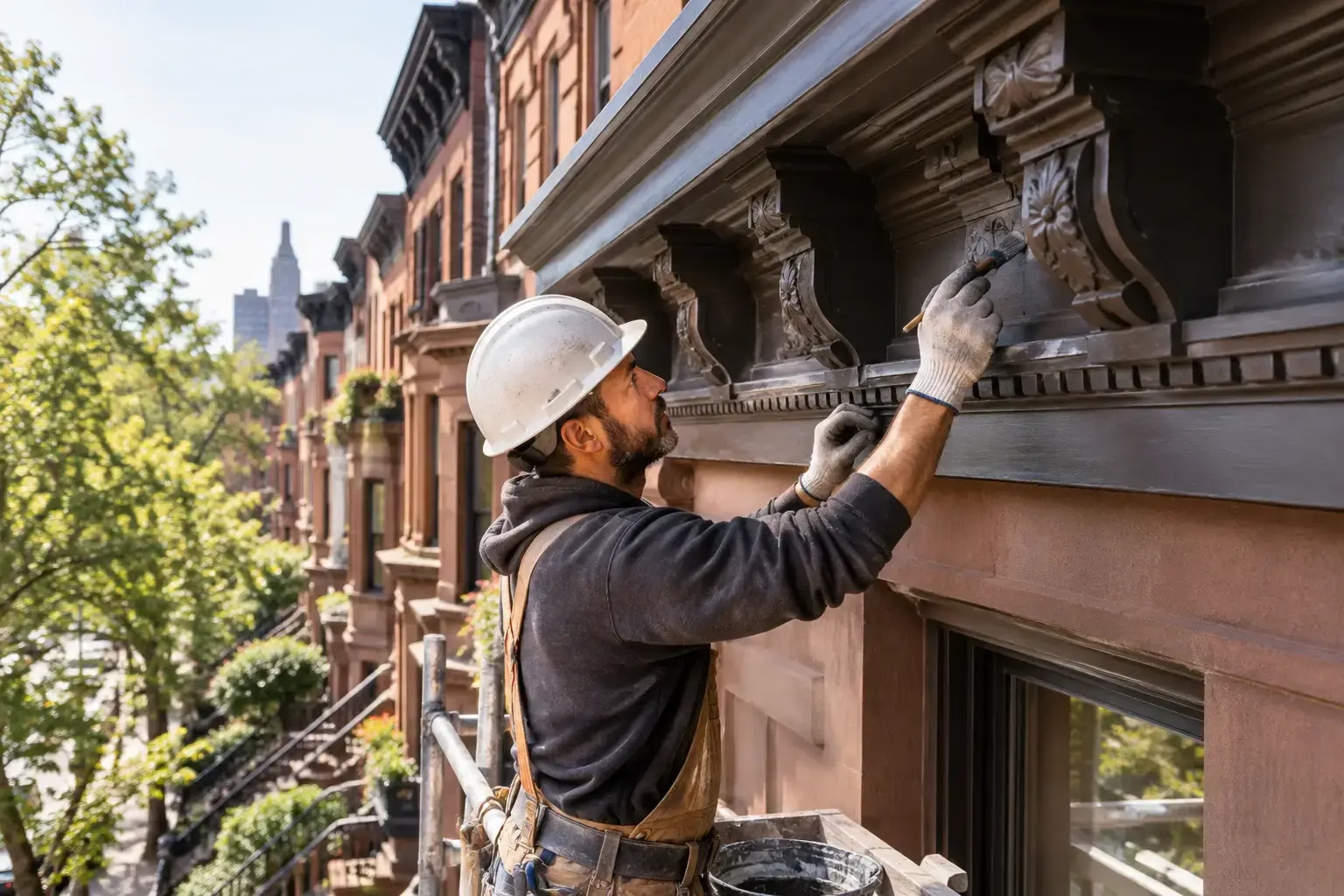
A sagging cornice is not just a curb-appeal problem. On a Brooklyn brownstone or older multifamily building, loose metal, rotted wood, open seams, and failing brackets can allow water into the facade and create a serious falling-debris hazard below. Victorian cornice restoration protects the architectural detail that gives an older building its identity while addressing the structural and weather-related issues behind the visible damage.
For property owners, the right decision is rarely to cover up the problem with paint or replace one loose piece and hope for the best. A cornice has to shed water, remain securely anchored, and work with the roof edge, masonry, flashing, and drainage system. That is why a hands-on inspection comes before a reliable repair plan.
Victorian Cornice Restoration: What the Work Really Involves
Victorian cornices were built in many forms, including wood, galvanized sheet metal, copper, terracotta, and combinations of these materials. In Brooklyn, decorative metal cornices are common on row houses, mixed-use buildings, and historic commercial facades. Their profiles can include brackets, dentils, modillions, panels, and deep projecting moldings that are difficult to repair correctly with generic trim materials.
A proper restoration begins by determining what has failed. Sometimes the issue is limited to a rusted seam, missing molding, failed coating, or localized wood rot. In other cases, water has traveled behind the cornice for years and damaged the substrate, anchoring points, masonry, roof flashing, or supporting framing.
The scope may include careful removal of loose material, repair or replacement of deteriorated sections, fabrication of matching metal details, wood restoration where appropriate, secure fastening, masonry patching, flashing corrections, priming, and exterior painting. The goal is not to make a historic cornice look brand new at any cost. The goal is to retain sound original details where possible and rebuild only what no longer performs safely.
Signs Your Cornice Needs Immediate Attention
Do not wait for a piece to fall before scheduling an inspection. Cornice deterioration often starts in areas that are difficult to see from the sidewalk, especially at rooflines, parapets, and rear elevations.
Common warning signs include:
- Rust staining running down brick, brownstone, or painted facade surfaces
- Cracks, open seams, holes, or separated metal panels
- Peeling paint that returns quickly after repainting
- Soft, split, or missing wood moldings and brackets
- Visible sagging, loose sections, or debris found on the sidewalk or roof
Water stains below the roofline are especially worth investigating. A cornice may look like a decorative finish, but it is also part of the building envelope. If its joints and flashing are failing, water can move behind the facade and turn a focused repair into a larger masonry, roofing, or interior water-damage project.
Repair, Partial Rebuild, or Full Replacement?
The best option depends on the cornice material, extent of decay, safety condition, and the building’s architectural requirements. A cost-conscious owner should not be pushed into a full replacement when selective restoration will provide a long service life. At the same time, patching severely corroded metal or rotted framing can waste money if the surrounding assembly is already failing.
Localized repair is often appropriate when the original profile remains stable and deterioration is limited to seams, isolated panels, small holes, or minor wood damage. This approach preserves more original fabric and can reduce material and labor costs.
Partial rebuilding makes sense when a section has lost its shape or structural support but adjacent sections remain sound. A contractor can reproduce the profile of the damaged area and integrate it with the existing cornice. Matching the depth, edges, and decorative pattern matters. A repair that is technically secure but visually flat can diminish the building’s facade.
Full replacement may be the responsible choice when widespread corrosion, repeated leaks, loose anchoring, or extensive rot affects most of the assembly. Replacement can also be practical when previous repairs have buried the original profile under layers of unsuitable materials. Even then, the work should respect the original proportions rather than substitute a generic aluminum edge for a detailed Victorian cornice.
Why Paint Alone Is Not a Cornice Repair
Fresh paint can improve appearance, but it cannot stop active rust, close failed seams, replace missing metal, or correct water entering behind the cornice. Painting over loose material may hide trouble for a season, then leave the owner facing the same issue with more deterioration underneath.
Preparation is where exterior restoration earns its value. Sound surfaces need cleaning and stabilization. Rusted metal must be treated or replaced depending on its condition. Failed joints need repair, and any source of water intrusion needs to be addressed before the finish coat is applied. Once the cornice is secure and properly prepared, a quality exterior coating system helps protect the work from sun, rain, snow, and New York City’s freeze-thaw cycles.
This is also why cornice work often connects to roofing, facade restoration, brick pointing, waterproofing, and exterior painting. Hiring one contractor who can assess the surrounding conditions helps avoid the common problem of repairing a cornice while leaving the roof edge or masonry leak untouched.
Best Budget Construction in Brooklyn & NYC
Older buildings in Park Slope, Brooklyn Heights, Cobble Hill, Bed-Stuy, and nearby brownstone neighborhoods need restoration work that respects both the property and the owner’s budget. Best Budget Construction approaches cornice projects as part of the building’s full exterior condition, not as an isolated cosmetic task.
Our process starts with a practical site review and a clear discussion of what we find. We explain whether the problem appears limited, whether related masonry or roof repairs should be considered, and where a selective repair can save money without compromising safety. Property owners and managers receive a straightforward scope so they can make a decision based on condition, priorities, and available budget.
For occupied residential and commercial properties, coordination matters as much as craftsmanship. Exterior access, pedestrian protection, staging, noise, delivery timing, and cleanup should be planned before work begins. A contractor familiar with dense NYC streets understands that a quality restoration also needs an orderly jobsite and reliable communication.
License & Insurance credentials for all services
Cornice restoration is elevated exterior work, not a casual handyman repair. Ask who will perform the work, how the area below will be protected, what insurance coverage is in place, and whether the proposal identifies related conditions that may affect the result.
License & Insurance credentials for all services give owners and property managers a stronger basis for hiring confidently. They also matter when work involves roof-level access, facade components above public areas, or coordination with building management. The lowest quote is not always the lowest cost if it omits safety measures, proper preparation, matching fabrication, or the repairs needed to stop water from returning.
For historic or landmarked properties, the required approach can be more specific. Material choices, profile details, and visible facade changes may need additional review or approvals. An experienced contractor should identify these considerations early instead of making assumptions after the work is underway.
100% OSHA guidelines compliant
Safe access and site control are essential when restoring projecting architectural features. Depending on the height, location, and scope, the work may require appropriate scaffolding, lifts, sidewalk protection, controlled work zones, and secure handling of loose materials. These measures protect residents, workers, pedestrians, and the property itself.
Best Budget Construction performs work 100% OSHA guidelines compliant, with safety planning built into the job rather than added as an afterthought. That commitment is especially important on busy Brooklyn blocks, where a loose cornice component can create a risk far beyond the building line.
Free Estimate Call (917) 674-9488
If you have noticed rust streaks, peeling paint, loose trim, water intrusion, or a sagging roofline detail, arrange an assessment before the next severe weather cycle makes the damage worse. A clear estimate should identify the visible repair needs, likely causes, access requirements, and any related exterior work worth addressing at the same time.
Free Estimate Call (917) 674-9488 to discuss your cornice restoration project. Acting while the damage is still localized can preserve more of the original Victorian detail, reduce disruption, and keep a manageable repair from becoming an emergency exterior project.
