

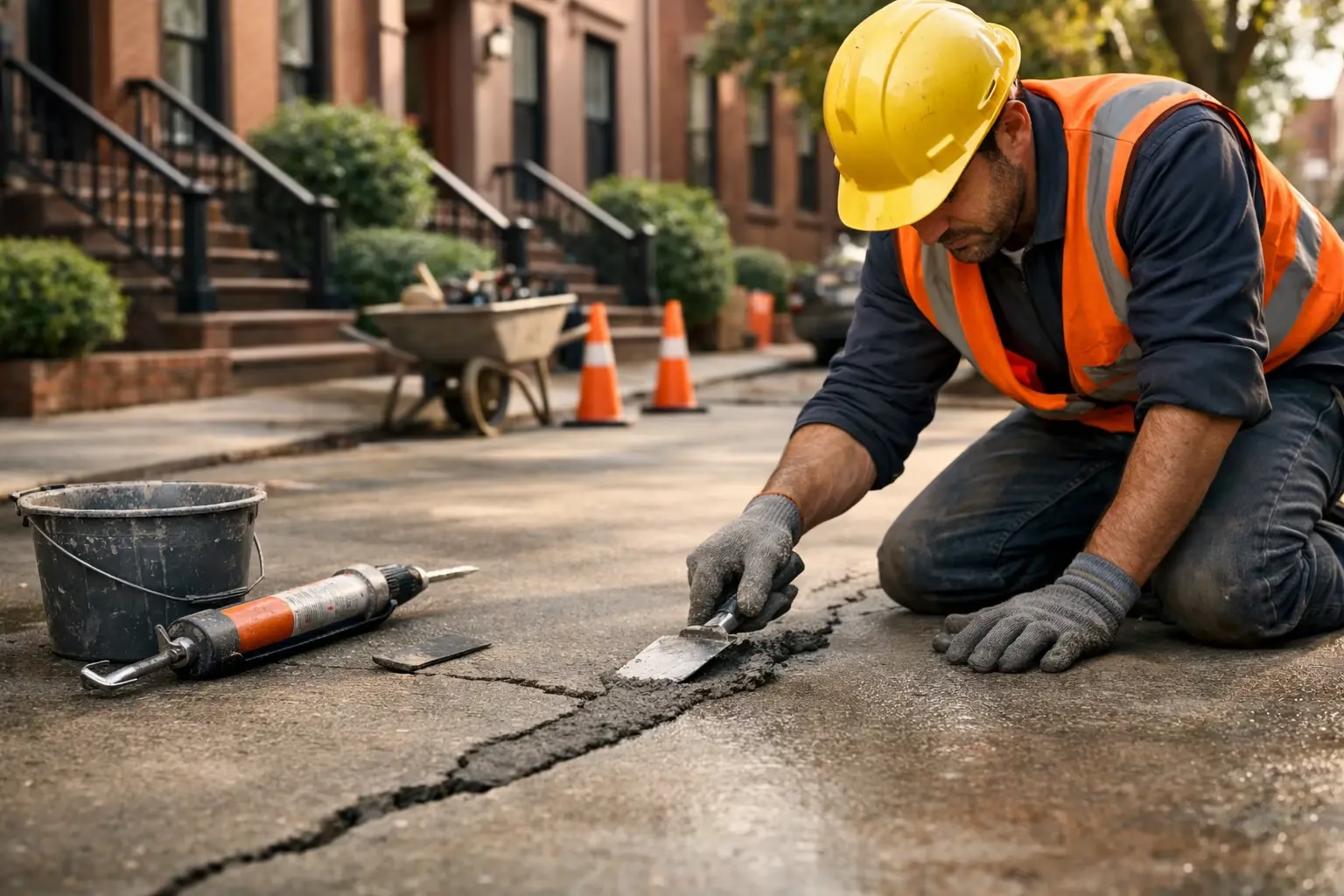
A driveway rarely fails all at once. It starts with one crack that holds water, then another that widens after a hard freeze, a delivery truck, or years of wear. That is usually when property owners start looking into cement work for driveway cracks and trying to figure out whether the problem is cosmetic, structural, or already beyond a simple patch.
In New York City, driveway surfaces take more abuse than most people realize. Heavy vehicles, tight urban lots, poor drainage, and old concrete all add stress. In brownstone neighborhoods and closely built residential blocks, even a small crack can turn into a bigger issue when water gets below the surface and starts weakening the base. The right repair is not just about filling a line. It is about stopping movement, shedding water, and restoring a safe surface that holds up.
What driveway cracks are really telling you
Concrete cracks for different reasons, and the cause matters. Some cracks are surface-level shrinkage from age and curing. Others point to movement underneath the slab, poor installation, tree root pressure, or repeated freeze-thaw cycles. If the crack is narrow and stable, repair may be straightforward. If one side of the driveway is higher than the other, or pieces are breaking loose at the edges, the issue is usually deeper than the surface.
This is where many property owners waste money. They buy a bag of patch material, fill the visible opening, and expect it to hold. If the slab is still moving or water is still getting under it, that repair may fail quickly. Good cement work starts with diagnosis, not just product choice.
In practical terms, width, depth, and pattern tell the story. A hairline crack is different from a long open joint running across the full width of the driveway. Multiple spreading cracks can mean the base has settled. Crumbling edges can signal salt damage, water intrusion, or age-related breakdown. The repair method has to match the actual condition.
When cement work for driveway cracks makes sense
Not every cracked driveway needs replacement. In many cases, targeted cement work for driveway cracks is the most cost-effective move, especially when the slab is largely intact and the damage is localized.
A proper repair makes sense when the concrete still has good strength, the cracking is limited to a few areas, and the surface remains mostly level. In those cases, the goal is to clean out loose material, treat the crack correctly, and use a repair method that bonds well and resists water entry. For some driveways, that may mean crack filling. For others, it may involve partial removal and recasting of a damaged section.
The trade-off is simple. Repairs cost less upfront, but only when the surrounding slab is still worth saving. If the driveway already has widespread deterioration, repeated patching becomes expensive in the long run because you are constantly chasing the next weak spot.
When repair is not enough
There is a point where patching no longer makes financial sense. If your driveway has extensive cracking, deep settlement, soft spots underneath, or major surface scaling, replacing part or all of it may be the better investment.
This is especially true when water drainage is part of the problem. A crack repair will not solve a driveway that pitches water back toward the house or traps water in low areas. In those cases, the repair needs to address slope, base stability, and surface integrity together. Otherwise, the same conditions that caused the original crack will keep causing new damage.
For many NYC properties, access and lot layout also matter. A narrow driveway in Brooklyn or Queens may look repairable on the surface, but if years of salt exposure and freeze-thaw damage have weakened the concrete across the entire width, section replacement may give better performance and a cleaner result.
How professional cement work for driveway cracks is done
The difference between a temporary patch and a lasting repair usually comes down to preparation. Concrete repair is not forgiving. If dust, loose debris, moisture, or failing edges are left in place, the new material will not bond the way it should.
A professional process starts by opening and cleaning the crack if needed, removing unsound material, and checking whether the edges are stable. The contractor should also look at what caused the crack in the first place. If water runoff, settlement, or expansion pressure is involved, that has to be part of the repair plan.
For smaller stable cracks, specialized repair compounds or cement-based fillers may be used. For larger or active cracks, routing, sealing, or rebuilding the affected area may be necessary. If the slab edge has broken down, a surface patch alone is usually not enough. That section may need to be cut out and replaced so the repair ties into solid concrete.
Finishing matters too. A driveway repair should not leave a weak, smooth skim coat that flakes off after one season. It needs the right mix, thickness, curing approach, and surface texture for traction and durability. In vehicle areas, compressive strength and bond performance matter far more than appearance alone.
The drainage problem many driveways hide
A lot of driveway cracking starts with water. Water enters through small openings, reaches the base, and weakens support under the slab. Then traffic loads do the rest. In winter, freeze-thaw expansion accelerates the damage. In summer, heat and drying can widen already stressed joints and cracks.
That is why a serious repair should include a look at drainage. Is water running off properly? Are downspouts discharging too close to the slab? Is the concrete pitched away from the structure? Is there soil erosion along the edges? These are not side issues. They directly affect how long a repair will last.
On older urban properties, especially where exterior surfaces have been patched many times over the years, drainage conditions are often part of a larger maintenance picture. A driveway crack may connect to sidewalk settlement, masonry wear, or waterproofing concerns nearby. Looking at the full exterior condition often prevents repeat repairs.
What property owners should expect from a contractor
If you are hiring someone for driveway crack repair, ask direct questions. A reliable contractor should explain whether the crack is cosmetic or structural, what preparation is required, what material will be used, and whether the repair is expected to be temporary or long-term.
They should also be clear about limitations. Some cracks can be improved, sealed, and stabilized without making the driveway look brand new. Other situations require more than repair. Honest advice saves money, even if it means recommending replacement over patchwork.
For NYC owners and managers, licensing, insurance, and site safety also matter. Exterior concrete work affects access, pedestrians, and nearby structures, so the crew should know how to manage the job professionally. If the driveway connects to other masonry or hardscape conditions, it helps to work with a contractor who understands the broader exterior system instead of treating the crack like an isolated problem.
Cost depends on more than the crack itself
People often ask for a price per crack, but driveway repair is rarely that simple. Cost depends on crack size, slab thickness, prep work, access, drainage issues, and whether the area can be repaired in place or needs to be cut out and repoured.
A small stable crack is one type of job. A cracked and sunken section near the garage entrance is another. Urban access can also affect labor. Tight spacing, parked cars, and limited material handling room often make city projects more involved than suburban open-lot work.
The cheapest fix is not always the affordable one. If a low-cost patch fails after one winter, you have paid twice and the slab may be worse than before. A well-planned repair usually costs more upfront than a quick fill, but less than repeated failure.
Why timing matters
Driveway cracks do not improve with age. Once water gets in, the repair window gets narrower. What might be a manageable crack this season can become edge spalling, slab movement, and wider deterioration after another winter.
That does not mean every crack is an emergency. It means early evaluation gives you more options. Smaller repairs are easier to perform, easier to blend, and more likely to last when the surrounding concrete is still solid.
For property owners who want practical answers, the best approach is simple. Get the driveway looked at before the damage spreads, understand whether repair or replacement makes more sense, and choose workmanship that addresses the cause as well as the surface. Best Budget Construction handles this kind of exterior repair with the straightforward approach most owners want – honest assessment, solid execution, and work built to hold up. A crack in the driveway may look minor today, but handled properly, it is one less bigger problem waiting for next season.
