

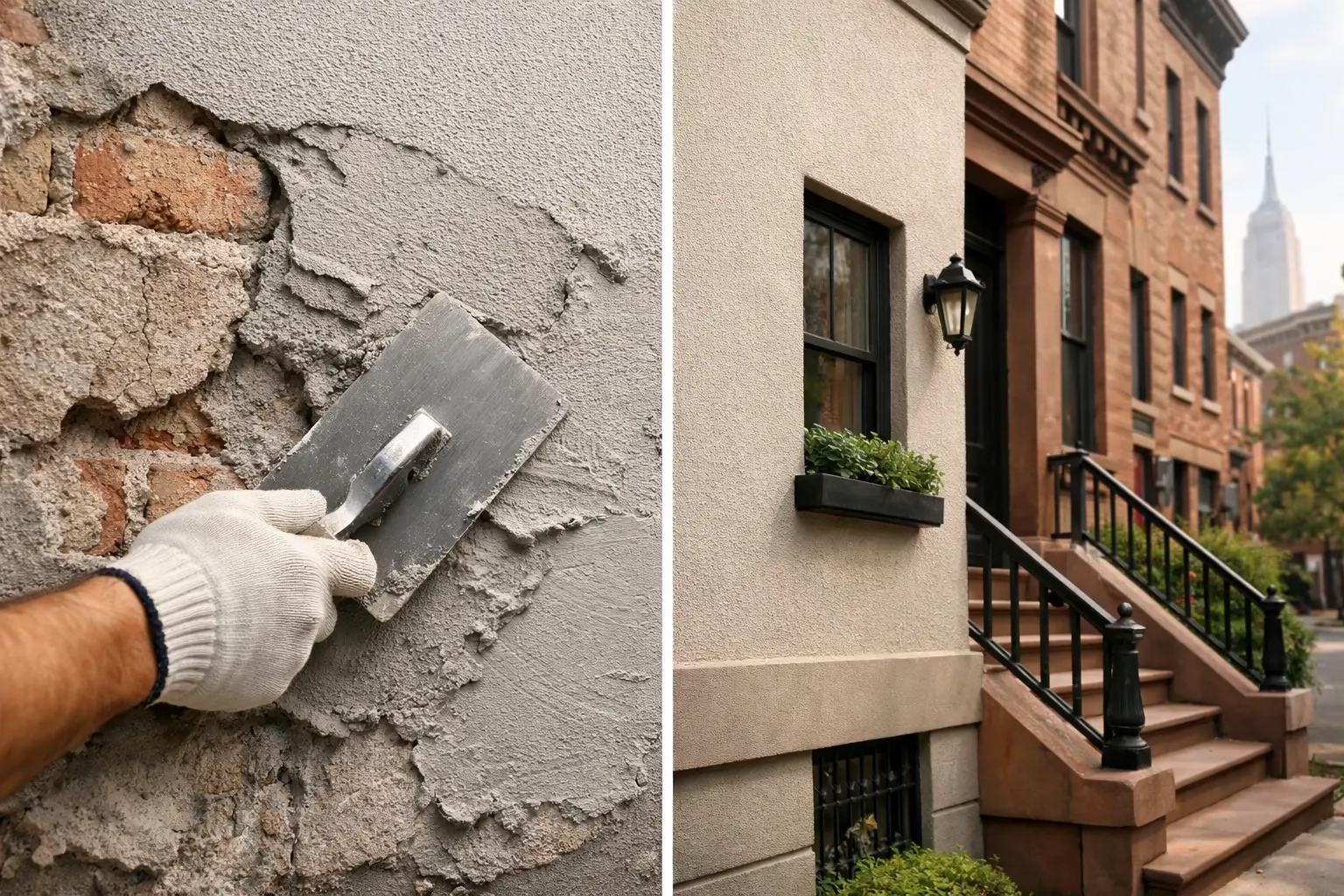
A cracked stucco wall can make an entire building look tired, but appearance is usually the smaller problem. When owners start searching for stucco repair before and after results, they are often trying to answer a more practical question: will this actually fix the wall, or just cover it up for a few months? In New York City, especially on older homes and mixed-material facades, the difference matters.
Stucco damage rarely starts as a cosmetic issue alone. Hairline cracks, bubbling, staining, and loose sections often point to water getting where it should not. On a Brooklyn brownstone block or a small commercial property with years of weather exposure, that can turn into bigger masonry, paint, and waterproofing problems if the repair is rushed or done with the wrong materials. Good before-and-after work should show more than a smoother surface. It should show a wall that is stable, sealed, and ready to hold up through another cycle of rain, heat, and freezing temperatures.
What stucco repair before and after should actually show
A lot of property owners expect the after photo to show a perfect, brand-new finish. Sometimes that happens. Sometimes it should not. The right result depends on the age of the building, the extent of the damage, and whether the repair is isolated or part of a larger facade restoration.
Before repair, common conditions include diagonal cracks near windows, impact damage at lower wall sections, bulging areas, discoloration, and patches that sound hollow when tapped. In older NYC properties, those symptoms may also be tied to movement in the substrate, failed flashing, or moisture entering from roof edges, parapets, or around penetrations. If those causes are left alone, a clean-looking patch job can fail fast.
After repair, the changes should be visible in both appearance and performance. The wall should look uniform, but not artificially skimmed over just to hide trouble underneath. Cracks should be properly opened, treated, and reinforced where needed. Damaged stucco should be removed back to sound material. The new finish should blend with the existing surface as closely as possible in texture and color, knowing that exact visual matching can depend on weathering and age.
That last part matters. Honest contractors do not promise a miracle blend on a facade that has faded for fifteen years. They aim for a repair that is structurally sound, watertight, and visually consistent from normal viewing distance.
The real difference between cosmetic patching and proper repair
This is where many before-and-after comparisons go wrong. A cosmetic patch can look impressive for a short time. It fills the crack, adds fresh coating, and gives the impression that the problem is solved. But if moisture is trapped behind the surface, or the base material is already loose, the same area can reopen.
Proper stucco repair usually starts with diagnosis, not patching. That means checking whether the problem is surface-level or tied to deeper facade conditions. A small crack from normal shrinkage is handled differently than cracking caused by movement, water intrusion, or failing masonry behind the finish.
A reliable contractor will often remove more material than the owner expected. That is not upselling by itself. It is often what is required to reach stable edges and avoid bonding new material to weak, crumbling stucco. In before-and-after terms, the “before” may look like a few minor cracks, while the real repair process reveals hidden deterioration underneath.
That is especially common on buildings that have had multiple repairs over the years. One layer over another can hide soft spots until the wall is opened. The after result lasts longer when the weak material is removed instead of buried.
What happens during a quality stucco repair
Every job is different, but the process should follow a logical sequence. First comes inspection to identify the cause and extent of damage. Then damaged sections are cut out or chipped away to sound substrate. If the lath, mesh, or base layer is compromised, that gets replaced. If water entry is involved, related issues around joints, coping, flashing, or adjacent masonry may need correction too.
Then the wall is rebuilt in layers. Depending on the system, that can mean a scratch coat, brown coat, and finish coat, with proper curing time between stages. For some repairs, reinforcing mesh is needed to reduce recurring cracking. The finish coat is then matched as closely as possible to the existing texture.
Paint or coating may come last, but only if the wall is ready for it. Painting damaged stucco before the substrate is fully repaired is one of the fastest ways to get a nice-looking before-and-after photo that does not hold up. A good contractor knows when to wait.
In neighborhoods like Park Slope or Brooklyn Heights, where facades often combine stucco, brownstone, brick, and decorative trim, this layered approach matters even more. One exterior problem rarely stays isolated to one material.
Common before-and-after scenarios owners see
Not every stucco repair starts from the same condition, so the after result should be judged accordingly.
If the before condition is hairline cracking, the after should show a continuous finish without visible separation, and the repaired area should feel solid. If the before condition is bubbling or staining, the after should include correction of the moisture source, not just a cleaner wall. If the before condition is missing or loose stucco, the after should restore the profile and protect the exposed substrate.
For buildings with widespread wear, owners sometimes ask whether spot repairs will be enough. The answer depends on how much of the facade has failed. Spot repairs make sense when most of the wall is still stable. When the finish is breaking down across large areas, partial work can leave the building looking uneven and may not be cost-effective in the long run.
That is one of the more honest trade-offs in stucco work. A lower immediate price is not always the better value if the wall needs broader restoration.
How long do stucco repair before and after results last?
That depends on what caused the damage in the first place. If the issue was a localized crack with no ongoing moisture problem, a well-executed repair can last for years. If the building has active water intrusion, movement, or neglected roof and masonry issues, even good stucco work can be stressed again.
NYC weather is hard on exterior finishes. Freeze-thaw cycles, wind-driven rain, heat, and pollution all wear surfaces down faster. That is why experienced contractors look beyond the patch itself. The best after result is not just smoother stucco. It is a facade system that is better protected than it was before.
Maintenance also matters. Periodic inspections, sealing joints where needed, and addressing small cracks early can keep a simple repair from turning into a larger facade project.
How to judge a contractor’s stucco work
If you are comparing estimates, do not look at photos alone. Ask what was removed, what was repaired underneath, and how the finish was rebuilt. Ask whether the color match will be exact or approximate. Ask if adjacent waterproofing or masonry conditions were checked.
Clear answers are a good sign. So is a contractor who explains what depends on site conditions instead of promising a perfect result before the wall is opened. Licensed, insured crews with real exterior restoration experience tend to be more direct about what they can match, what they can guarantee, and where additional work may be needed.
That is the kind of practical approach property owners usually want. No drama, no overselling, and no temporary fixes dressed up as full restoration. At Best Budget Construction, that means looking at the wall as part of the whole building exterior, especially on older NYC properties where water, masonry, and finish failures often overlap.
When it is time to stop waiting
Many owners hold off because the damage still looks small. A few cracks, a little staining, one corner starting to chip away. But stucco problems are usually cheaper to repair before moisture spreads deeper into the facade. Once water reaches underlying materials, the repair scope can shift from finish work to substrate replacement, waterproofing correction, and more extensive restoration.
If your wall is showing active cracking, discoloration, bulging, or separation, the before stage is already telling you something. The goal of the after stage is not just to make the property look better for a photo. It is to protect the building, extend the life of the facade, and avoid paying twice for the same area.
A strong stucco repair should leave you with more than a cleaner exterior. It should leave you with confidence every time it rains.
