

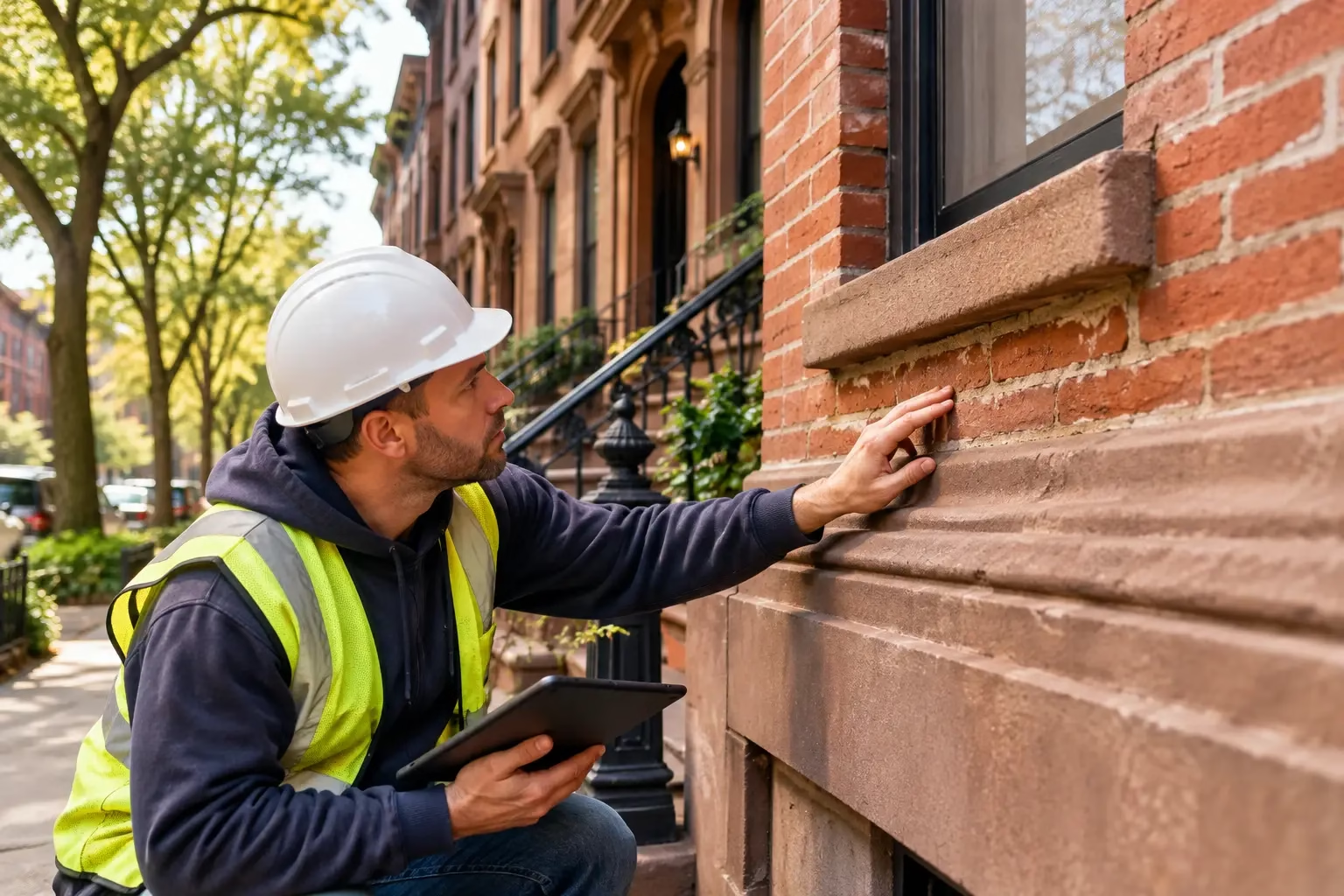
A brownstone facade can look solid from the sidewalk while the mortar joints are slowly failing behind years of paint, patching, rain, and freeze-thaw cycles. That is why property owners often ask, do brownstones need repointing? Many do, but not every cracked joint calls for a full facade project. The right answer comes from the mortar condition, the brick or brownstone condition, water movement, and how much of the wall has already been repaired.
For Brooklyn owners, especially in Park Slope, Brooklyn Heights, Cobble Hill, Bed-Stuy, and Carroll Gardens, repointing is not only about improving curb appeal. Proper brick pointing protects the wall from water entry, loose masonry, interior moisture damage, and larger facade repair costs down the road.
Do Brownstones Need Repointing Before Water Damage Spreads?
Brownstones and brick row houses rely on mortar joints to keep the masonry assembly stable and manage moisture. Mortar is meant to be the sacrificial material in the wall. It should weather gradually before the brick or historic brownstone itself begins to break down.
When joints become soft, recessed, cracked, or missing, rain can work its way into the wall. In New York City, that water may freeze during winter, expand, and push mortar or masonry faces outward. Over time, a minor open joint can lead to spalling brick, flaking brownstone, rusting embedded metal, staining, and leaks inside the building.
Repointing removes failing mortar to the proper depth and installs compatible new mortar in cleaned joints. Done correctly, it restores protection without damaging the surrounding masonry. Done poorly, it can trap moisture, crack the face of historic brick, or create a patchwork appearance that lowers the value of the facade.
The timing depends on the wall. A few isolated failed joints may need selective pointing. Widespread mortar loss, recurring leaks, bulging areas, or loose pieces usually point to a larger restoration scope. An on-site inspection is the practical way to separate cosmetic wear from a real masonry problem.
Warning Signs Your Brownstone Needs Brick Pointing
The most obvious sign is mortar that is missing or recessed well behind the brick face. You may also see joints that crumble when lightly touched, vertical cracks following the mortar lines, or gaps around window lintels, sills, and parapets.
Look closely after heavy rain. Dark wet areas that remain long after surrounding masonry has dried can indicate water entering through failed joints or cracked masonry. White powdery deposits, called efflorescence, can also signal that moisture is traveling through the wall and leaving salts behind.
Inside the property, peeling paint, damp plaster, moldy odors, or recurring water marks on exterior-facing walls deserve attention. Those symptoms do not automatically mean the facade needs repointing – roof flashing, window conditions, cornices, and plumbing can also be responsible. But they are a reason to inspect the exterior masonry instead of repeatedly repainting the interior damage.
Other visible red flags include:
- Bricks or brownstone faces that are flaking, scaling, or popping off
- Mortar that has been smeared across brick faces during an earlier repair
- Cracks that widen near window openings, corners, or parapets
- Loose masonry, leaning sections, or areas that sound hollow when tapped
- Water stains beneath coping stones, cornices, or roofline details
Loose or falling material is a safety issue, not a maintenance item to postpone. It should be evaluated promptly by a qualified contractor.
Why the Wrong Mortar Can Harm Historic Masonry
Older brownstones were commonly built with softer, more breathable masonry and mortar than many modern buildings. One of the most common repair mistakes is installing a mortar mix that is too hard for the original brick or brownstone.
Hard cement-heavy mortar may seem durable, but it can force moisture to escape through the softer masonry instead of the joint. The result can be cracked brick faces, spalling, and accelerated deterioration. A repair that looks clean in its first year can create a much more expensive restoration problem later.
Proper repointing begins with evaluating the existing mortar, brick condition, joint profile, exposure, and previous repairs. The old mortar must be removed carefully, without chipping the edges of the brick. Joints are then cleaned, prepared, and filled in layers with an appropriate mortar mix. Color and texture matter as well, particularly on visible historic facades where mismatched pointing stands out immediately.
Brownstone itself needs special care. Unlike standard brick, brownstone can be soft and prone to surface erosion. Some conditions require patching, resurfacing, Dutchman repairs, or restoration work in addition to joint repointing. Painting or coating over failing brownstone without addressing the source of deterioration is usually a short-term cover-up.
Repointing Is Not the Same as Rebuilding a Facade
Owners sometimes delay an inspection because they assume every pointing project means tearing down the front of the building. In many cases, that is not true. Targeted repointing can address localized joint failure before loose masonry and water damage spread.
At the same time, a contractor should not recommend spot repairs where the wall has broad mortar failure, structural cracking, failed lintels, or damaged parapet masonry. Selective work may be the affordable choice when the issue is genuinely limited. A more complete restoration becomes the better value when repeated patches would leave the building exposed and force you to pay for access and setup again later.
The scope should also account for related conditions. A leaking cornice, failing roof flashing, cracked window caulking, or deteriorated coping can keep feeding water into a newly repointed wall. Coordinating exterior repairs under one plan helps protect the work and avoids the frustration of fixing symptoms one at a time.
Best Budget Construction in Brooklyn & NYC
For an aging brownstone, the first step is a direct assessment of what is failing and why. Best Budget Construction approaches masonry work with the same practical mindset used for roofing, waterproofing, cornice restoration, facade repair, and interior water-damage repairs: identify the source, explain the scope clearly, and complete work that holds up under NYC weather.
Property owners should expect a contractor to review accessible elevations, mortar joints, brick and brownstone faces, parapets, window areas, roofline transitions, and visible signs of water travel. If the building is in a historic district, work may also require attention to approved materials, facade details, and applicable local requirements. Preserving original character does not mean ignoring safety or moisture problems.
A clear estimate should distinguish between repointing, brick replacement, brownstone patching, crack repair, waterproofing, and any required access or protection. That clarity matters when comparing bids. A low number that only covers surface mortar smears is not the same service as carefully removing failed joints and restoring a durable facade.
License & Insurance credentials for all services
Masonry work involves ladders, scaffolding, sidewalk protection, falling-debris risk, and sometimes structural conditions that cannot be judged from a quick sidewalk look. Hiring a licensed and insured contractor protects the owner, occupants, neighbors, and the project itself.
Ask who will perform the work, how adjacent surfaces will be protected, whether loose material will be stabilized, and what the repair includes. For multi-family buildings and commercial properties, coordination with tenants, managing agents, and building access is just as important as the mortar mix. A reliable contractor plans for the working conditions instead of treating them as an afterthought.
100% OSHA guidelines compliant
Safe execution is part of quality workmanship. Exterior pointing may require proper scaffolding, controlled work zones, personal protective equipment, dust management, and protection for pedestrians below. These details keep a necessary facade repair from becoming a disruption or liability.
Owners should be cautious of anyone proposing to grind out mortar aggressively across an old facade without discussing dust, brick-edge damage, or protection. Fast work is not always efficient work. Careful preparation and trained masonry labor are what produce clean joints, minimize collateral damage, and help the repair last.
When Should You Schedule an Inspection?
The best time to inspect a brownstone is before the wall starts shedding material or leaking into finished rooms. Late spring through fall is often favorable for exterior masonry work because temperatures and curing conditions are more predictable. Still, visible damage should be assessed whenever it appears, even if permanent work needs to be scheduled for a more suitable weather window.
If you are planning a roof repair, cornice restoration, exterior painting, waterproofing project, or interior renovation after a leak, include the facade in the conversation. The condition of the masonry can affect every one of those projects.
Free Estimate Call (917) 674-9488
Your brownstone does not need a one-size-fits-all repair. It needs an honest look at the mortar, masonry, water path, and surrounding details before small failures become costly facade work. A timely inspection and a clear repair plan can keep an NYC property safe, dry, and looking like it belongs on its block.
