

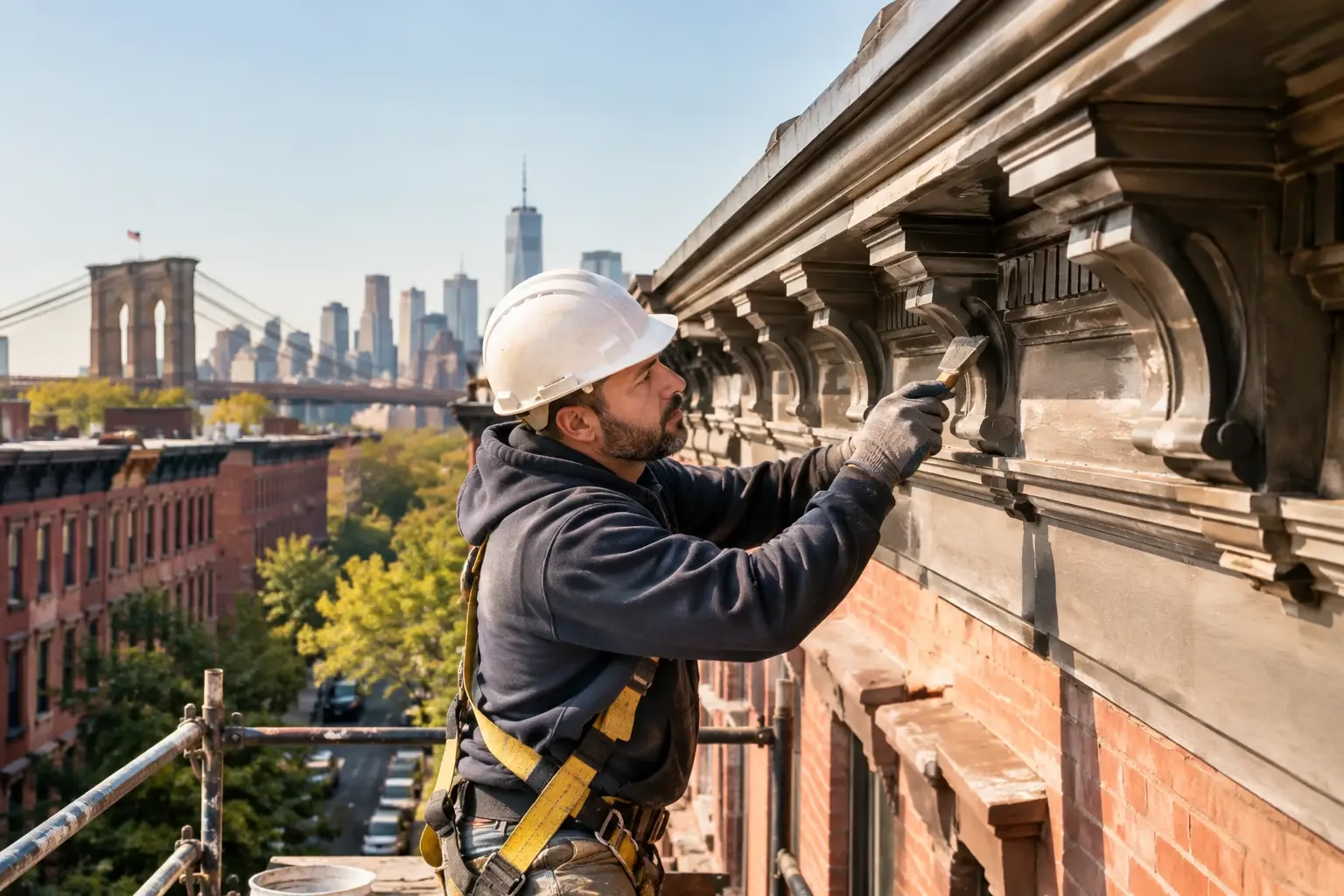
A damaged cornice is not just a cosmetic problem at the roofline. On a Brooklyn brownstone, townhouse, apartment building, or storefront, loose metal, cracked terracotta, failed wood, and open masonry joints can allow water into the facade and create a serious falling-debris hazard below. A qualified Brooklyn cornice restoration contractor should identify the source of the damage, stabilize unsafe areas, and restore the profile without treating the visible problem as a quick patch.
At Best Budget Construction, we see cornice issues that started small and became expensive because water had been moving behind the facade for years. The right repair protects the building’s appearance, but it also protects the masonry, roof edge, framing, and people walking on the sidewalk.
When a Brooklyn Cornice Needs Restoration
Cornices take constant punishment from rain, snow, wind, freeze-thaw cycles, roof runoff, and long-term neglect. Older Brooklyn properties often have original details that have been patched repeatedly, sometimes with materials that do not move or drain the same way as the original construction. That mismatch can lead to more cracking, staining, and separation.
Watch for rust streaks below sheet-metal cornices, cracked or missing ornament, peeling paint that returns quickly, soft or rotted wood, open seams, displaced brackets, or pieces of masonry on the sidewalk. Water stains on the top-floor ceiling can also point to a roof-to-cornice connection problem rather than a roofing problem alone.
A close visual inspection from the street is useful, but it cannot always show what is happening behind the face of the cornice. Safe access is needed to inspect the flashing, coping, roof edge, fasteners, masonry backup, and drainage conditions. That is where a professional evaluation saves guesswork.
Why Small Cornice Repairs Can Turn Into Bigger Work
The most visible crack is not always the real issue. Water may be entering at failed flashing, clogged roof drains, open mortar joints, deteriorated coping, or a poorly repaired parapet. If those conditions remain, even a carefully painted or patched cornice can fail again.
A proper scope often includes related work around the roofline: localized masonry repair, brick pointing, waterproofing details, roof flashing repair, replacement of rusted metal sections, and repainting or coating where appropriate. Not every building needs all of these services. The correct approach depends on the cornice material, the extent of deterioration, access requirements, and whether moisture has reached the structure behind it.
For example, a sheet-metal cornice with isolated seam failure may be repaired and sealed successfully. A cornice with widespread rust-through, failed internal wood blocking, and loose sections may require partial or full reconstruction. Trying to save a severely compromised section simply because it appears less expensive can lead to repeated mobilization costs and another repair within a short time.
What a Good Cornice Restoration Scope Includes
Restoration work should begin with a practical diagnosis, not a one-price-fits-all promise. A contractor should explain which components can be retained, which must be replaced, and why. On historic or highly detailed buildings in areas such as Park Slope, Brooklyn Heights, Cobble Hill, and Bed-Stuy, matching the existing proportions and details matters as much as stopping the leak.
A well-planned project may include temporary stabilization, removal of unsafe material, repair or replacement of the supporting substrate, fabrication of matching metal or wood details, masonry and pointing work, proper flashing integration, priming, painting, and cleanup. Where ornamental pieces are involved, the work may require careful measurement and custom fabrication rather than stock trim.
The best result is not necessarily the most aggressive replacement plan. Retaining sound original fabric can be the right choice when the underlying support is stable. On the other hand, patching over deeply corroded metal or decayed wood is not restoration. It is a delay that can put the facade, budget, and public safety at risk.
Choosing a Brooklyn Cornice Restoration Contractor
Cornice restoration is specialized exterior work, and the contractor needs to understand both preservation and building performance. Ask how the team will access the work safely, how it will protect pedestrians and neighboring property, how the repair ties into the roof and facade, and what material will be used for each part of the repair.
You should also expect a clear written scope. It should separate visible repairs from possible concealed conditions discovered after controlled removal. Older NYC buildings often reveal rusted anchors, damaged wood framing, or deteriorated masonry only after failed material is opened. A transparent contractor explains this possibility before work begins instead of presenting an unexpected bill without context.
Price matters, especially for owners managing aging buildings and multiple maintenance needs. But the lowest number can leave out the elements that make a repair last: safe access, removal of loose material, proper flashing, substrate repair, primer, finish coats, and cleanup. Compare scopes, not just totals.
Best Budget Construction in Brooklyn & NYC
Best Budget Construction provides practical exterior restoration for homeowners, landlords, property managers, and small commercial property owners who want one dependable team for connected building needs. Cornice work frequently overlaps with roofing, facade restoration, brick pointing, stucco repair, waterproofing, power washing, painting, and brownstone restoration. Coordinating these items under one contractor can reduce scheduling conflicts and prevent one repair from damaging another.
Our approach is direct: inspect the condition, identify the active cause of deterioration, recommend a repair plan that fits the building, and provide a clear estimate. We work with the realities of dense Brooklyn streets, occupied properties, aging masonry, and weather-sensitive exterior schedules. The goal is durable work completed with care, not a temporary visual fix.
License & Insurance credentials for all services
Exterior restoration should never be handed to an unqualified crew simply because the damaged area is high above the street. Ask for current license and insurance information, and make sure the contractor has experience with the access and protection requirements for your project. Sidewalk sheds, scaffolding, lifts, and controlled work zones may be necessary depending on the building and the scope.
Licensed, insured work protects the owner when conditions become more complicated than expected. It also provides accountability for the job site, the workers, the building occupants, and the public. For landlords and property managers, those details are part of managing risk, not optional paperwork.
100% OSHA guidelines compliant
Cornice repair involves elevated work, sharp metal, unstable materials, overhead hazards, and active sidewalks. Safe execution means setting up the work area correctly, using proper fall protection and access equipment, securing loose debris, and keeping residents, employees, and pedestrians away from danger.
OSHA-focused work practices are not separate from quality. A crew that takes protection, staging, and material handling seriously is better positioned to perform careful detail work without rushing through unsafe conditions. On occupied buildings, the contractor should also communicate access needs and work timing so tenants and businesses can plan around the project.
Keep the Repair From Failing Again
Once the cornice has been restored, regular maintenance makes a real difference. Clear roof drains and gutters, inspect roof-edge flashing after severe weather, address peeling paint before bare metal or wood is exposed, and have the upper facade checked when you see fresh stains or mortar deterioration. Water always looks for the easiest route, and a minor opening at the roofline can travel far before it becomes visible indoors.
If your building has recurring leaks, loose trim, rusting metal, cracked decorative work, or a cornice that looks unsafe from the sidewalk, do not wait for a piece to fall. An early inspection can often limit the repair to a manageable scope and protect the character of your Brooklyn property.
Free Estimate Call (917) 674-9488
A cornice restoration estimate should give you a clear starting point: what is damaged, what is causing it, what work is recommended now, and what related conditions should be watched. Call (917) 674-9488 for a free estimate and a straightforward conversation about your Brooklyn cornice, facade, roofing, masonry, or waterproofing needs. A timely repair can preserve the details that make your building stand out while keeping the property safer for everyone below.
