

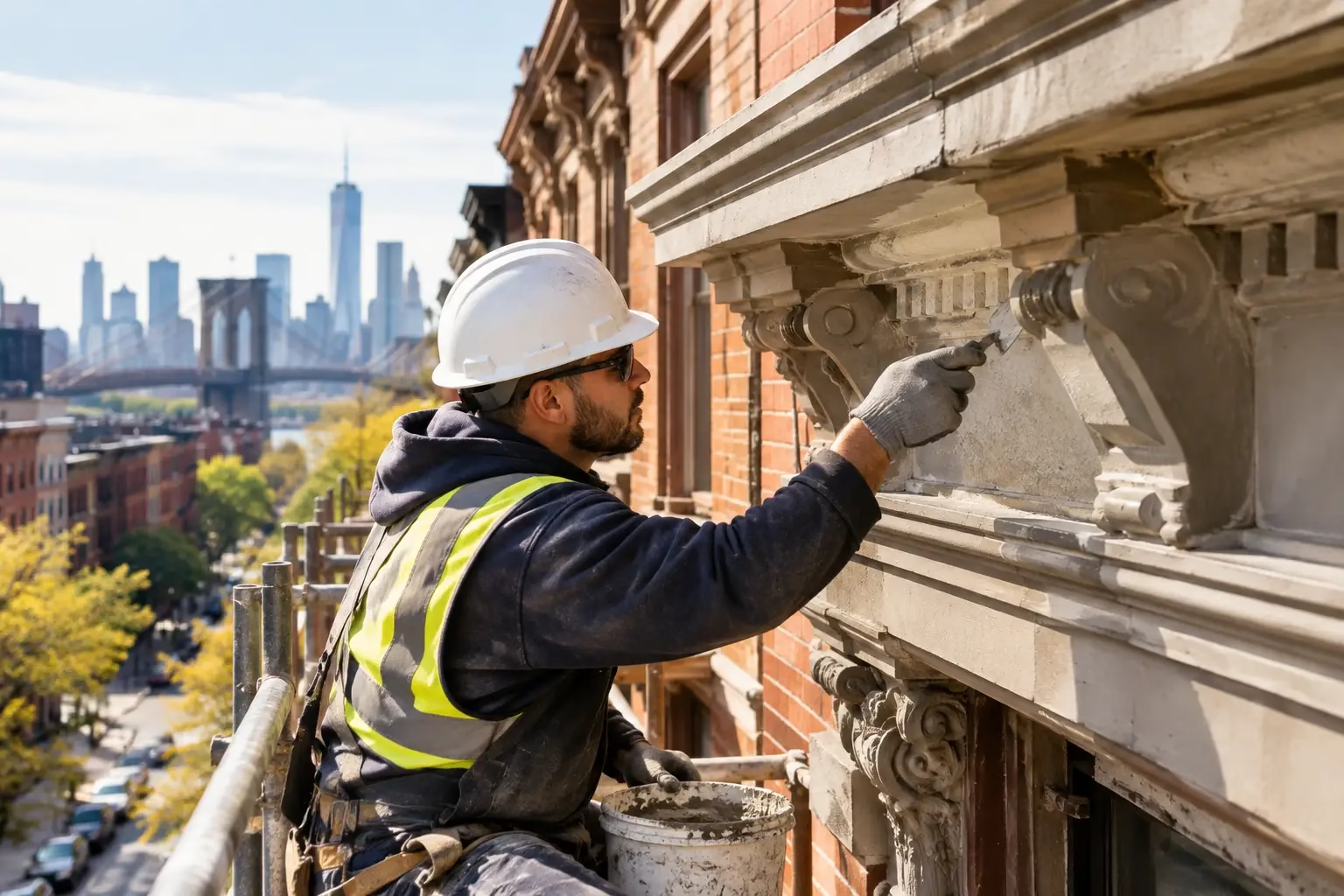
A loose cornice is not just an old-building eyesore. On a Brooklyn brownstone, prewar apartment building, or small commercial property, damaged metal, wood, or masonry at the roofline can let water behind the facade and create a serious falling-material hazard. Exterior cornice repair addresses the visible damage, but the right repair also finds the leak, failed flashing, rusted support, or cracked masonry that caused it.
For NYC owners and managers, waiting is usually the expensive choice. A small open seam can turn into rotted wood framing, damaged brick, interior water stains, and a larger scope once winter freeze-thaw cycles get involved. Fast assessment and solid workmanship protect both the building’s appearance and the people walking below it.
When Exterior Cornice Repair Cannot Wait
Cornices take a beating in New York. Rain sits in failed joints, snow and ice expand small cracks, summer heat moves metal, and wind works loose sections that were already weakened by age. Buildings in Park Slope, Brooklyn Heights, Bed-Stuy, and similar historic neighborhoods often have original architectural details that need thoughtful repair rather than a quick cover-up.
Call for an inspection when you see rust streaks beneath a metal cornice, cracked or missing sections, peeling paint concentrated at the roofline, open seams, sagging trim, or staining on the top-floor interior walls. Pieces on the sidewalk or a visibly separated section require immediate attention. The work may need temporary protection, controlled removal of unsafe material, and a repair plan before anyone can safely use the area below.
A cornice problem can also start out of sight. Water may enter through a worn roof edge, damaged coping, failed gutter connection, or flashing behind the cornice. Repainting the face without correcting that path only makes the issue look better for a short time.
What a Proper Cornice Inspection Looks For
A dependable exterior repair starts with close visual review from safe access, not a guess from the street. We look at the cornice itself, its fasteners and supports, adjacent masonry, roof flashing, parapet conditions, and drainage. The goal is to separate cosmetic paint failure from material loss or structural deterioration.
On a metal cornice, common findings include corrosion at seams, pinholes, split solder joints, loose brackets, and sections that have thinned beyond practical patching. Wood cornices may show rot behind painted surfaces, separated joints, insect damage, or failed fascia boards. Masonry and terra cotta details can crack from water entry and movement, sometimes with loose pieces that must be stabilized or removed.
The repair method depends on what is still sound. Retaining original material where practical helps preserve the character of a brownstone or historic facade. But patching a cornice that has lost its structural backing is not a responsible long-term fix. In that situation, selective rebuilding or replacement of the failed section is usually the better value.
Repair, Restore, or Replace?
Small holes, open seams, limited rust, and isolated damaged trim can often be repaired after proper preparation. The work may include removing failed material, treating or replacing corroded metal, fabricating a matching section, resealing joints, repairing backing, and applying a durable coating system.
Restoration makes sense when the cornice has architectural value and most of its profile remains intact. Matching the original shape takes more skill than installing a flat cover, but it protects the building’s curb appeal and avoids a mismatched roofline.
Replacement is appropriate when deterioration is widespread, supports are unsafe, or repeated patches would cost more than a new fabricated section. A good contractor will explain the trade-off plainly: preservation can be worthwhile, but not if the remaining material cannot safely carry through another New York winter.
Exterior Cornice Repair: License & Insurance credentials for all services
Cornice work happens at height, often above active sidewalks, neighboring properties, and busy streets. That is why credentials and jobsite control matter as much as the finished appearance. Owners should ask who is performing the work, how access will be managed, whether the contractor carries proper coverage, and how falling debris and public safety will be handled.
Best Budget Construction provides License & Insurance credentials for all services and approaches exterior work with the planning required for dense NYC properties. Depending on the scope, a project may require scaffold access, sidewalk protection, debris containment, coordinated roofing repairs, and careful staging around residents or storefront operations.
The cheapest quote is not always the affordable quote. A low number that skips access equipment, flashing repairs, preparation, or proper coatings can leave the owner paying twice. Clear scopes and honest estimates make it easier to compare what each contractor is actually proposing.
100% OSHA guidelines compliant Cornice Work
Safe exterior cornice repair is organized before a crew starts removing material. Access must be stable, workers need fall protection where required, and the public area below must be protected. Loose sections are handled carefully because pulling on a failing edge without understanding its attachment can make a bad condition worse.
Best Budget Construction works 100% OSHA guidelines compliant on jobsite safety practices. That commitment is especially relevant for occupied multifamily buildings and commercial properties, where a repair must be completed without treating residents, tenants, or pedestrians as an afterthought.
Safety also supports better craftsmanship. When a crew has correct access to the roofline, it can clean, inspect, fasten, seal, and finish the cornice properly instead of reaching from unsafe ladders or leaving hidden areas untouched.
The Repair Process for NYC Properties
After the initial review, the first priority is making any dangerous condition safe. That can mean securing a loose section, removing compromised material under controlled conditions, or protecting the area below while a full repair is scheduled.
Next comes removal of deteriorated material and inspection of what sits behind it. This is the stage where hidden rot, rusted support steel, damaged roof edges, or open flashing often becomes visible. Repairing these components is what helps stop the same damage from returning through the new finish.
The crew then rebuilds, patches, or installs replacement sections to suit the existing profile and condition. Seams are sealed, connections are secured, and adjacent roof or masonry details are addressed as needed. Proper priming and exterior-grade coatings finish the job and add protection against moisture and corrosion.
For properties that need more than cornice work, using one contractor for roofing, facade restoration, brick pointing, waterproofing, masonry repair, and painting reduces coordination problems. It also helps ensure that the roofline, wall, and drainage system are working together instead of being repaired as unrelated pieces.
How to Protect a Repaired Cornice
A repaired cornice still needs periodic attention. Annual visual checks, especially after severe storms and before winter, can catch peeling coating, new rust, failed sealant, and drainage issues early. Keep roof drains and gutters clear so water does not back up at the roof edge.
Do not ignore top-floor leaks or new stains near exterior walls. They may be a roof issue, but they can also signal water entering behind a cornice or parapet. Early maintenance is usually simpler than emergency restoration after material has already failed.
For landmark-style homes and older masonry buildings, match maintenance work to the materials already in place. Incorrect coatings, trapped moisture, or poorly detailed replacement metal can create new problems even when the work initially looks clean.
Best Budget Construction in Brooklyn & NYC
Property owners need a contractor who understands that exterior repairs affect safety, appearance, tenants, and budgets at the same time. Best Budget Construction brings hands-on experience in cornice restoration, roofing, masonry, waterproofing, facade work, and professional painting, so the repair can be evaluated as part of the whole building.
We serve Brooklyn property owners, managers, and commercial clients with practical recommendations, transparent scopes, and workmanship focused on lasting results. Whether the issue is an isolated rusted metal section or broader deterioration along a historic facade, the right next step is a site review before the damage spreads.
Free Estimate Call (917) 674-9488
If your cornice shows cracks, rust, loose material, water damage, or failing paint, do not wait for a piece to fall or a small leak to become a major repair. Call (917) 674-9488 for a free estimate and a straightforward plan for exterior cornice repair that fits your building, timeline, and budget.
