

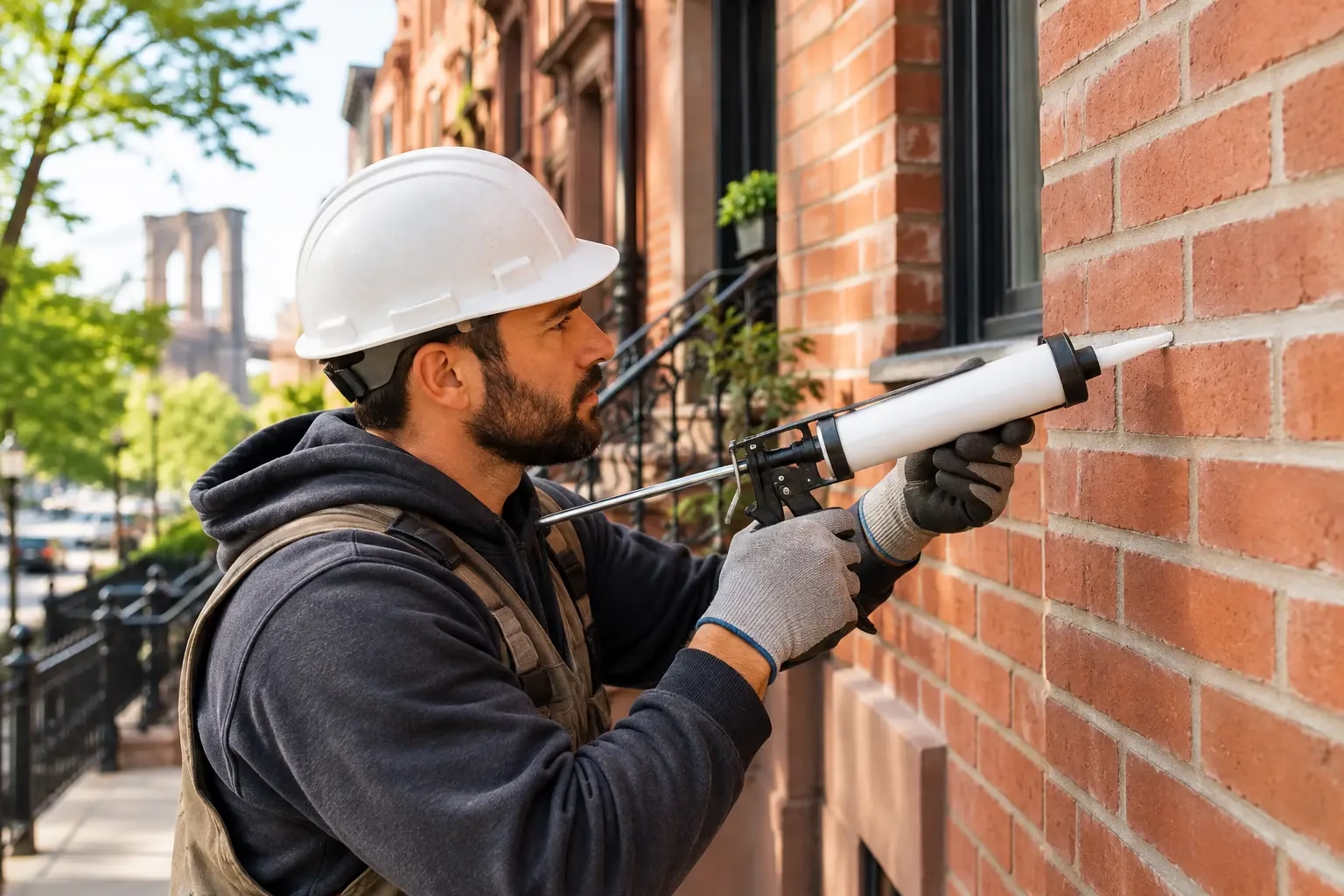
Old brick rarely fails all at once. In Brooklyn brownstones and prewar commercial buildings, water usually finds its way in through a cracked mortar joint, failed window perimeter, open coping joint, or a facade that has been absorbing rain for years. Choosing the best sealants for masonry starts with identifying that path. The wrong product can trap moisture inside the wall and make spalling, efflorescence, and interior leaks worse.
For NYC property owners, a masonry sealant is not simply a coating that makes water bead up. It has to work with the building’s materials, exposure, age, and repair history. That is especially true around historic brick and brownstone facades, where breathability matters as much as water resistance.
What Makes the Best Sealants for Masonry?
The best product depends on whether you are sealing the face of the masonry or a moving joint between materials. Those are two different jobs, and they require different solutions.
For sound, absorbent brick, concrete, stone, or brownstone, a penetrating silane or siloxane water repellent is often the best choice. It soaks below the surface instead of creating a thick film on top. Properly applied, it reduces rainwater absorption while allowing water vapor inside the wall to escape. That breathability is critical on older NYC buildings that need to dry after rain, snow, or humid weather.
For gaps around windows, doors, coping stones, flashings, expansion joints, and masonry-to-metal transitions, use a high-quality polyurethane or hybrid polymer joint sealant. These products remain flexible as building materials expand, contract, and move. A hard patch or a basic household caulk may look fine at first, but it can split quickly when exposed to weather and building movement.
A good masonry waterproofing plan often uses both: a breathable penetrating repellent on eligible masonry surfaces and flexible sealant where materials meet or joints move.
Penetrating Water Repellents for Brick, Stone, and Concrete
Silane and siloxane repellents are our first consideration when the masonry itself is in good condition but taking on too much rainwater. They are particularly useful on exposed brick facades, parapet walls, chimneys, concrete block, and certain stone surfaces.
Silane molecules penetrate deeply into dense concrete and brick. Siloxane generally works well on more porous masonry because it forms a water-repelling network closer to the surface. Many professional-grade products combine both. The objective is the same: limit liquid water entry without sealing the wall shut.
This approach has real advantages in Park Slope, Brooklyn Heights, and other neighborhoods with aging facades. It can help reduce freeze-thaw damage, staining, and moisture loading without changing the building’s appearance. But it is not a substitute for masonry repair. If mortar is missing, brick faces are flaking, or a parapet has open joints, those conditions need repair before any water repellent is applied.
A clear penetrating product should also be tested in a small, inconspicuous area. Some masonry darkens slightly, and certain stones can react differently than brick. Surface preparation matters just as much as product selection. Dirt, paint residue, efflorescence, algae, and loose material can prevent even absorption.
Flexible Joint Sealants for Cracks and Transitions
Water often enters where the facade changes direction or materials meet. That includes window openings, metal flashing, lintels, coping stones, roof-to-parapet transitions, and small cracks that continue to move with the structure.
Polyurethane sealants have long been a dependable choice for exterior construction joints. They adhere well to many masonry surfaces, accommodate movement, and stand up to exterior exposure when properly installed. Hybrid polymer sealants are another strong option, particularly where low odor, easier tooling, or better application in damp conditions is useful.
The product alone will not make a failed joint watertight. The old loose sealant must be removed, the joint needs to be clean and dry as required by the manufacturer, and a backer rod may be needed to control depth and create the right sealant shape. Applying sealant over dirty mortar, wet debris, or an oversized open joint is a short-term patch, not a lasting repair.
For larger cracks in brickwork, first determine whether the crack is active. A stable hairline crack may be repaired and sealed. A widening diagonal crack, separated parapet, bulging wall, or displaced lintel calls for professional assessment before sealing. Covering a structural warning sign does not fix the source of movement.
Why Acrylic Coatings and Paint Are Not Always the Answer
Acrylic masonry coatings can be appropriate on certain concrete or previously coated surfaces, especially where a uniform finished appearance is part of the project. They can bridge very fine surface cracks and provide a finished color layer. However, they are not automatically the right choice for old exposed brick or brownstone.
Film-forming coatings can reduce a wall’s ability to release moisture. If rainwater, plumbing leaks, or rising damp are already feeding moisture from behind, that moisture can push outward and cause peeling, blistering, or brick deterioration. This is why a facade should never be coated just because it looks weathered.
Painted masonry also needs a different evaluation than bare masonry. If there is failing paint, the correct path may involve preparation, repairs, a compatible primer, and a breathable coating system. It depends on the substrate, existing finish, and whether the wall is historically intended to remain exposed.
Best Budget Construction in Brooklyn & NYC
Our approach is practical: find the water path, correct failed masonry or flashing, and specify materials that fit the building rather than forcing one product onto every surface. A brownstone cornice repair, brick pointing job, concrete sidewalk repair, and commercial parapet waterproofing project each have different demands.
Before sealing, we look for open mortar joints, deteriorated bricks, failed previous caulk, loose coping stones, roof drainage problems, and cracks around openings. Repointing may be the better first investment when mortar has worn away. On historic masonry, the mortar mix also matters. Mortar that is too hard can damage softer old brick by forcing moisture through the brick instead of the joint.
A properly planned repair can save money because it focuses work where the building is actually failing. It also helps avoid repeated interior painting and plaster repairs caused by exterior moisture that was never addressed.
License & Insurance credentials for all services
Exterior masonry and waterproofing work should be performed by a contractor who understands site safety, local building conditions, access requirements, and the consequences of a failed facade repair. Best Budget Construction provides License & Insurance credentials for all services, giving property owners and managers more confidence when coordinating repairs on occupied homes, multifamily properties, and storefronts.
Licensed and insured work matters when a project involves ladders, scaffolding, roof edges, sidewalk protection, or repairs above pedestrian areas. It also supports clearer project planning, realistic scope decisions, and accountable workmanship.
100% OSHA guidelines compliant
Safe execution is part of a successful masonry project. Best Budget Construction is 100% OSHA guidelines compliant, with attention to worker protection, site controls, proper access, and keeping residents, tenants, and passersby safer during exterior work.
That discipline matters on tight Brooklyn blocks where there is little room for staging materials and daily building activity continues around the project. Good preparation protects the work area and helps the crew complete repairs without unnecessary disruption.
When Sealing Will Not Solve a Water Problem
Sealants are valuable, but they are not a cure for every leak. If water appears at the top-floor ceiling, inspect roof flashings, drains, coping, and parapet conditions. If a basement wall is wet, the cause may involve exterior grading, foundation cracks, drainage, or hydrostatic pressure. If leaks occur only around windows during wind-driven rain, the problem may be failed perimeter sealant, missing flashing, or the window assembly itself.
Efflorescence is another clue. White mineral deposits mean moisture is moving through the masonry. Cleaning it without addressing the moisture source only delays its return. Similarly, recurring interior stains should be investigated before repainting. The right exterior repair protects the interior finish and prevents repeat costs.
Free Estimate Call (917) 674-9488
If your brick facade is absorbing water, mortar joints are breaking down, or old caulk around openings has failed, schedule a site evaluation before choosing a sealant. Free Estimate Call (917) 674-9488 to discuss masonry repair, brick pointing, waterproofing, facade restoration, or protective sealing for your NYC property.
The smartest next step is usually a close inspection of the wall in dry weather and after rainfall. Once the actual entry point is clear, the right repair and sealant system become much easier to choose.
