

A damp basement wall can start as a musty smell, a white powder on brick, or paint that keeps peeling at the bottom of the wall. In a Brooklyn brownstone or older NYC building, it can also signal that water is moving through aged masonry, failed exterior coating, or a drainage system that no longer does its job. The best waterproofing methods for foundations depend on where the water begins, how the foundation is built, and whether the problem is active seepage, groundwater pressure, or surface runoff.
There is no one-coating fix for every property. A dependable waterproofing plan finds the water path first, then combines the right exterior protection, drainage, masonry repair, and interior measures. That approach avoids spending money on a cosmetic repair that fails after the next heavy storm.
Best Waterproofing Methods for Foundations: What Works
For most foundations, exterior waterproofing is the strongest long-term solution because it stops water before it reaches the wall. Interior systems are valuable too, especially where excavation is impractical, but they generally manage water after it has reached the foundation rather than preventing contact in the first place.
The right method also depends on access. A detached home with open side yards is very different from a row house in Park Slope, Brooklyn Heights, or Bed-Stuy, where neighboring buildings, narrow areaways, sidewalks, and existing utilities can limit excavation. A proper site inspection should account for those conditions before anyone recommends a system.
Exterior membrane waterproofing
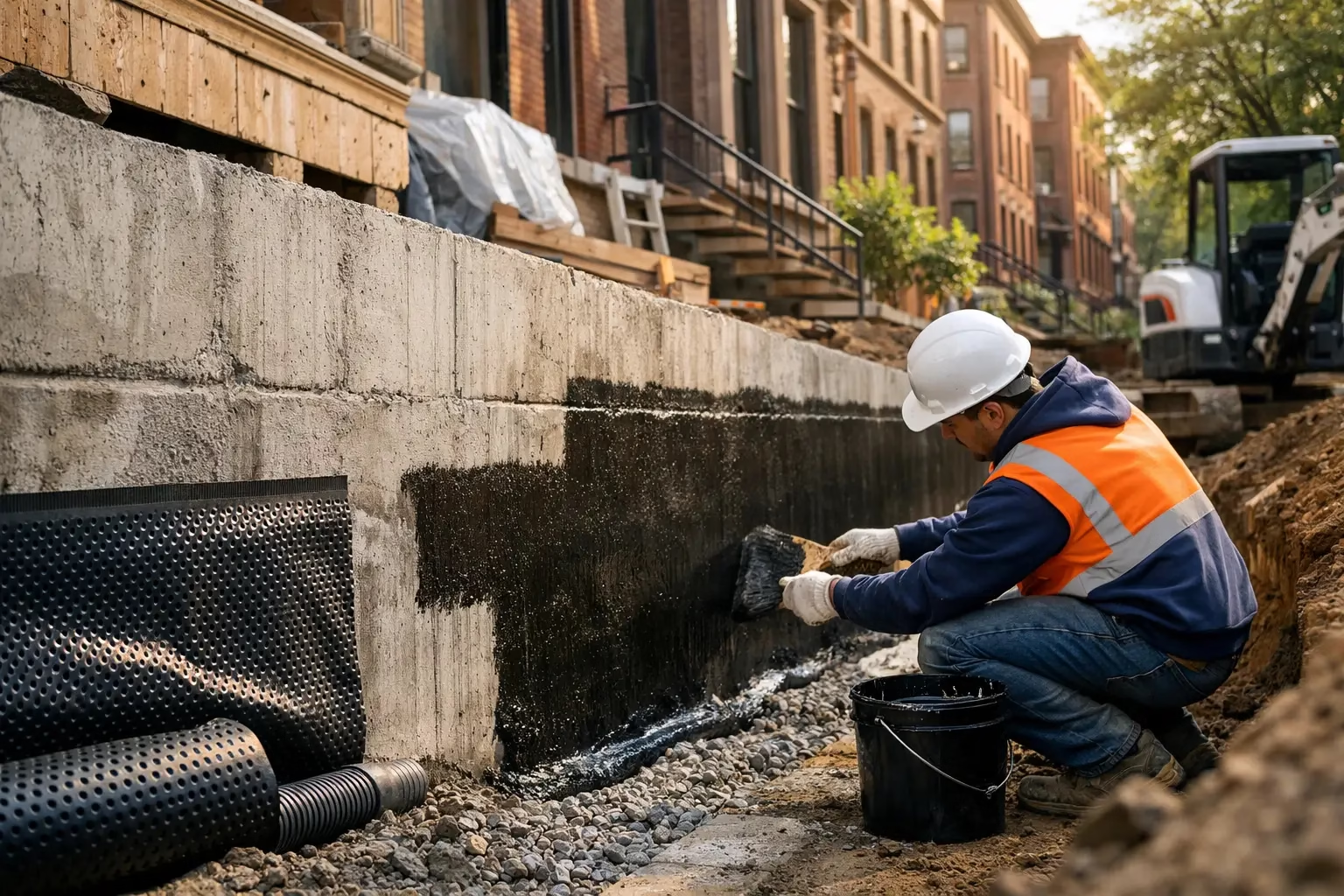
Exterior membrane waterproofing involves excavating down to the foundation footing, cleaning and repairing the wall, and applying a continuous waterproof barrier to the outside surface. Depending on the structure and site conditions, that barrier may be a liquid-applied rubberized membrane, sheet membrane, or another commercial-grade system designed for below-grade use.
This is often the best choice when a foundation has recurring water entry, cracked or deteriorated exterior masonry, or hydrostatic pressure from saturated soil. It protects the structure on the side where water is pushing, which helps preserve the wall itself rather than merely catching the leak indoors.
The trade-off is cost and access. Excavation takes planning, labor, and careful protection of nearby paving, landscaping, utility lines, and neighboring property. On an urban property, this work may also involve sidewalk restoration or coordination around exterior access. It is not the cheapest repair, but it is usually the most complete one when the exterior wall is accessible and water intrusion is significant.
Footing drains and exterior drainage boards
A waterproof membrane performs better when water is not allowed to sit against it. A footing drain, sometimes called a perimeter drain, is a perforated pipe installed near the base of the foundation. It directs groundwater away from the wall to an approved discharge point or sump system, depending on site conditions and local requirements.
Drainage board or protection board is commonly installed over the membrane. It shields the waterproofing during backfill and creates a path for water to travel down to the footing drain instead of building pressure against the wall.
For many projects, membrane waterproofing and footing drainage should be treated as one system. Installing a membrane without addressing trapped groundwater can leave the foundation under unnecessary pressure. Installing a drain without repairing the wall can allow water to continue entering through cracks and joints.
Cementitious waterproofing for masonry foundations
Cementitious waterproof coatings are applied to masonry or concrete surfaces and can be useful on sound, prepared walls. They are commonly used on the interior side of basement masonry, in utility areas, and as part of a broader repair plan. Some products bond well to damp substrates and are a practical option where a wall needs added protection but exterior excavation is not feasible.
The limitation is movement. Old brick and stone foundations can shift slightly with temperature changes, settlement, and moisture. A rigid coating can crack if the wall moves or if underlying mortar joints continue to deteriorate. Before coating, loose mortar, open joints, cracks, and damaged parging need to be properly repaired.
For NYC masonry buildings, this method works best as part of careful masonry restoration, not as a shortcut over failing brickwork. If water is entering through an exterior facade, below-grade coating alone may not solve the source.
Crack injection and localized foundation repair
When water enters through a specific crack in poured concrete, epoxy or polyurethane injection may provide a targeted repair. Epoxy is typically used where structural bonding is needed, while polyurethane is more flexible and can expand to help seal active water leaks. The right product depends on the crack, wall material, and whether the crack is dry, wet, stable, or still moving.
This is a cost-conscious solution for an isolated problem, but it is not a replacement for full waterproofing when several walls are damp or drainage is poor. A crack that returns after repair may be a sign of ongoing movement, pressure, or water accumulation outside the foundation.
Interior drain systems and sump pumps
When exterior access is blocked by adjoining buildings, finished hardscape, or practical budget limits, an interior perimeter drain can be a smart water-management solution. The system is installed along the inside edge of the basement slab, collects water that reaches the foundation, and directs it to a sump pit. A sump pump then moves the water out through an appropriate discharge route.
Interior drainage does not waterproof the exterior face of the wall. What it does well is relieve water pressure and keep the basement floor dry enough for storage, mechanical equipment, or a properly planned renovation. For an existing finished basement with repeated water problems, the space may need selective demolition so the system can be installed correctly and hidden behind new finishes.
A sump pump needs maintenance and dependable power. Properties with frequent storm-related flooding should consider a battery backup and should test the pump before heavy-rain seasons. A pump that has failed silently is not protection.
Start With Surface Water Before Digging
Many foundation leaks begin above ground. Gutters that overflow, missing downspouts, clogged leaders, low pavement, cracked areaway drains, and soil pitched toward the building can send large volumes of water directly to the foundation wall. Correcting these conditions may not solve every basement leak, but it can reduce the load on any waterproofing system.
Check that roof drainage carries water away from the building, not into a narrow side passage or against the facade. Repair damaged sidewalk joints, exterior cracks, and settled concrete that slopes toward the house. If an areaway drain repeatedly backs up, it should be cleaned, tested, and evaluated rather than covered over and forgotten.
For brownstones and attached homes, façade maintenance matters too. Open mortar joints, cracked brownstone, failed flashing, and damaged coping can allow water into the wall assembly, where it travels downward and appears in the basement far from its actual entry point. That is why a qualified contractor should inspect the full exterior condition, not just the wet interior wall.
Waterproofing or Damp Proofing: Know the Difference
Damp proofing slows soil moisture, while true waterproofing is designed to resist water under pressure. The difference matters when choosing a repair. A basic asphaltic damp-proof coating may be appropriate for limited moisture control on a low-risk wall, but it is not the right answer for a below-grade foundation with active seepage or recurring groundwater.
A clear scope should state what material will be used, how cracks and joints will be repaired, whether drainage will be included, and how the work area will be restored. Property owners should also ask how the contractor will protect adjacent masonry, pavement, and landscaping during excavation. Transparent details are more useful than a vague promise to “seal the basement.”
Choosing the Right Method for Your Property
Choose exterior membrane waterproofing with footing drainage when water is consistently entering from outside and excavation is possible. Choose an interior drain and sump system when groundwater is the issue but exterior work is restricted or disproportionate to the project. Use crack injection for isolated concrete cracks, and use cementitious coatings only after the masonry and water source have been properly addressed.
The best result often combines methods. For example, a Brooklyn row house may need repaired pointing and exterior drainage improvements at the rear, a targeted membrane along an accessible foundation wall, and an interior sump system to manage water during extreme storms. That is not overbuilding when each component addresses a different failure point.
Best Budget Construction approaches waterproofing as building protection, not just basement cleanup. A licensed, insured contractor can assess the foundation, masonry, drainage, and surrounding conditions, then provide a clear scope built around the work your property actually needs.
If you see staining, recurring dampness, loose basement finishes, or water after rain, address it before mold, damaged framing, and masonry deterioration make the repair larger. A timely inspection and a well-planned waterproofing system can keep a small warning sign from becoming a major restoration project.
