

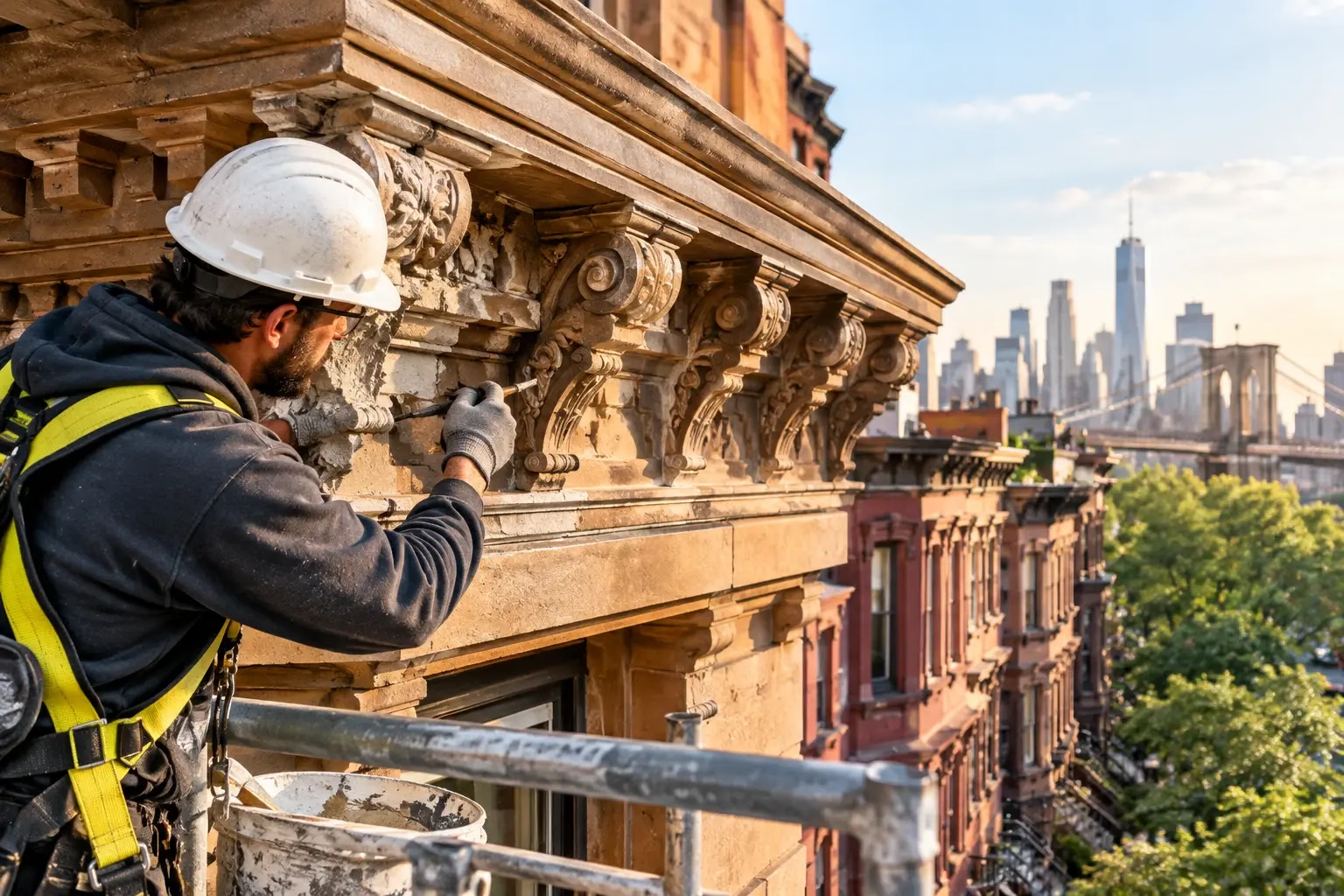
A cracked or missing cornice is not just an old-building cosmetic issue. In New York City, historic cornice restoration can be the difference between preserving a building’s character and dealing with falling debris, water damage, violations, or costly facade repairs later. For brownstone owners, landlords, and commercial property managers, the right repair starts with an honest assessment of what is failing and why.
Cornices sit at the top edge of a building, where they take years of rain, snow, wind, heat, and freeze-thaw cycles. On Brooklyn brownstones and older masonry buildings, those conditions eventually expose weak mortar, rusting metal anchors, split wood, cracked terra cotta, and failed coatings. A fresh coat of paint may hide the problem briefly, but it will not stop a loose projection from becoming a safety concern.
Why Historic Cornice Restoration Is Different
Historic cornice restoration is skilled exterior preservation work, not a standard patch-and-paint job. The goal is to stabilize the structure, remove unsafe material, reproduce missing profiles where needed, and protect the repair from water intrusion without making the finished work look out of place.
Many properties in Brooklyn Heights, Park Slope, Cobble Hill, Bed-Stuy, and Carroll Gardens have original architectural details that give the facade its value. A cornice may be pressed metal, sheet metal over a wood frame, carved wood, terra cotta, cast stone, or a combination of materials added during past repairs. Each material needs a different approach. Treating all cornices the same can create visible mismatches or trap moisture behind a repair.
The practical question is not always whether a cornice can be restored. It is whether restoration is the soundest long-term choice. If the core framing and attachment points are stable, selective restoration can preserve original details and control costs. If corrosion, rot, or structural movement has spread throughout the assembly, rebuilding sections may be safer and more economical than repeatedly patching failures.
Signs Your Building Needs Cornice Work
Property owners should inspect upper facade details after harsh winters, major storms, or roof leaks. The most serious problems are often visible from the street, but a close professional inspection is needed before anyone decides on the scope of work.
Common warning signs include:
- Cracks, open seams, or sections pulling away from the wall
- Rust stains, bubbling paint, and swelling metal panels
- Rotting wood, loose brackets, or missing decorative pieces
- Water marks on interior top-floor walls or ceilings near the roofline
- Debris on a sidewalk, stoop, roof, or neighboring property
A cornice problem often begins with water entering from above. Damaged flashing, clogged gutters, failed roof edges, and open masonry joints can send water behind decorative metal or wood. Once moisture gets inside, it can corrode fasteners and rot framing where the damage is hidden. That is why a reliable contractor looks beyond the visible crack and checks the roofing, parapet, coping, pointing, and drainage conditions around it.
What a Proper Restoration Process Looks Like
A dependable restoration plan begins with access and investigation. For a low-rise building, that may involve ladders and controlled work areas. Taller, more complicated buildings may require scaffolding, a lift, sidewalk protection, or other safety measures. The setup depends on the height, street conditions, public exposure, and the amount of material being repaired.
Inspection Before Repair
The first step is identifying the cornice material, its condition, and its connection to the building. We look for loose sections, failed seams, corrosion, rotten substrate, damaged brickwork, and roof conditions that could cause the same failure again. On older properties, it is also important to identify repairs that were completed decades ago. A cornice can look original from below while hiding modern patch materials or inappropriate fasteners.
A good scope of work separates urgent stabilization from restoration. If any section poses a falling hazard, it must be secured or removed safely first. Decorative reproduction comes after the building is safe and dry.
Repairing the Structure, Not Just the Surface
Once loose and deteriorated material is removed, the supporting wood or metal framing must be repaired or replaced as needed. Metal cornice sections can be cleaned, reinforced, soldered, patched, or fabricated to match the original shape. Wood elements may require epoxy repair or carefully milled replacement pieces. Masonry behind the cornice may need brick pointing, cement repair, or rebuilding before the decorative work goes back in place.
This is where shortcuts become expensive. Covering rusted metal with filler and paint without addressing corroded anchors will not create a secure repair. Installing a new decorative piece over wet or failing framing only delays the next failure.
Matching the Historic Profile
The visible profile matters. NYC brownstones often feature brackets, dentils, bands, modillions, and layered moldings that should look balanced across the entire facade. When a portion is missing, a contractor may use existing intact areas as a pattern for custom fabrication.
Exact duplication is not always necessary or practical, especially where extensive prior alterations exist. But the replacement should respect the scale, projection, rhythm, and finish of the original architecture. A mismatched cornice can make an otherwise well-maintained facade look patched together.
Material Choices and Budget Trade-Offs
There is no single best material for every historic cornice restoration. Preserving sound original sheet metal or wood is often the right choice for a landmark-quality appearance. For sections that are beyond repair, new metal fabrication can provide long service life and a close visual match. In some cases, fiberglass-reinforced or other composite architectural components may be considered for non-structural decorative sections.
The lower-cost option is not always the affordable option over time. A material that does not match the existing building, cannot handle the exposure, or is installed without proper flashing may need replacement much sooner. On the other hand, not every property needs a museum-level restoration. For rental properties and commercial buildings, the scope may focus on safety, weather protection, clean appearance, and durable maintenance within a defined budget.
An experienced contractor should explain those options plainly. You should know what is being saved, what is being replaced, what is causing the deterioration, and what work is recommended to prevent it from returning.
Best Budget Construction in Brooklyn & NYC
For aging brownstones, multifamily buildings, and small commercial properties, cornice repair is often connected to other exterior needs. A failing roof edge can damage the cornice. Open pointing joints can allow water into the facade. A cracked parapet can affect both safety and drainage. Handling these related conditions through one construction team helps avoid conflicting scopes and repeated mobilization costs.
Best Budget Construction approaches exterior restoration as practical building maintenance with craftsmanship behind it. We assess the full condition around the cornice, including masonry, roofing transitions, waterproofing, and paint failure, so the repair addresses the source of the damage rather than only the visible symptom.
License & Insurance credentials for all services
Exterior work above sidewalks and occupied spaces carries real risk. Property owners should work with a licensed, insured contractor that can explain the planned access, protection, repair sequence, and cleanup process. Proper coverage and documentation protect the building owner, residents, pedestrians, and workers when work is being performed at height.
For projects that may require permits, landmark coordination, or additional facade review, the work should be planned before demolition begins. Requirements can vary by building type, location, scope, and whether the property falls within a historic district. A site inspection is the right time to identify those issues.
100% OSHA guidelines compliant
Safe execution is part of a quality restoration. Cornice work can involve overhead hazards, unstable material, scaffolding, lifts, power tools, sharp metal, and active sidewalk areas. Work zones must be controlled, debris must be contained, and crews need the right fall protection and equipment for the site.
Owners should be cautious of estimates that sound unusually low because they leave out access, safety protection, disposal, or necessary structural repair. A transparent estimate may show these items separately, but they should not be ignored. The lowest upfront number can become the highest cost when work stops, damage spreads, or a repair has to be redone.
Free Estimate Call (917) 674-9488
If you see a loose cornice section, fresh rust staining, recurring leaks near the roofline, or pieces of material on the ground, do not wait for the next storm to test the condition. Take clear photos from a safe distance, keep people away from any suspected falling hazard, and schedule a professional inspection.
A well-planned restoration protects more than the decorative edge of your building. It helps preserve the facade, manage water, protect the public, and keep a historic NYC property looking like it belongs on its block for years to come.
