

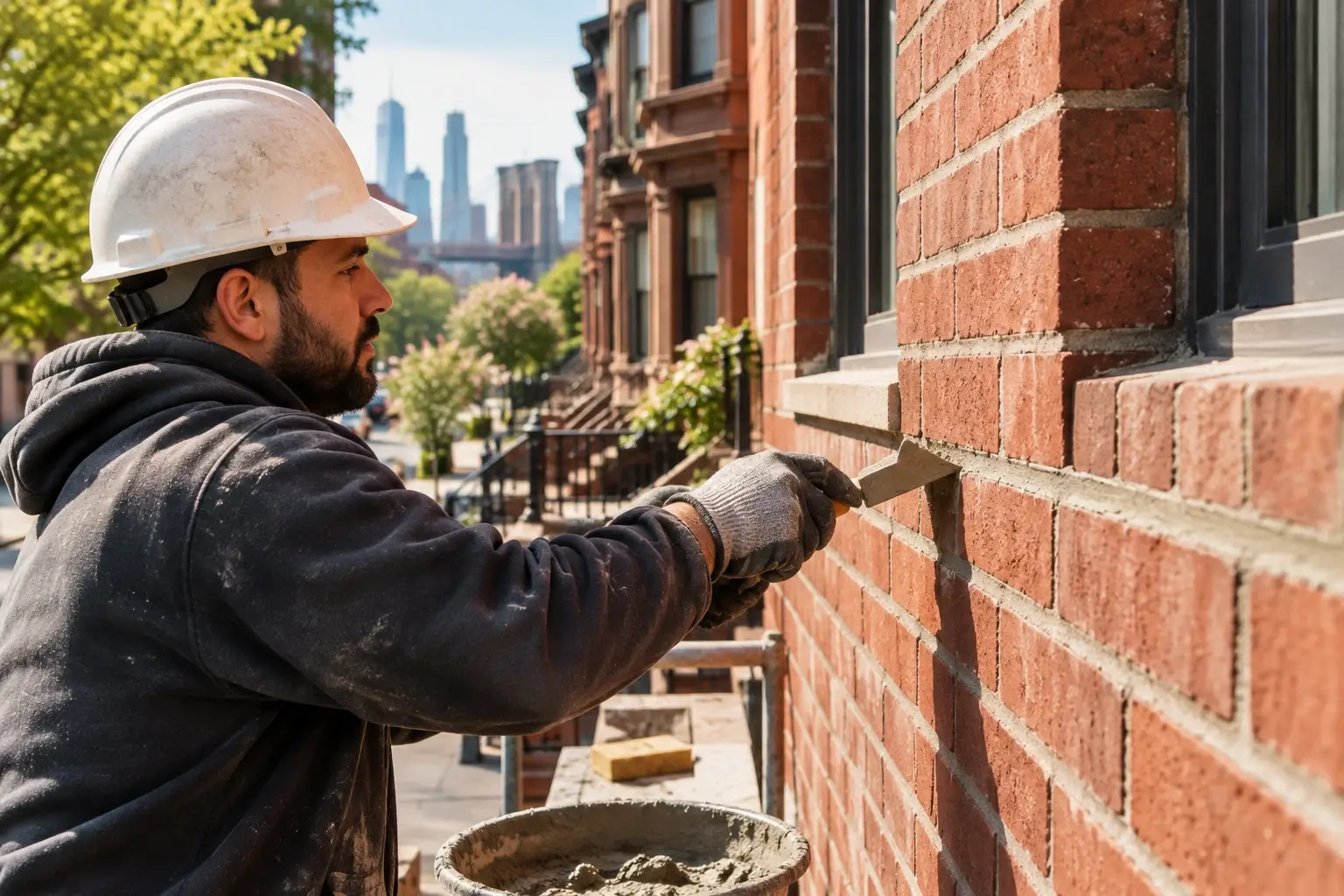
A failed mortar joint on a Brooklyn brownstone is rarely just a cosmetic problem. Water enters the open joint, sits behind the brick face, and expands when temperatures drop. Brick pointing with LPC adds another layer to that repair: the work must protect the building while meeting the New York City Landmarks Preservation Commission’s requirements for a designated property.
For owners and managers, the goal is straightforward. Repair deteriorated masonry before it turns into loose brick, interior leaks, spalling, or a larger facade project. The right approach is not simply filling cracks with whatever mortar is available. It is careful removal, compatible mortar, proper joint finishing, and a scope that respects the historic facade.
Brick Pointing With LPC: What Approval Covers
LPC is the New York City agency that reviews exterior changes to individually designated landmarks and buildings within historic districts. Many brownstones in Brooklyn Heights, Park Slope, Cobble Hill, Carroll Gardens, and Bedford-Stuyvesant fall under this review. If your property is not landmarked, LPC approval may not apply. If it is, do not assume a small repointing job can begin without checking the requirements.
The level of review depends on the condition of the wall and the proposed work. Localized in-kind repointing may have a simpler path than rebuilding a parapet, replacing large areas of brick, changing a cornice, or modifying a visible facade. LPC may want to see photos, marked-up elevations, mortar details, brick samples, and information about how joints will be tooled and colored.
Approval is not paperwork for paperwork’s sake. It helps prevent irreversible changes to historic masonry. A wall repaired with a too-hard mortar or a noticeably different joint profile can lose both its original appearance and its ability to manage moisture properly.
Start With a Close Facade Inspection
Before preparing an LPC submission or a repair estimate, inspect the whole affected elevation. Mortar failure often appears in patterns. You may see open vertical joints below a leaking gutter, soft mortar around window lintels, cracked coping at the parapet, or brick faces flaking near the sidewalk where salts and repeated wetting take their toll.
We look beyond the obvious missing mortar. The inspection should identify water sources, loose or shifted brick, failed flashing, damaged sills, deteriorated coping, and prior patchwork. Pointing alone will not solve a leak caused by an open roof termination or a broken leader pipe above it.
Match the Mortar Before Removing It
Older NYC brickwork often needs a lime-rich, more vapor-permeable mortar than modern Portland-cement-heavy mixes. The correct mix depends on the age and hardness of the brick, the existing mortar, wall exposure, and the original construction. There is no one-bag solution for every brownstone.
A mortar that is too hard can force moisture through the surrounding historic brick rather than allowing the joint to do its job. That can contribute to spalling, where the brick face breaks away. A mix that is too weak or poorly installed will wash out early. Color matters as well, but performance comes first.
Joint shape is another detail LPC may review. Flush, concave, weathered, and ribbon joints create different appearances. On a prominent street facade, a mismatched joint can be visible from the sidewalk even when the new mortar color is close.
How Professional Brick Pointing Is Performed
Good pointing is controlled masonry repair, not surface patching. The damaged mortar is removed to a sound depth without chipping the brick edges. Joints are cleaned of dust and loose material, then prepared so the new mortar can bond correctly.
New mortar is generally placed in layers rather than packed into a deep void all at once. The mason allows the material to reach the right stage before tooling the joint to match the existing profile. Work also has to be scheduled around weather. Mortar should not be applied to frozen masonry, and freshly completed joints need protection from excessive rain, direct heat, or rapid drying.
For a typical landmarked facade, the sequence may include:
- documenting existing conditions with clear photos and measured areas
- confirming the LPC permit path and required repair details
- setting safe access, such as scaffolding or pipe scaffolding where needed
- removing failed mortar carefully and repairing unstable brick or masonry units
- installing compatible mortar, matching the joint finish, and cleaning the work without damaging the facade
The exact scope changes when there are bulging walls, cracked lintels, unstable parapets, or extensive water damage. Those conditions may require structural masonry repair, steel work, roofing corrections, waterproofing, or a larger facade restoration plan.
Common Mistakes That Cost NYC Owners More
The most expensive masonry repairs often begin as small jobs handled the wrong way. Smearing new mortar over loose or powdery joints does not create a durable repair. It hides the problem for a short time, then separates from the wall.
Using a grinder without control can scar brick arrises, the sharp edges that define each brick. Aggressive acid washing can also damage historic material and change the wall’s appearance. On a landmarked facade, that kind of damage may create extra repair work and problems during review.
Another common mistake is treating repointing as a substitute for water management. If the cornice, roof flashing, window perimeter, coping, or leader is allowing water behind the brick, the new mortar will be under stress from day one. A practical scope connects the masonry repair to the source of deterioration.
Owners should also be cautious of estimates that offer one price per square foot without inspecting access, height, brick condition, mortar depth, and permit needs. A rear-wall repair reached from a yard is not priced or performed like a fifth-floor front facade over a busy Brooklyn sidewalk.
License & Insurance credentials for all services
Exterior masonry work carries real risk. It involves ladders, scaffolding, debris control, occupied buildings, pedestrians, and sometimes work close to roof edges or public sidewalks. Property owners should ask who is responsible for the site, what insurance is in place, how access will be managed, and whether the contractor understands NYC permit and landmark conditions.
Best Budget Construction in Brooklyn & NYC approaches brick pointing as part of a complete building repair plan. Our team can coordinate masonry, waterproofing, roofing, cornice restoration, stucco, and related exterior repairs so an owner is not left hiring separate trades to correct the same water issue. Clear scope, visible craftsmanship, and practical recommendations matter more than selling work a building does not need.
100% OSHA guidelines compliant work practices
Safe execution protects the workers, your building, and the people walking below the project. Proper access and fall protection are not optional details. Depending on the building and the scope, the site may need sidewalk protection, controlled material handling, scaffolding inspections, debris containment, and a plan for keeping entrances usable.
It also helps to schedule work around the realities of an occupied NYC property. Tenants need notice when access, windows, parking, or building entrances may be affected. Commercial operators need a contractor who can keep the work area organized and avoid unnecessary disruption to customers.
When to Schedule Brick Pointing
Do not wait until mortar is missing across the entire wall. Schedule an inspection when you see open joints, crumbling mortar, water stains indoors, white mineral deposits on brick, loose pieces around a parapet, or repeated leaks after heavy rain. Early repair is usually more affordable than rebuilding brick that has already deteriorated.
Spring and fall often provide favorable conditions for masonry work, but the best timing depends on the weather, LPC review period, access requirements, and the urgency of the condition. An active water problem or unsafe facade area should be evaluated immediately rather than held for a preferred season.
Free Estimate Call (917) 674-9488
A useful estimate starts with a site visit and an honest discussion of what the facade needs now, what can be monitored, and what related conditions should be corrected at the same time. For landmarked properties, bring any prior LPC approvals, facade reports, or maintenance records to the visit if available.
The best time to address a failing joint is while it is still a pointing repair. Protecting original brick, keeping water out, and matching the building’s historic character is a practical investment in the property you already own.
