

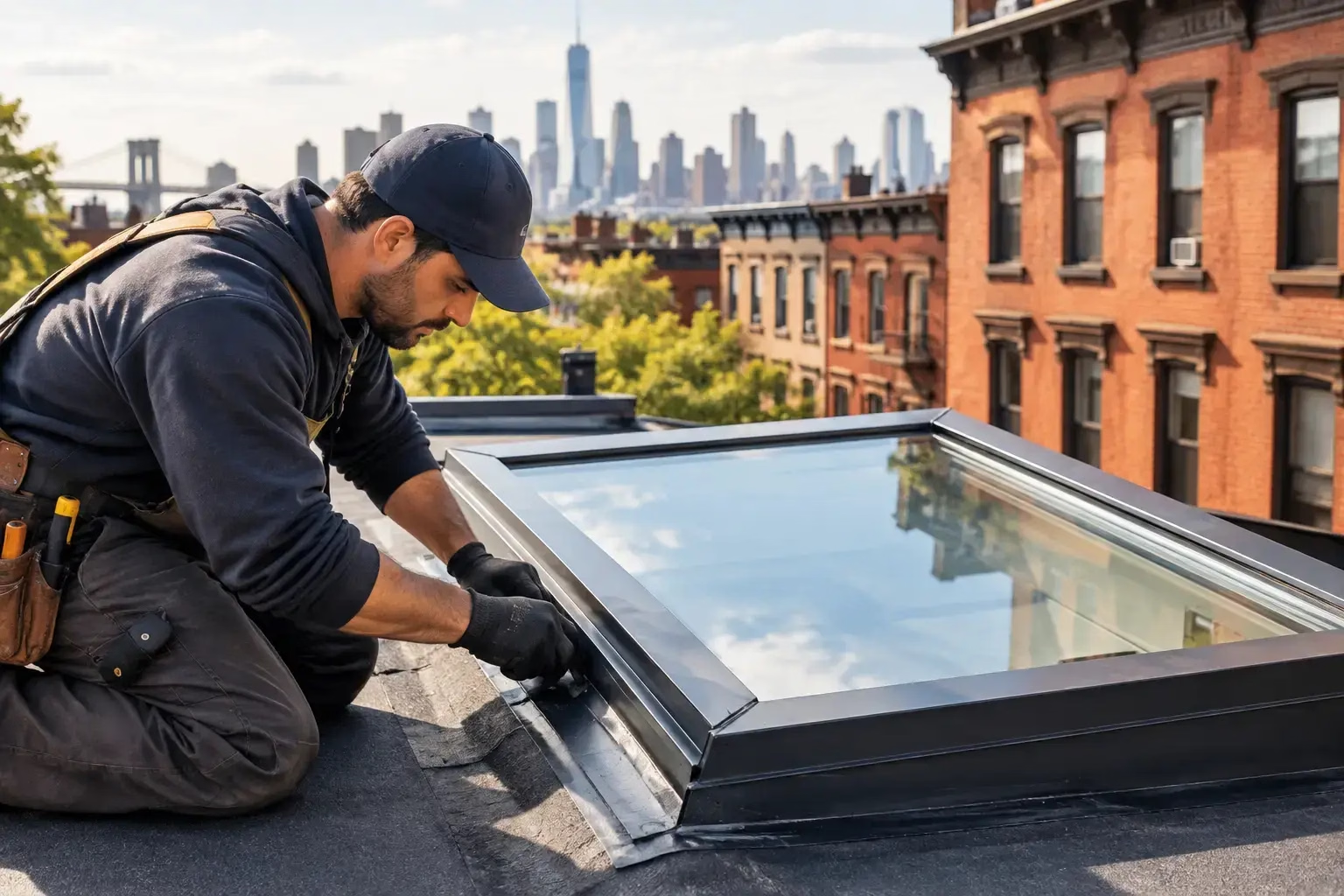
A skylight leak rarely stays a skylight leak for long. Water can travel along roof decking, rafters, insulation, and ceiling framing before it shows up as a stain or drip. To fix leaking skylight problems correctly, NYC property owners need to identify where water is entering, address the roof system around the unit, and repair any interior damage only after the area is dry.
A bucket under the drip may protect the floor for the night, but it is not a repair plan. In Brooklyn brownstones, townhouses, multifamily buildings, and older commercial properties, delayed skylight repairs can lead to damaged plaster, mold growth, rotted framing, electrical concerns, and a much larger roofing bill.
Why Skylights Leak in NYC Properties
The skylight itself is not always the source of the failure. Many leaks come from the flashing system that ties the skylight into the surrounding roof. Flashing directs rainwater around the opening. If it is installed incorrectly, corroded, loose, or covered by failing roofing material, water finds a path below the roof surface.
Age is another common factor. Gaskets and seals can become brittle after years of sunlight, freezing temperatures, and summer heat. Acrylic domes may crack. Glass skylights can lose their seal, causing condensation between panes or water intrusion at the frame. On a flat or low-slope roof, ponding water can expose weak seams that did not leak when the roof was newer.
In neighborhoods with aging masonry and roofing systems, such as Park Slope, Brooklyn Heights, Bed-Stuy, and Carroll Gardens, we also see leaks that appear to be skylight failures but begin higher up the roof. A damaged parapet, failed coping, blocked drain, deteriorated roof membrane, or open masonry joint can send water toward the skylight opening.
Fix Leaking Skylight Issues by Finding the True Source
The first step is to determine whether the moisture is rainwater, condensation, or a plumbing leak from another source. A stain that worsens during or shortly after rainfall points toward the roof or skylight. Moisture that appears mainly in cold weather may be condensation caused by poor ventilation, insufficient insulation, or warm interior air meeting a cold skylight surface.
A professional inspection should include the skylight glazing, curb, frame, interior shaft, exterior flashing, roof membrane or shingles, drainage paths, and nearby penetrations. The goal is not to apply caulk wherever water is visible. The goal is to identify the first point where water enters the assembly.
Caulk has a limited role. It can seal a small, clean joint when used with the correct compatible material, but it cannot replace missing flashing, repair a failed curb, or solve cracked roofing around the opening. Heavy applications of roofing cement can also trap water and make a future repair harder to diagnose.
When a Skylight Repair Is Enough
Repair is often the right choice when the skylight glass or dome is intact, the frame is sound, and the issue is isolated to flashing or the surrounding roof covering. For example, a roofer may be able to remove damaged shingles or membrane material, install a proper flashing sequence, replace deteriorated sealant, and restore the roof surface around the unit.
A repair can also make sense when a newer skylight has been damaged by wind, falling debris, or poor workmanship from a previous roof project. The key is whether the unit still performs as intended after the roof connection is rebuilt.
Interior repairs should wait until the roof leak is stopped and the affected framing and drywall have had time to dry. Painting over a water stain too early only hides the evidence. If wet insulation or drywall has deteriorated, it may need removal and replacement to avoid odors and mold conditions.
When Replacement Is the Better Investment
Replacement is usually more cost-effective when the skylight is near the end of its service life, the glazing is cracked, the frame is warped, or the insulated glass seal has failed. Repeated repairs to an outdated unit can cost more than replacing it with a properly sized, energy-efficient skylight and a compatible flashing system.
Replacement is also worth considering during a roof replacement. Installing a new roof around an old skylight creates a weak link. If the existing unit fails a year later, sections of the newer roofing may need to be opened again to access the flashing. Coordinating the skylight and roof work at the same time usually provides a cleaner result.
For flat-roof buildings, the curb deserves close attention. A curb that is too low, poorly flashed, or damaged by water can allow wind-driven rain to enter. On brownstones and attached homes, access, roof pitch, neighboring walls, and drainage layout can affect the repair approach. There is no one-size-fits-all skylight repair.
License & Insurance credentials for all services
Skylight work is roofing work, and roofing work involves real safety and property-protection concerns. A contractor should be able to evaluate the complete roof condition, not just patch the visible opening. That matters in NYC, where roof access, old construction, shared walls, and changing building conditions can make a simple-looking leak more complicated.
Choose a contractor who is properly licensed and insured for the work being performed. Ask what is causing the leak, what materials will be replaced, whether the flashing will be rebuilt, and whether the proposal includes interior restoration if the ceiling has been damaged. A clear scope protects property owners from vague patch jobs and surprise add-ons.
At Best Budget Construction, we approach leaking skylights as part of the entire building envelope. Our team handles roofing, waterproofing, masonry, interior repair, painting, and restoration work, so clients do not have to coordinate separate crews when a roof leak has also damaged ceilings, walls, or finishes.
100% OSHA guidelines compliant
Safe execution matters as much as a watertight repair. Roof edges, ladder access, skylight openings, and wet surfaces create hazards that should never be treated casually. Proper fall protection, controlled work areas, and careful material handling help protect workers, occupants, and the property throughout the job.
For landlords and property managers, this is especially important when work is being performed above occupied units or active commercial spaces. A professional plan considers access, debris control, weather conditions, tenant communication, and the protection of interior finishes below the work area.
What to Do Before the Repair Crew Arrives
If water is actively dripping, move furniture and electronics away from the affected area. Place a container below the drip and protect flooring with towels or plastic sheeting. If the ceiling is bulging, do not ignore it. Water can collect above drywall and cause part of the ceiling to collapse. Keep people clear of the area and contact a qualified contractor promptly.
Do not climb onto a wet roof or attempt to cover the skylight with loose plastic in high wind. That can create a serious fall hazard and may cause more roof damage. If there is water near light fixtures, switches, or electrical equipment, turn off power to the affected circuit only if it is safe to do so, then contact an electrician or emergency professional as needed.
Take clear photos of the interior staining, active drips, and any visible exterior damage from a safe location. These details can help document the condition and make the inspection more efficient.
Best Budget Construction in Brooklyn & NYC
A skylight should bring daylight into your property, not recurring water damage and repair bills. Whether the issue is failed flashing, aging roofing, a cracked unit, or water entering from another part of the roof, the right repair starts with a thorough inspection and an honest recommendation.
Free Estimate Call (917) 674-9488
If you see a ceiling stain, hear dripping after rain, or notice moisture around a skylight frame, address it before the next storm makes the damage worse. Call for a free estimate and get a practical scope of work built around your roof, your building, and your budget.
