

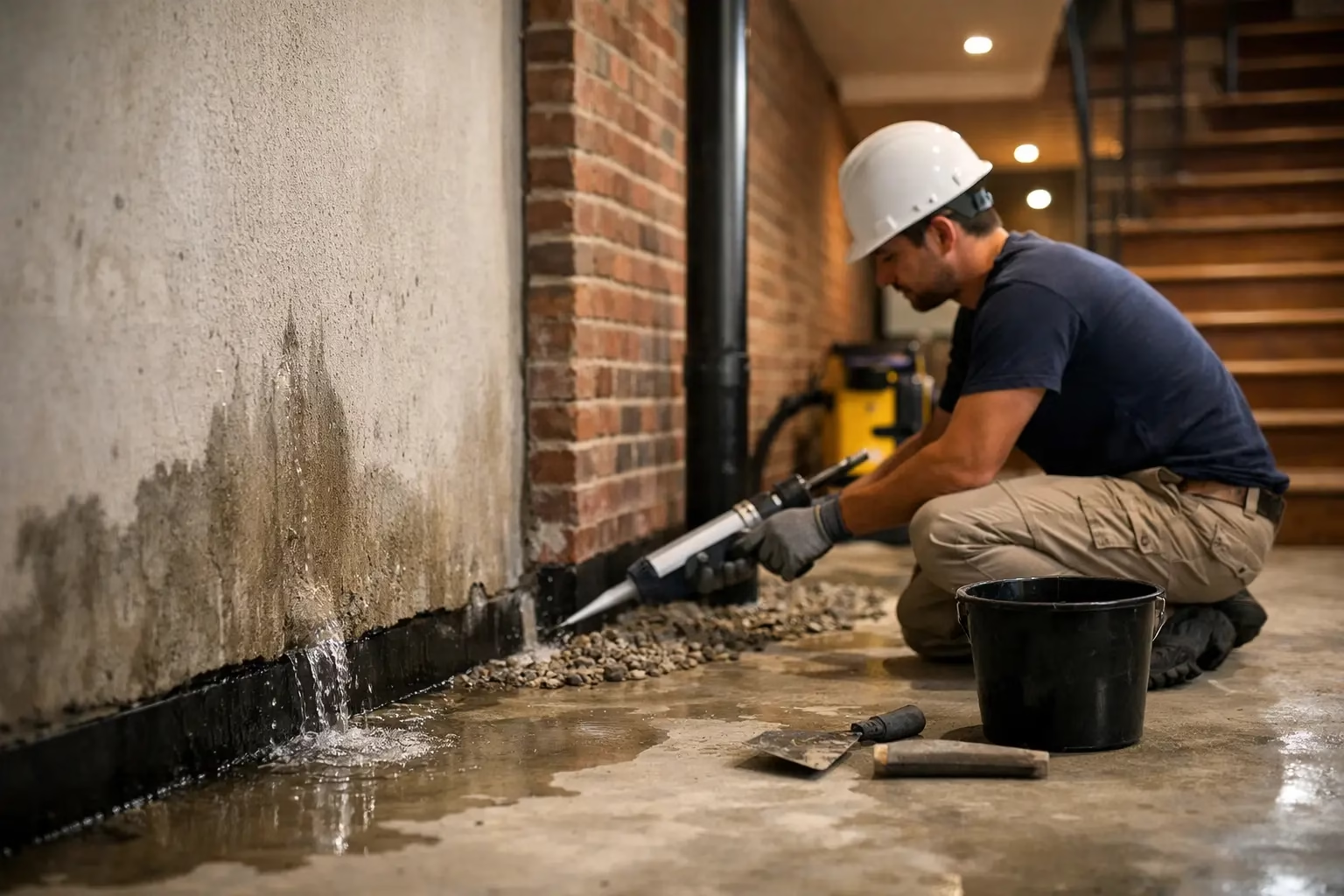
A damp basement usually does not start with a flood. It starts with a dark line at the wall joint, peeling paint, a musty smell, or a small wet patch that shows up after heavy rain. If you are trying to figure out how to stop basement water seepage, the real job is finding where the water is getting in and fixing the condition that allows it to happen.
In Brooklyn brownstones, older row houses, and many mixed-use buildings across NYC, basement seepage is rarely caused by one issue alone. Aging masonry, worn mortar joints, poor exterior drainage, sidewalk pitch, foundation cracks, and hydrostatic pressure often work together. A quick patch might slow the problem for a while, but lasting results come from treating the source.
How to stop basement water seepage starts with the source
Water in a basement can move through more paths than most owners expect. It can come through foundation wall cracks, around pipe penetrations, through porous masonry, at the cove joint where the floor meets the wall, or up through the slab when groundwater pressure rises. In older homes, especially those with fieldstone or brick foundations, the wall itself may absorb and pass moisture even when there is no obvious crack.
That is why the first step is diagnosis, not guesswork. Look at when the seepage happens. If it appears only after driving rain, the issue may be exterior grading, roof drainage, or facade and pointing failure. If it shows up after several wet days even without direct rain, groundwater pressure is more likely. If one corner is always damp, you may be dealing with a localized crack, failed waterproof coating, or exterior settlement.
You also want to separate seepage from plumbing problems. A leaking supply line, waste line, or condensate drain can mimic foundation water. The pattern usually tells the story. Rain-related water tends to spread from walls or slab edges. Plumbing leaks often create isolated wet areas that do not match the weather.
Fix the outside before sealing the inside
Many basement water problems start above grade. Gutters that overflow, downspouts that discharge too close to the building, and sloped concrete that sends water toward the foundation can dump a surprising amount of water right where you do not want it. In tight urban lots, where buildings sit close together and exterior access is limited, even small drainage mistakes can keep a basement wet.
Start with roof drainage. Gutters should be clean, pitched correctly, and sized to handle heavy storms. Downspouts need to carry water away from the building, not drop it beside the foundation. If a rear yard or side passage holds water, that standing water can migrate toward the basement wall over time.
Then look at grading and hardscape. Soil or paving should pitch away from the structure whenever possible. In NYC properties, the challenge is often concrete patios, sidewalks, areaways, and narrow side paths that have settled over the years. A small depression near the house can channel water directly to the foundation. Correcting that pitch often makes a bigger difference than any interior coating.
Facade condition matters too. Open mortar joints, deteriorated brick, failed stucco, and cracked parging can let water enter the wall system and travel downward. In older Brooklyn homes, that moisture often shows up in the basement even though the failure started higher on the building.
Interior signs that tell you what kind of seepage you have
Not all water entry means the same repair. If you see a clean vertical crack with active dripping, that may be a crack injection or structural repair situation. If the paint is bubbling across a broad area of masonry, the wall may be absorbing moisture from outside. If water appears along the full perimeter where wall meets floor, hydrostatic pressure under the slab is a stronger suspect.
Efflorescence is another clue. That white, chalky residue on masonry means water is moving through the material and leaving mineral deposits behind. Efflorescence itself is not the main problem, but it confirms that moisture is active in the wall.
Musty odors also matter. Even minor seepage can create enough humidity for mold growth, especially in basements that were finished without proper waterproofing or vapor management. If the basement is being used for storage, laundry, or living space, moisture control is not just about the wall. It is also about air quality, framing durability, and protecting flooring and finishes.
Crack repair, coatings, and waterproofing systems
Homeowners often ask whether a waterproof paint or masonry sealer is enough. Sometimes it helps, but it is not a cure for active water pressure. If water is being forced through a crack or through the wall under pressure, a coating alone usually fails sooner or later.
For isolated cracks, professional injection with epoxy or polyurethane can be effective, depending on whether the crack is structural or mainly a water path. The right material matters. One product is not for every crack, and a crack that continues to move may reopen if the root cause is not addressed.
For porous foundation walls, exterior waterproofing is usually the strongest long-term fix. That can involve excavation, wall repair, waterproof membrane installation, drainage board, and proper backfill. It is more labor-intensive and costs more upfront, but it deals with water before it enters the building. On many properties, especially where there is recurring seepage or finished basement space, this is the repair that makes sense.
Interior waterproofing systems have a place too. If exterior excavation is not practical because of lot lines, neighboring structures, or cost, an interior drainage system with a sump pump can manage groundwater effectively. This does not stop water from reaching the foundation wall, but it relieves pressure and directs water away before it damages the space. That trade-off matters. It is a management system, not the same thing as keeping the exterior wall completely dry.
How to stop basement water seepage in older NYC homes
Older homes in neighborhoods like Park Slope, Brooklyn Heights, and Bed-Stuy often come with conditions you do not see in newer construction. Stone and brick foundations can be more porous. Mortar joints may be weak. Past repairs may have layered incompatible materials over the years, trapping moisture instead of controlling it.
That means the repair should match the building. Hard cement over soft historic masonry can create new problems. So can finishing a basement with drywall and flooring before moisture issues are fully solved. A lot of expensive basement remodels fail because waterproofing was treated as an afterthought.
In these buildings, it often takes a combination approach: exterior masonry repair, proper pointing, drainage correction, foundation crack sealing, and interior moisture control. This is where working with a contractor who understands both waterproofing and building restoration matters. You do not want one company fixing the symptom and another missing the real cause.
When seepage is a warning sign, not just a nuisance
Some water entry is annoying but manageable. Some points to a bigger structural or maintenance problem. If cracks are widening, walls are bowing, floors are heaving, or seepage is carrying soil into the basement, do not wait. Those signs can indicate settlement, pressure buildup, or deterioration that needs immediate attention.
Repeated seepage also affects more than the basement itself. It can damage framing, electrical systems, insulation, and stored contents. In rental or mixed-use buildings, it can lead to tenant complaints, mold concerns, and more expensive repairs down the road. What starts as a small leak can turn into a renovation project if it is ignored long enough.
What a practical repair plan looks like
The right fix depends on access, budget, and building condition. Sometimes the answer is straightforward: extend downspouts, repitch pavement, seal one crack, and install a dehumidifier. Other times the basement needs a broader scope that includes masonry repair, exterior waterproofing, drainage upgrades, and sump pump installation.
The key is not to oversell a minor issue or underscope a serious one. A cheap patch is only affordable if it works. If the same seepage returns every storm, you are paying twice.
For property owners who want to finish a basement, waterproofing should come first, before framing, flooring, or paint. That sequence saves money and avoids tearing out new work later. For landlords and commercial owners, a proactive inspection is often the difference between a planned repair and an emergency call.
If you are dealing with ongoing seepage, get the basement and the exterior looked at together. A dependable contractor should be able to explain where the water is entering, what repair options make sense, and where the trade-offs are between short-term control and long-term prevention. Best Budget Construction handles that kind of work with the practical approach NYC owners expect – licensed, insured, and focused on getting the problem fixed the right way.
Basement water rarely fixes itself, and it usually gets more expensive the longer it sits. A clear diagnosis and the right repair plan can turn a damp, unreliable basement back into usable square footage and peace of mind.
