

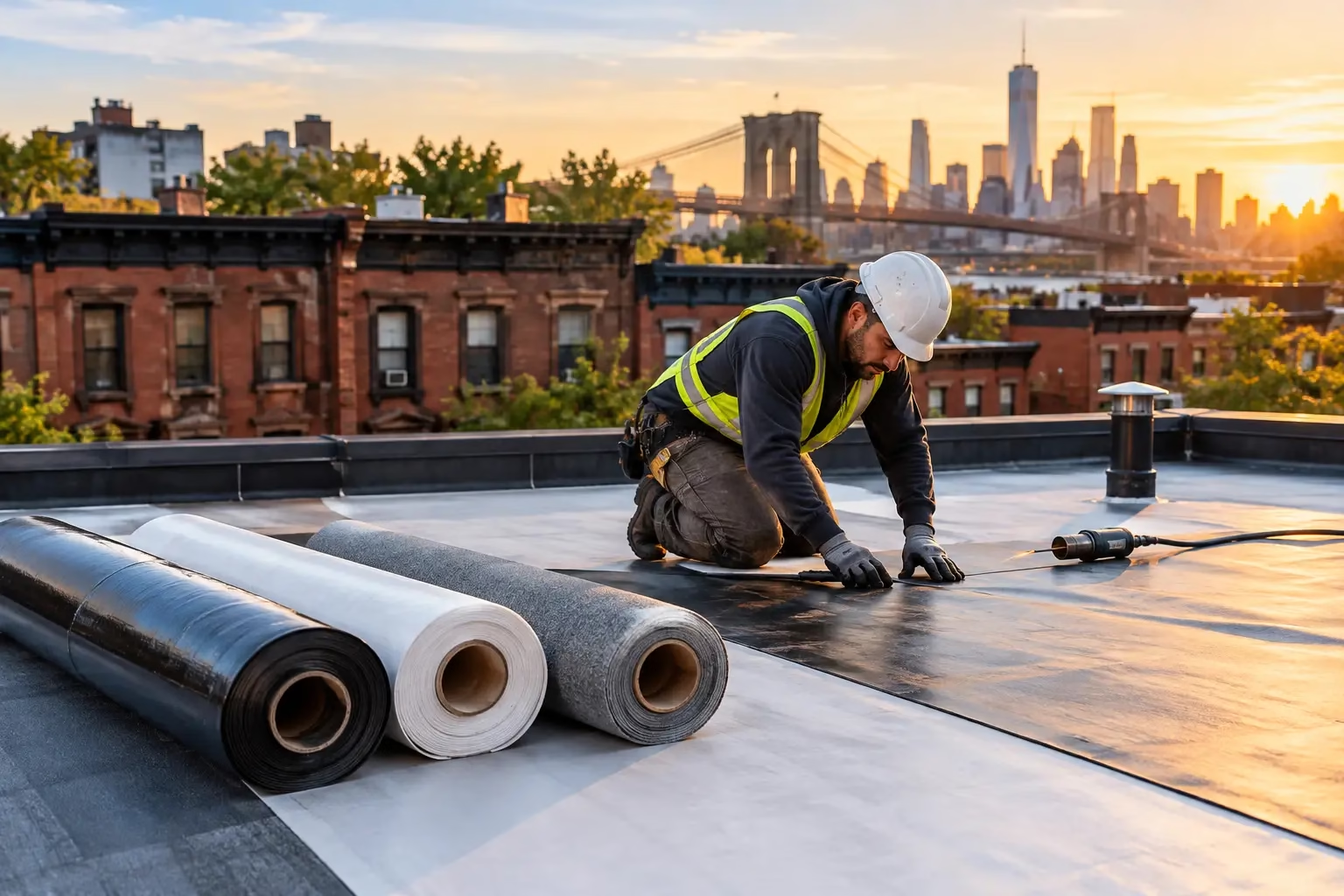
A flat roof can look fine from the sidewalk and still be one heavy rain away from a ceiling stain, damaged insulation, or a tenant complaint. That is why a proper roof membrane comparison matters for NYC property owners. The right material is not simply the one with the lowest installed price. It must fit the roof’s drainage, foot traffic, existing conditions, building use, budget, and expected repair needs.
In Brooklyn brownstones, mixed-use buildings, and commercial properties, roofing decisions are rarely made on a clean, empty deck. There may be old layers below, masonry parapets, coping issues, rooftop equipment, skylights, drains, and years of patchwork repairs. A membrane performs only as well as the system beneath and around it.
Roof Membrane Comparison: The Materials That Matter
The most common choices for low-slope roofs are modified bitumen, EPDM, TPO, and PVC. Each can be a sound choice when installed correctly. The mistake is treating them as interchangeable.
Modified bitumen is an asphalt-based membrane installed in rolls, usually in multiple layers. It remains a familiar option on NYC buildings because it handles detail work well and can be practical for roofs with many penetrations, uneven surfaces, or complicated edges. It is available in torch-applied, cold-applied, and self-adhered systems. On occupied urban properties, cold-applied or self-adhered installation may be preferred when flame work presents added safety and insurance concerns.
EPDM is a synthetic rubber membrane, commonly black, though lighter options exist. It has a long track record and performs well through temperature changes. EPDM can be economical on larger, simpler roof areas, but seams and flashing details require careful workmanship. A black membrane also absorbs heat, which may be less attractive for a building owner focused on rooftop temperature and energy use.
TPO is a white single-ply membrane with heat-welded seams. It is popular because the reflective surface can reduce heat absorption and the welded seams create strong, continuous connections when completed correctly. TPO quality varies by manufacturer and thickness, so a low bid that does not clearly identify membrane thickness, insulation, flashing, and warranty coverage deserves questions.
PVC is another heat-welded single-ply material. It is often selected for commercial roofs, restaurants, and buildings where grease, oils, and chemical exposure may be a concern. PVC is usually more expensive than TPO, but it can offer excellent seam strength and long-term performance in the right setting. It is not automatically the best choice for every residential roof, especially if the added cost does not solve a specific property problem.
What NYC Conditions Change the Decision
New York roofs take a beating. Winter freeze-thaw cycles can open weak flashing details. Summer heat stresses materials and accelerates aging. Wind can lift poorly secured edges, while leaves, debris, and nearby construction dust clog drains. On older Brooklyn properties, the roof is also connected to parapet walls, cornices, masonry joints, and roof access structures that may need repair at the same time.
Drainage comes first. No membrane is designed to sit under standing water for extended periods because a roof drain is clogged or the deck has low areas. Before choosing a material, inspect the slope, scuppers, internal drains, overflow drains, and the condition of the existing substrate. If the roof holds water after 48 hours of dry weather, the project may need tapered insulation, localized slope correction, or deck repairs instead of another membrane laid over the same problem.
Foot traffic also changes the recommendation. A roof that only sees occasional maintenance access has different needs than one with HVAC equipment, solar hardware, or regular service visits. Walk pads, reinforced paths, and protected service areas should be part of the scope. Repeated foot traffic can damage any membrane if it is not planned for.
For brownstones and attached homes in Park Slope, Brooklyn Heights, Cobble Hill, and Bed-Stuy, detailing is often more important than the membrane label. The transitions at parapet walls, chimney bases, skylights, bulkheads, and shared party walls are where leaks commonly begin. A contractor should examine those points before offering a final recommendation.
Modified Bitumen vs. Single-Ply Membranes
Modified bitumen often makes sense when a roof has a lot of irregular detailing or when the owner values a layered system with a proven repair history. It can be easier to patch in many cases, and experienced crews know how to integrate it with existing flashing conditions. The trade-off is that installation can be more labor-intensive, and reflective cap sheets may still need maintenance over time.
TPO and PVC can create clean, reflective roof surfaces with welded seams. On a large open roof, they can install efficiently and deliver strong water resistance. Their success depends heavily on proper welding, fastening patterns, edge securement, and flashing work. A single-ply roof with rushed seams is not a bargain.
EPDM remains worth considering for simple, lower-budget roofs where its flexibility and established performance fit the project. It is less about choosing a material that sounds newest and more about selecting a complete system that matches the building. A sound EPDM installation is better than a poorly specified TPO installation every time.
License & Insurance credentials for all services
Roof work affects the building envelope, occupants, neighboring properties, and sometimes public safety below. Price matters, but a proposal should also show who is responsible for the work. Ask whether the contractor is licensed and insured, whether the crew has experience with the proposed membrane, and whether the estimate includes removal, substrate inspection, insulation, flashing, drains, edge metal, cleanup, and disposal.
A vague quote can become expensive once work begins. For example, an estimate that says only “new flat roof” may not account for wet decking, deteriorated parapet coping, rotted wood blocking, or improperly terminated old flashing. These are not rare surprises on aging NYC buildings. A clear scope does not eliminate every hidden condition, but it gives the owner a realistic path for handling them.
100% OSHA guidelines compliant
Safe roof installation is not paperwork. It affects how the crew accesses the building, protects pedestrians, handles materials, controls fall hazards, and performs hot work when applicable. A contractor should plan for safe staging, roof-edge protection, debris control, and site conditions before work starts.
This matters especially on dense city blocks where neighbors are close, sidewalks are active, and access is limited. A careful crew protects the property as well as the people working on it. It also helps keep the project moving without preventable delays caused by unsafe site practices.
When a Roof Repair Is Enough
A full replacement is not always necessary. If the membrane is generally sound and the issue is limited to a few failed seams, punctures, drain details, or localized flashing areas, a targeted repair may extend service life. The key is diagnosing the source rather than covering the visible symptom.
Repeated leaks in different areas, widespread blistering, brittle membrane surfaces, saturated insulation, failing seams, and chronic ponding usually point toward a larger project. Coating a roof that has wet materials below or major flashing failure can delay the real repair without correcting the cause.
An honest evaluation should separate immediate leak control from the long-term plan. Sometimes the right move is an emergency repair now, followed by a planned replacement during better weather or before a major renovation. That approach can protect the building while giving the owner time to budget properly.
Best Budget Construction in Brooklyn & NYC
Best Budget Construction approaches roofing as part of the whole building, not an isolated surface. On many properties, roof work may connect to waterproofing, brick pointing, facade repair, cornice restoration, or interior water damage repair. Looking at those conditions together can prevent a new roof from being blamed for water entering through failing masonry or wall flashing.
Our recommendations are based on the roof in front of us, not a one-material sales pitch. We explain what needs attention, what can wait, and where spending more will actually improve the roof’s service life. That practical approach is especially valuable for landlords, homeowners, and small commercial operators balancing maintenance needs with real operating costs.
Free Estimate Call (917) 674-9488
The best membrane is the one installed over a sound, properly drained roof deck with careful flashing and a clear scope of work. If your roof is leaking, showing wear, or approaching the end of its service life, start with an on-site evaluation before choosing a material. A straightforward estimate can help you decide whether a focused repair, restoration, or full replacement makes the most financial sense for your property.
