

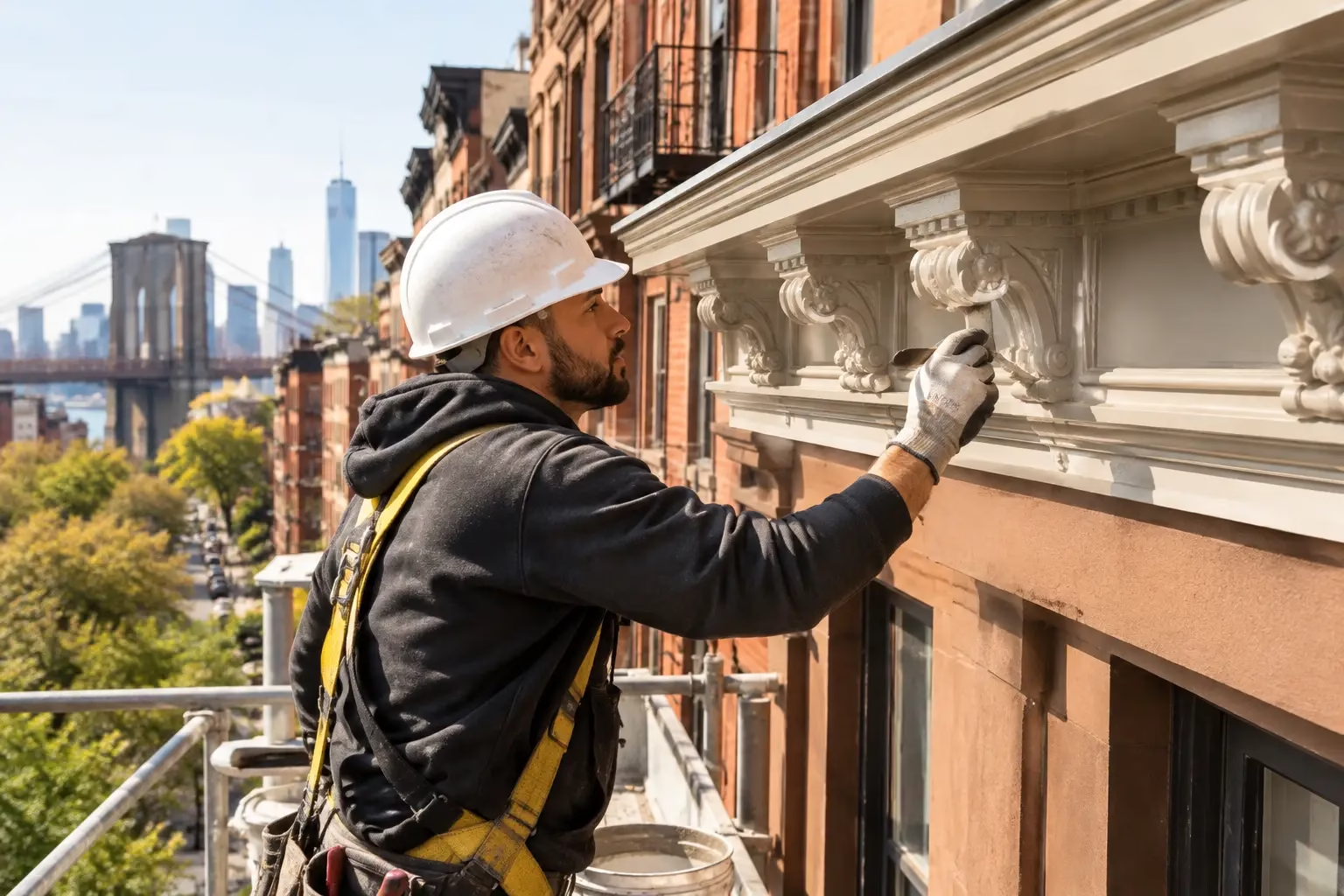
A cracked or sagging cornice is not just an old-building cosmetic problem. In Brooklyn and across NYC, it can allow water behind the facade, loosen masonry, create falling-debris risks, and lead to expensive violations if it is ignored. Hiring the right cornice restoration contractor means finding a team that understands both decorative historic details and the structural work behind them.
For brownstone owners, landlords, and property managers, the goal is not simply to make a cornice look fresh. The work needs to stop the cause of deterioration, protect the building envelope, and restore the profile in a way that belongs on the property.
What a Cornice Restoration Contractor Should Actually Repair
A cornice sits at one of the most exposed areas of a building. It takes direct rain, snow, freeze-thaw cycles, sun, wind, and runoff from the roof. On older NYC buildings, the original assembly may include sheet metal, galvanized steel, copper, wood framing, terra cotta, brick, limestone, or cast decorative elements. Each material fails differently, and that is why one-size-fits-all repairs do not hold up.
A qualified contractor begins by identifying what is causing the damage. Stained masonry below the cornice, for example, may point to failed flashing or a blocked leader. Rusted metal can expand and split seams. Open joints can let water reach wood blocking, where rot spreads out of sight. A loose bracket or a bowed fascia may mean the supporting structure needs attention before any finish work begins.
The repair scope may include selective demolition, stabilization, replacement of rotted wood framing, metal fabrication, soldered seam repairs, masonry rebuilding, repointing, flashing installation, coating, and painting. On a detailed historic facade, damaged ornament is often replicated so the new section matches the surviving profile instead of looking like a flat patch.
Why NYC Cornice Repairs Need a Local Approach
A Brooklyn brownstone in Park Slope or Brooklyn Heights has different restoration concerns than a newer commercial property in Midtown. Historic homes often require careful matching of existing details and materials. Multi-family buildings may need coordinated access, tenant communication, sidewalk protection, and work scheduling that limits disruption.
The height and location of the cornice matter too. A small rear addition may be reachable from a ladder, while a street-facing facade commonly requires pipe scaffolding, a supported scaffold, or other approved access. Access affects the project price, duration, and safety planning. A low estimate that does not account for proper protection and access can become a costly change order later.
For buildings with visible facade deterioration, owners should also consider whether nearby brickwork, parapets, coping stones, roof edges, and gutters need repair at the same time. Addressing related water-entry points during one scaffold setup is often more cost-effective than reopening the work area a year later.
Signs You Should Call a Cornice Restoration Contractor
Some deterioration is easy to see from the sidewalk, but the most serious conditions can start in seams and concealed framing. Do not wait for a large piece to break loose before scheduling an inspection.
Common warning signs include:
- Rust streaks, peeling paint, open seams, or holes in metal cornice sections
- Cracks, missing pieces, loose ornament, or crumbling mortar around the cornice line
- Water stains on interior top-floor walls or ceilings near the exterior facade
- Sagging, bowing, or visibly separated trim and brackets
- Repeated leaks after roof repairs or heavy rain
- Loose debris, failing masonry, or a sidewalk shed already installed below the facade
These signs do not always mean full replacement is necessary. Localized repair can be the right answer when the original material is largely sound and the failure is limited. If corrosion, rot, or structural separation is widespread, partial reconstruction or replacement can provide a safer long-term result. An honest assessment should explain that difference clearly.
License & Insurance credentials for all services
Cornice work happens above sidewalks, entrances, windows, and occupied spaces. That makes contractor qualifications more than a paperwork issue. Before work starts, ask for current licensing and insurance documentation, a written scope, and clear details about access and protection.
A dependable contractor should be able to explain who is handling the exterior restoration, roofing connections, masonry repairs, painting, and cleanup. Using one coordinated team can prevent a common problem on older properties: one trade repairs the surface while another unresolved issue continues to send water behind it.
Written estimates should identify the visible damage, the expected repair method, the materials proposed, and what conditions could require additional work once damaged layers are opened. No contractor can promise there will never be hidden damage in a century-old cornice, but they can set realistic expectations before demolition begins.
100% OSHA guidelines compliant Work Protects Your Property
Cornice restoration is high-elevation work, and safe execution protects pedestrians, residents, workers, and the building itself. Proper scaffolding, fall protection, debris containment, barricades, and daily site housekeeping are part of responsible construction, not extras to be skipped for a lower price.
A contractor working under 100% OSHA guidelines compliant practices plans the job before materials are removed. That includes securing the work zone, protecting windows and landscaping where applicable, controlling falling debris, and keeping access routes safe. On busy Brooklyn streets, safe staging is especially important because the public is directly below the repair area.
Safety also supports quality. Workers who can access the cornice correctly are more likely to remove failed materials carefully, inspect concealed conditions, install flashing with proper laps, and finish joints without rushing. Fast work is only valuable when it stays repaired through the next hard winter.
How a Proper Cornice Restoration Project Moves Forward
The first visit should focus on diagnosis, not a quick paint recommendation. The contractor evaluates the cornice from accessible areas, looks for active moisture issues, checks adjacent roof and masonry conditions, and determines what level of access is required. Photos and a plain-language discussion help owners understand what they are paying to correct.
Once the scope is approved, the crew sets up protection and access. Failed material is removed in controlled sections, and the supporting substrate is inspected. The team then repairs framing or masonry as needed, rebuilds or fabricates replacement sections, installs flashing and weatherproof connections, and finishes the surface to suit the building.
Painting is usually the final visible step, but it should not be the whole repair plan. Coating over rusted metal, wet wood, or open seams may improve the appearance briefly while trapping the underlying issue. Surface preparation, compatible primers, and durable exterior coatings are what make the finish worth paying for.
Best Budget Construction in Brooklyn & NYC
Owners do not need to coordinate separate crews for cornice repairs, brick pointing, facade restoration, roofing connections, waterproofing, and exterior painting. Best Budget Construction brings those related services together for practical repair planning, which can save time and avoid gaps between trades.
The right scope depends on the property. A small section of cracked decorative work may need focused restoration. A building with leaking roof edges, deteriorated pointing, and corroded metal may need a broader exterior repair plan. The useful question is not, “What is the cheapest patch today?” It is, “What work will prevent this condition from coming back?”
Free Estimate Call (917) 674-9488
If your cornice is cracking, rusting, leaking, or dropping material, arrange an inspection before the damage expands into the facade or interior. Bring any previous repair records, photos of leaks, and information about when the issue became visible. That gives the contractor a stronger starting point and helps produce a more accurate scope.
A well-restored cornice does more than improve curb appeal. It protects the top of the facade, respects the character of the building, and gives owners a repair they can rely on through New York weather.
