

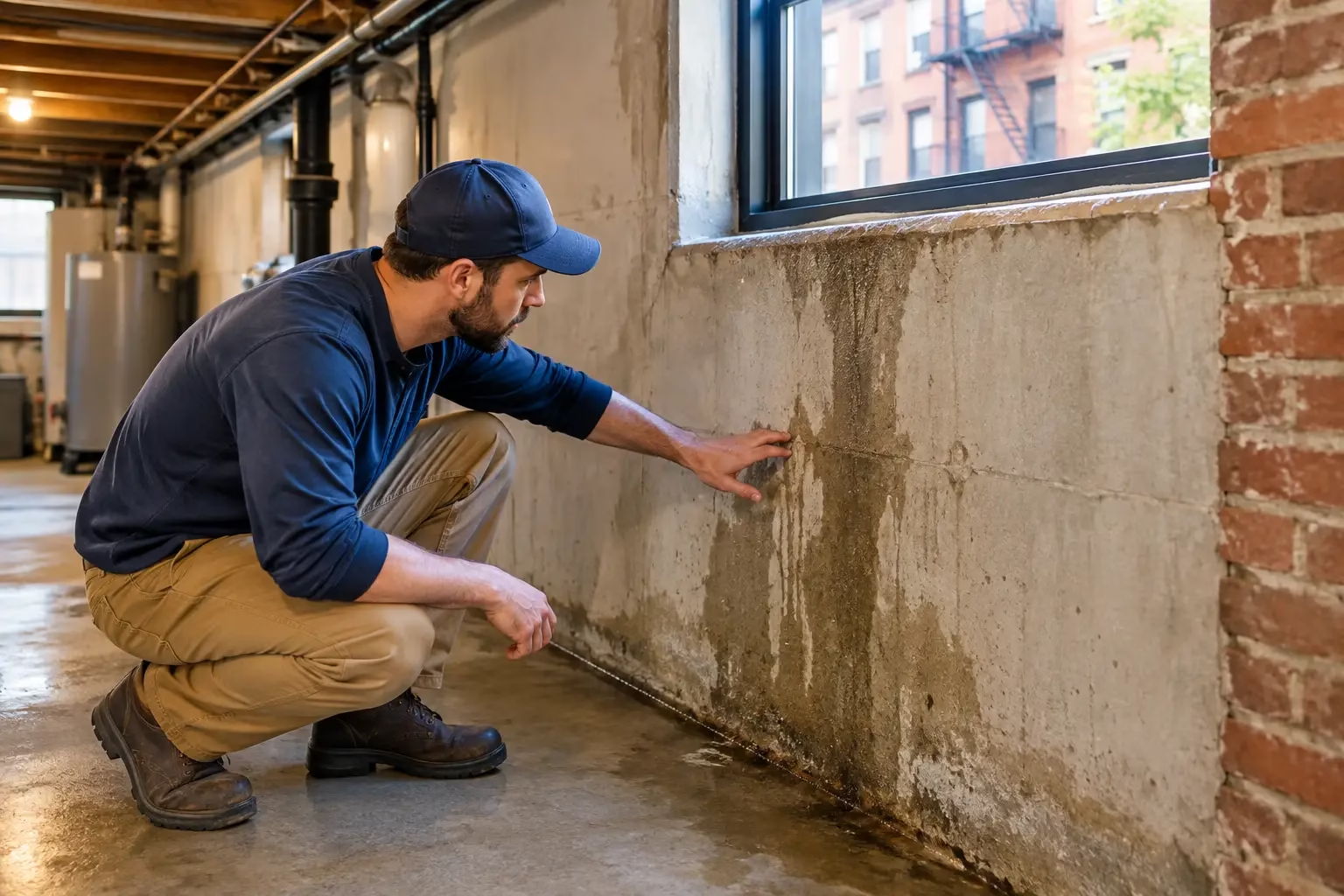
A wet basement rarely starts with a puddle. In many Brooklyn homes, it begins as a faint white powder on old masonry, a musty odor after rain, peeling paint near the floor, or a dark line that returns along the same wall. Property owners often ask, “why do basement walls leak” when the water becomes visible, but the real issue usually began outside the building weeks, months, or years earlier.
For brownstones, row houses, and older multifamily properties, basement water is not just a cosmetic problem. It can damage finishes, weaken mortar joints, create mold conditions, raise heating costs, and turn a usable storage or living area into a recurring repair expense. The right repair starts by finding the water path, not by simply covering the evidence.
Why Do Basement Walls Leak After Rain?
Water follows the easiest available route. When rainwater is allowed to collect near a foundation, it pushes against below-grade walls and floors. This is called hydrostatic pressure. Brick, stone, block, and older concrete walls may look solid, but they can absorb moisture through pores, cracks, open mortar joints, and failed joints around pipes or utility penetrations.
In NYC, the condition of the surrounding property matters as much as the basement wall itself. Tight lot lines, paved rear yards, aging sidewalks, neighboring foundations, and limited drainage space can all direct water toward the building instead of away from it. A leak that appears on one basement wall may be caused by a roof drainage problem, a cracked front stoop, or poor grading several feet away.
A dry day does not always mean the problem is gone. Groundwater can remain trapped against the foundation after a heavy storm, and snowmelt can create the same pressure. If a basement gets damp only after extended rain, exterior drainage is a likely suspect. If it remains damp year-round, groundwater, plumbing, or vapor movement may also be involved.
Roof and Gutter Discharge Near the Foundation
A clogged gutter or disconnected leader can dump hundreds of gallons of roof runoff beside a house during a storm. On a narrow Brooklyn property, that water has little room to go. It pools near the foundation, saturates the soil, and eventually finds a weakness in the basement wall.
Downspouts should carry water away from the foundation and discharge properly. In attached homes, roof drainage systems may also be tied into underground lines that are broken, blocked, or improperly pitched. Water can then back up and travel toward the building instead of away from it.
Cracks, Failed Pointing, and Aging Masonry
Older brick and brownstone buildings naturally move over time. Seasonal temperature changes, settlement, vibration, and decades of weather exposure can open small cracks in masonry or loosen mortar joints. Water enters through these openings, especially where the wall is below grade.
The repair depends on the wall condition. Minor cracks may be sealed after the moisture source is corrected. Deteriorated masonry may require brick pointing, cement work, waterproofing membrane installation, or a more complete foundation repair. Applying interior paint or a quick patch over wet masonry does not stop water pressure from the outside.
Poor Drainage Around Sidewalks, Areaways, and Rear Yards
Sidewalk and yard drainage problems are common in dense NYC neighborhoods. Cracked concrete, settled pavers, damaged areaway drains, and improperly sloped surfaces can send water directly toward the structure. Water may enter at the foundation wall, through a basement window, or at the joint where the wall meets the slab.
An exterior surface should pitch away from the building where possible. In urban properties, that is not always simple, especially when there are shared walls and limited outdoor space. A practical solution may involve repairing concrete, rebuilding an areaway, installing drainage, or correcting a failed waterproofing detail at the foundation.
The Difference Between a Leak, Condensation, and a Plumbing Problem
Not every wet basement wall is leaking from the soil outside. Proper diagnosis prevents property owners from spending money on the wrong repair.
Condensation occurs when warm, humid air touches a cool wall or pipe. It often appears in summer and may make surfaces feel damp without a clear water trail. Better ventilation, insulation, dehumidification, and air sealing can help, but those measures will not solve rain-related foundation leaks.
A plumbing leak usually appears even when the weather has been dry. Check areas around water lines, drain pipes, bathrooms, kitchens, boilers, and laundry equipment. A slow leak can travel along framing or masonry before becoming visible, so the wet spot is not always directly below the failed pipe.
A foundation leak is more likely when moisture gets worse after rain, snowmelt, or saturated ground conditions. Signs include efflorescence, peeling paint, crumbling mortar, rusted metal, stained drywall, mold growth, and water collecting along the perimeter of the floor.
How We Find the Real Source of Basement Water
A proper waterproofing evaluation should look beyond the visible stain. The goal is to trace water from where it begins to where it enters. In older NYC buildings, there can be more than one source, especially when exterior repairs have been deferred for years.
We inspect roof drainage, leaders, masonry joints, foundation cracks, basement windows, exterior grading, sidewalks, rear yards, and interior wall conditions. We also look for previous patchwork repairs that may be hiding a larger issue. A sealed crack that keeps reopening, for example, may indicate ongoing movement or water pressure that needs to be addressed outside.
Property managers should also pay attention to timing. Note whether moisture appears after short heavy storms, long periods of rain, snowmelt, or only when a particular fixture is in use. That information can help separate drainage issues from plumbing failures and make an estimate more accurate.
Basement Waterproofing Repairs That Actually Last
The best repair method depends on how water is entering, the construction of the wall, access around the building, and the intended use of the basement. A storage basement may need a different level of protection than a finished recreation room, office, apartment, or commercial space.
Exterior waterproofing is often the most durable option when accessible. It addresses water before it reaches the wall by excavating as needed, repairing damaged masonry, applying a waterproof membrane, protecting the wall, and improving drainage. This approach can be more involved, but it is often the right choice for recurring water intrusion and deteriorated below-grade walls.
Interior waterproofing may be appropriate where excavation is not practical or where water needs to be managed from inside. Depending on the situation, the work can include crack repair, waterproof coatings, drainage channels, sump pump systems, and wall restoration. Interior systems can be effective, but they should not be used as an excuse to ignore obvious exterior drainage failures.
For a finished basement, repairs should come before new framing, flooring, paint, cabinetry, or drywall. Finishing over a damp wall traps moisture where it can damage materials and create mold conditions. It is more affordable to correct water entry first than to demolish newly completed work later.
Best Budget Construction in Brooklyn & NYC
Local construction experience matters when the building has old masonry, a narrow lot, shared property conditions, and years of previous repairs. We handle waterproofing as part of a larger building-care plan, including roofing, facade restoration, brick pointing, stucco, sidewalk repair, cement work, and basement remodeling.
For owners in Park Slope, Brooklyn Heights, Bed-Stuy, Cobble Hill, Williamsburg, and other NYC neighborhoods, the goal is straightforward: identify the cause, explain the repair options clearly, and complete work that protects the property without unnecessary add-ons. Some leaks need a focused crack repair. Others require drainage correction and masonry restoration. The scope should match the condition, not a one-size-fits-all package.
License & Insurance credentials for all services
Waterproofing and structural repair affect the safety and value of your property. Hire a contractor that can explain the work, provide a clear scope, and carry the proper protections for the job. Licensed and insured service gives homeowners, landlords, and property managers more confidence when work involves excavation, masonry, drainage, or occupied buildings.
100% OSHA guidelines compliant
Basement and exterior repairs can involve confined work areas, excavation hazards, heavy masonry materials, and active building access. Safe jobsite practices protect workers, residents, tenants, and the property itself. Professional planning matters just as much as the repair material used on the wall.
Free Estimate Call (917) 674-9488
If your basement smells damp, shows white mineral deposits, or takes on water after rain, do not wait for the next storm to make the damage worse. A clear inspection and a practical repair plan can protect the space you already own and help you move forward with confidence.
