

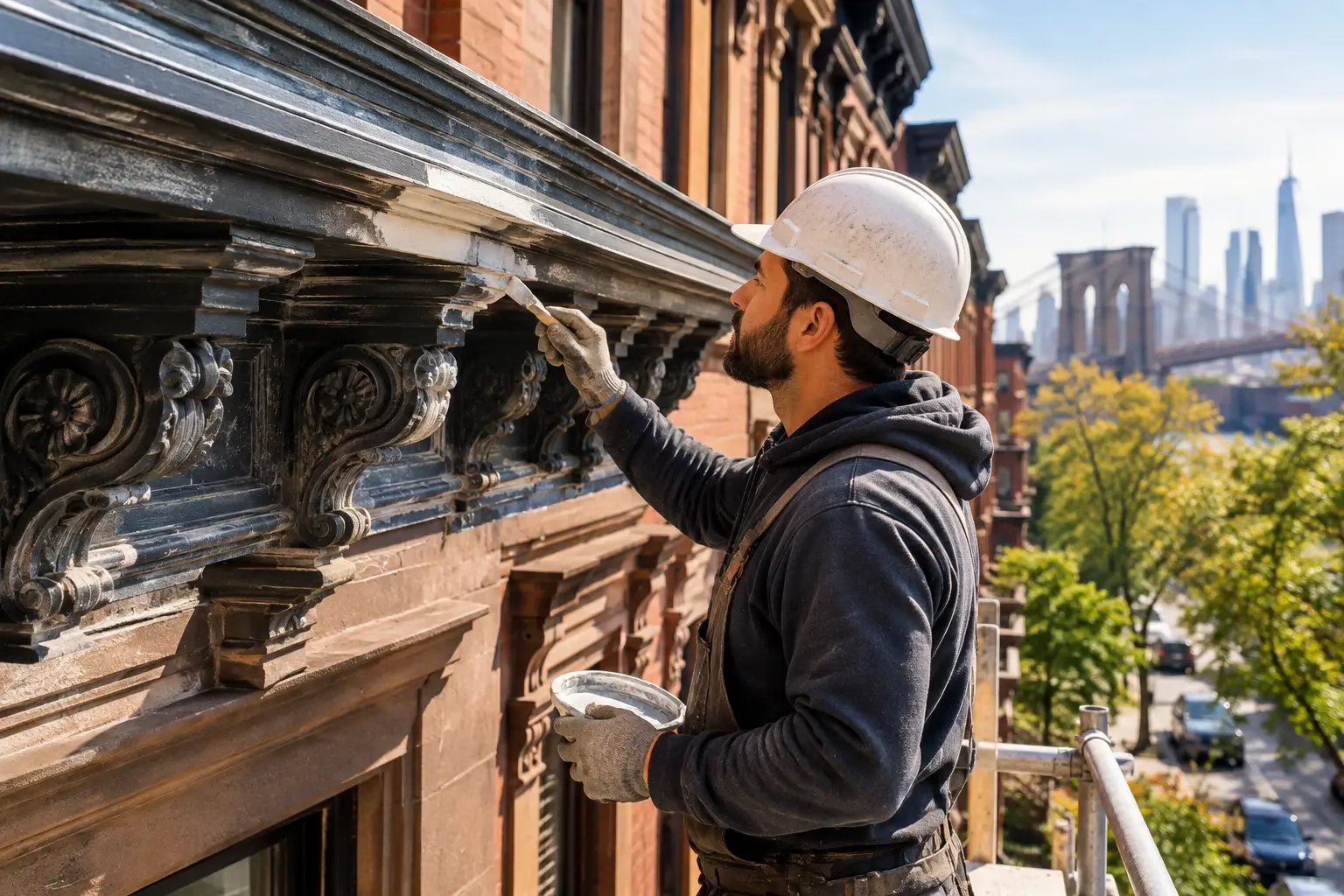
A cracked cornice is not just an exterior eyesore. On a Brooklyn brownstone, it can be the first visible sign that water has reached the masonry, metal supports, roof edge, or wall behind it. Cornice restoration Brooklyn property owners schedule early can prevent loose material, leaking, facade damage, and a repair bill that grows with every season.
Cornices sit at the top of a building, where they take the full force of rain, snow, freeze-thaw cycles, rooftop runoff, and years of paint failure. In neighborhoods with older row houses, including Park Slope, Brooklyn Heights, Cobble Hill, Bed-Stuy, and Carroll Gardens, original decorative work often needs careful repair rather than a quick cosmetic patch.
Cornice Restoration Brooklyn: What Usually Goes Wrong
A cornice can be built from sheet metal, galvanized steel, copper, wood, terra cotta, cast stone, or a combination of materials. That matters because the correct repair method depends on what is actually failing underneath the surface. A coat of paint may temporarily improve the appearance, but paint alone cannot stabilize a rusted metal return, rotten wood blocking, loose masonry, or an open joint at the roofline.
The most common warning signs are peeling paint that returns quickly, rust streaks, swelling seams, missing decorative sections, cracks at the wall connection, loose brackets, and stains on the facade below. Water marks on an upper-floor ceiling can also point to a cornice or flashing problem, especially after wind-driven rain.
Property owners should take sagging or visibly separated sections seriously. Loose cornice material above a sidewalk, stoop, entrance, or commercial storefront is a safety issue first. Waiting for a piece to fall is never a maintenance plan.
Why Brooklyn’s Weather Speeds Up Damage
Brooklyn buildings face repeated wet-dry and freeze-thaw cycles. Water enters through failed seams, cracks, roof flashing, or unsealed joints. When temperatures drop, trapped moisture expands and pushes materials apart. Rust spreads under paint, wood softens, mortar weakens, and small openings become larger ones.
Flat roofs can add to the problem. If roof drainage is poor or flashing has failed, water may keep feeding the cornice from behind. A proper inspection should look at the roof edge and drainage path, not only the face of the ornament.
Repair, Restoration, or Replacement?
The right answer depends on how much original material remains sound. Small cracks, open seams, limited rust, and isolated missing details can often be repaired. This approach preserves the building’s original character and may cost less than full replacement when the structure beneath is still stable.
Restoration is the better choice when the profile, brackets, dentils, or decorative metalwork are important to the property’s appearance and enough original material can be retained. The contractor may remove failed sections, repair the substrate, fabricate matching components, rebuild decorative details, seal joints, and apply a protective finish.
Replacement becomes necessary when corrosion or rot has compromised large portions of the cornice, supports are no longer secure, or prior patchwork has left the assembly unreliable. Replacement does not have to mean a generic result. New metal can be formed to match the existing profile, but it should be planned around the building’s facade, roof flashing, and drainage conditions.
A low upfront price is not always the best value. Covering deterioration with filler and paint may look acceptable for a short time, yet it often leaves the water source and structural problem untouched. The more practical approach is to identify the cause, complete the needed repairs, and finish the work so the cornice is protected for the long term.
A Practical Cornice Restoration Process
Good restoration starts with close inspection from a safe access point. The team checks the exterior surface, seams, anchors, brackets, wall connection, roof edge, flashing, and adjacent masonry. If damage is widespread, opening selected areas may be necessary to see what is happening behind the visible face.
Next comes a clear scope of work. Property owners should know whether the project includes temporary protection, removal of unstable material, metal or wood repair, replacement fabrication, masonry work, flashing, priming, painting, cleanup, and disposal. This is where transparent estimates matter. A vague proposal makes it difficult to compare bids or understand what has actually been priced.
During the work, loose or damaged material is removed carefully. Sound material is retained where possible. Rusted metal may be cut back and replaced, wood backing may be rebuilt, and failed fasteners or anchors may be corrected. When decorative pieces are missing, matching the existing profile is a detail that separates restoration from a basic exterior patch.
The final protective steps are just as important as the visible repair. Seams need proper sealing, roof transitions must shed water, and prepared surfaces require the right primer and exterior coating system. If the adjacent brick, brownstone, stucco, or pointing is damaged, handling those repairs at the same time can avoid gaps between separate trades.
Best Budget Construction in Brooklyn & NYC
Best Budget Construction handles cornice work as part of the whole building exterior, not as an isolated trim job. That means looking at the roof edge, facade condition, brick pointing, waterproofing needs, and finish work that may be connected to the failure. For brownstone owners, landlords, property managers, and small commercial operators, one coordinated contractor can reduce scheduling gaps and avoid repeated mobilization costs.
A dependable estimate should be based on the actual condition of the cornice, the access required, the material involved, and the repairs needed behind the surface. Scaffolding, lift access, sidewalk protection, roof work, custom fabrication, and permit requirements can affect cost. The honest answer to “How much will it cost?” is that it depends on the extent of the deterioration, but a site visit should produce a straightforward scope rather than a guess.
License & Insurance credentials for all services
Exterior work above public and private spaces requires responsible planning. Before hiring a contractor, ask how the crew will access the area, protect pedestrians and occupants, secure unstable material, manage debris, and coordinate any required building or city procedures. Also ask whether the estimate covers the complete repair or only the visible surface work.
Licensed and insured service protects property owners from unnecessary risk, while clear documentation helps managers plan around tenant access, storefront operations, and building maintenance schedules. A contractor should also be willing to explain material choices in plain language. For example, a metal cornice may need fabricated replacement sections, while a masonry cornice may require rebuilding, repointing, and water management at the roofline.
100% OSHA guidelines compliant
Safety should not be treated as an add-on when work is performed at a roof edge or above a sidewalk. Proper access equipment, fall protection, controlled work areas, debris handling, and trained crews protect everyone around the property. OSHA-compliant job practices also support a more organized project, especially on tight Brooklyn streets where access and pedestrian movement require attention.
For occupied buildings, planning is especially valuable. Residents need notice when windows, roof access, entrances, or parking areas may be affected. Commercial owners need work staged to reduce disruption to customers and deliveries. A professional crew plans these details before the first damaged section comes down.
Free Estimate Call (917) 674-9488
If your cornice shows cracks, rust, peeling paint, loose pieces, or recurring leaks near the roofline, schedule an inspection before another winter or heavy rain exposes more damage. Take clear photos from a safe distance, note when leaks or stains appear, and avoid standing beneath visibly loose sections.
A well-repaired cornice does more than improve curb appeal. It helps protect the roofline, facade, and people below it, while preserving the character that makes Brooklyn properties worth maintaining.
