

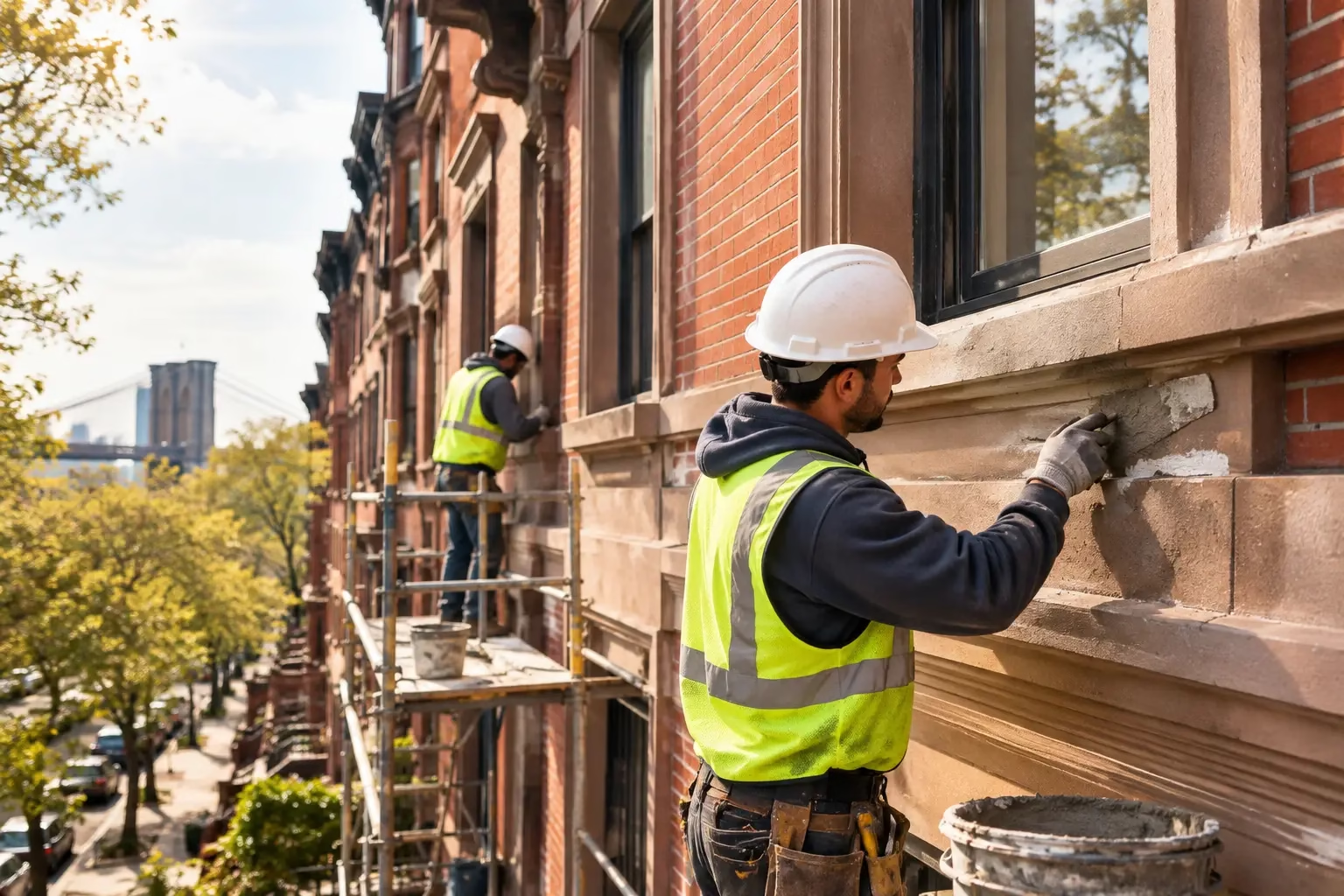
A loose brick above a Brooklyn sidewalk is not a cosmetic issue. Water behind a brownstone face is not just a stain. These facade repair examples show how small exterior defects can become costly masonry, waterproofing, and safety problems when they are left through another New York winter.
For property owners, landlords, and managers, the right repair is rarely about making a wall look new. It is about finding the source of deterioration, repairing the affected materials correctly, and protecting the building without spending money on work that does not solve the problem. A sound facade repair plan considers masonry, flashing, joints, parapets, cornices, drainage, and the age of the building as one system.
Brick Pointing and Replacement After Mortar Failure
One of the most common jobs on older Brooklyn homes is failing mortar between bricks. Mortar is meant to wear before the brick does. After years of freeze-thaw cycles, moisture, and movement, joints can become sandy, recessed, cracked, or completely open. That allows rain to enter the wall, where it can loosen more mortar and cause brick faces to spall.
A proper repair starts by removing loose or failed mortar to an appropriate depth without chipping the surrounding brick. New mortar is then installed to match the existing joint profile and, where possible, the hardness and appearance of the original material. On historic brick, using a mortar that is too hard can trap moisture and damage the brick itself. Cheap patching over the joint may look acceptable for a season, but it does not create a durable bond.
Where bricks are cracked, displaced, or losing their outer face, replacement is often necessary. Matching color, size, and texture matters on visible elevations in Park Slope, Brooklyn Heights, Cobble Hill, and similar brownstone neighborhoods. A repair should blend into the facade while restoring the wall’s ability to shed water.
Brownstone Face Repairs for Cracks and Missing Detail
Brownstone is beautiful, but it is softer and more vulnerable than modern masonry. A common example is a front facade with vertical cracks, crumbling patches around windows, and worn decorative trim at the parlor level. Sometimes the visible damage is limited to the surface. Other times, water has reached the masonry behind the brownstone coating.
The right approach depends on the condition underneath. Minor surface deterioration may be repaired with compatible patching material and careful shaping. Larger failures may require removing loose material, rebuilding damaged areas, and restoring profiles around lintels, sills, arches, or ornamental details. Painting before those repairs are complete only hides the problem temporarily.
Owners should also look beyond the damaged spot. A cracked brownstone face near a window can point to failed caulking, an unprotected sill, clogged roof drainage, or missing flashing above. Repairing the visible crack without correcting the water path is how the same issue returns.
Facade Repair Examples for Water Intrusion Around Windows
Interior peeling paint, bubbling plaster, and damp window trim often lead owners to assume they need an interior painter. In many cases, the real problem begins outside. Water can enter through open mortar joints, failed sealant, cracked stucco, roof flashing, or deteriorated window perimeter details.
A practical repair example is a masonry wall with staining below several upper-floor windows. The exterior work may include repointing open joints, replacing cracked bricks, repairing sills, renewing exterior sealant where it is appropriate, and correcting flashing or coping above. Once the exterior is watertight and the wall has time to dry, interior repairs can be completed with far less risk of repeat damage.
This sequence matters. Painting or patching the inside first can make a unit look finished while moisture continues working behind the wall. For landlords and commercial operators, that can mean repeat tenant complaints, mold concerns, and another round of repair costs.
Stucco Crack Repair That Does More Than Cover a Line
Hairline stucco cracks are not always serious, especially on an older building that has experienced normal movement. Wider cracks, recurring cracks, hollow-sounding sections, or areas where stucco is separating from the wall deserve closer attention. The decision is not simply whether to fill the crack. It is whether the stucco system is still securely attached and keeping water out.
For limited damage, a contractor may remove weak material around the crack, repair the base, apply compatible stucco coats, and finish the surface to blend with the surrounding facade. For widespread failure, spot patches can become a poor value. A larger removal and replacement area may cost more upfront but can provide a more consistent, longer-lasting result.
Paint also has a role, but only after preparation. Exterior coatings should be selected for the substrate and applied to a clean, dry, stable surface. Paint cannot hold together failing stucco or replace waterproofing repairs.
Cornice, Parapet, and Coping Repairs at the Roofline
The highest parts of a building often receive the least attention until material begins falling or water appears on the top floor. Damaged cornices, cracked parapet caps, loose coping stones, and open joints at the roofline can allow water into the wall from above. They can also create a public safety concern on a busy NYC sidewalk.
A typical roofline repair may involve rebuilding unstable parapet sections, resetting or replacing coping, restoring damaged cornice components, repairing metal flashing, and sealing transition areas correctly. The details vary widely. A painted wood cornice, sheet-metal cornice, and masonry parapet do not receive the same repair method.
For buildings over six stories, facade conditions may also fall under New York City’s Facade Inspection and Safety Program requirements. Owners should not wait for a filing deadline or a visibly hazardous condition to address loose masonry and roofline failures. Early repairs are usually simpler than emergency stabilization.
Best Budget Construction in Brooklyn & NYC: Facade Repair Examples
The best facade repair examples are not always dramatic before-and-after photos. Often, they are projects where the visible repair is clean, the water problem stops, and the owner avoids a much larger restoration later. A Brooklyn row house may need targeted pointing and sill repair. A mixed-use storefront may need cracked stucco removed and rebuilt. A brownstone may require facade patching, cornice restoration, exterior painting, and waterproofing coordinated under one scope.
Best Budget Construction approaches these jobs with the full building in mind. That helps owners avoid the frustration of hiring one crew for masonry, another for waterproofing, and a third for painting when the work needs to be planned in the right order.
License & Insurance credentials for all services
Exterior work affects occupants, pedestrians, neighboring properties, and the structure itself. Before approving a proposal, ask what work is included, how damaged material will be removed, what protection will be used, and whether the contractor carries the proper License & Insurance credentials for all services. A clear written scope is especially valuable when repair areas are high, hidden behind scaffolding, or connected to active leaks.
Price matters, but the lowest number is not always the lowest final cost. A vague estimate can leave out access, flashing, material matching, disposal, or necessary repairs discovered after loose material is opened. A transparent estimate identifies the planned repair and explains what conditions could require additional work.
100% OSHA guidelines compliant
Safe facade work requires more than ladders and a patch bucket. Proper site protection, controlled debris handling, access planning, and trained crews protect the public and the building. Work performed 100% OSHA guidelines compliant should be part of the conversation whenever repairs involve elevated masonry, roof edges, scaffolding, or sidewalk protection.
When to Repair, Restore, or Replace a Facade Section
Targeted repair is usually the right choice when deterioration is isolated and the surrounding wall remains sound. Restoration becomes more sensible when multiple elevations have failed mortar, widespread brownstone loss, repeated leaks, or aging decorative elements. Replacement may be necessary when a section is unstable, severely displaced, or no longer repairable with compatible materials.
The deciding factor is not appearance alone. A few cracks may be manageable. A few cracks combined with bulging brick, rust staining, loose pieces, persistent leaks, or crumbling parapets call for a more thorough evaluation. Addressing the cause early protects your budget and keeps a manageable repair from turning into an emergency.
Free Estimate Call (917) 674-9488
If your building has loose mortar, cracked stucco, deteriorating brownstone, water stains near exterior walls, or a failing cornice, get the condition reviewed before the next hard rain or freeze. Free Estimate Call (917) 674-9488 to discuss the visible damage, your property type, and a practical repair scope that fits the building and the budget.
