

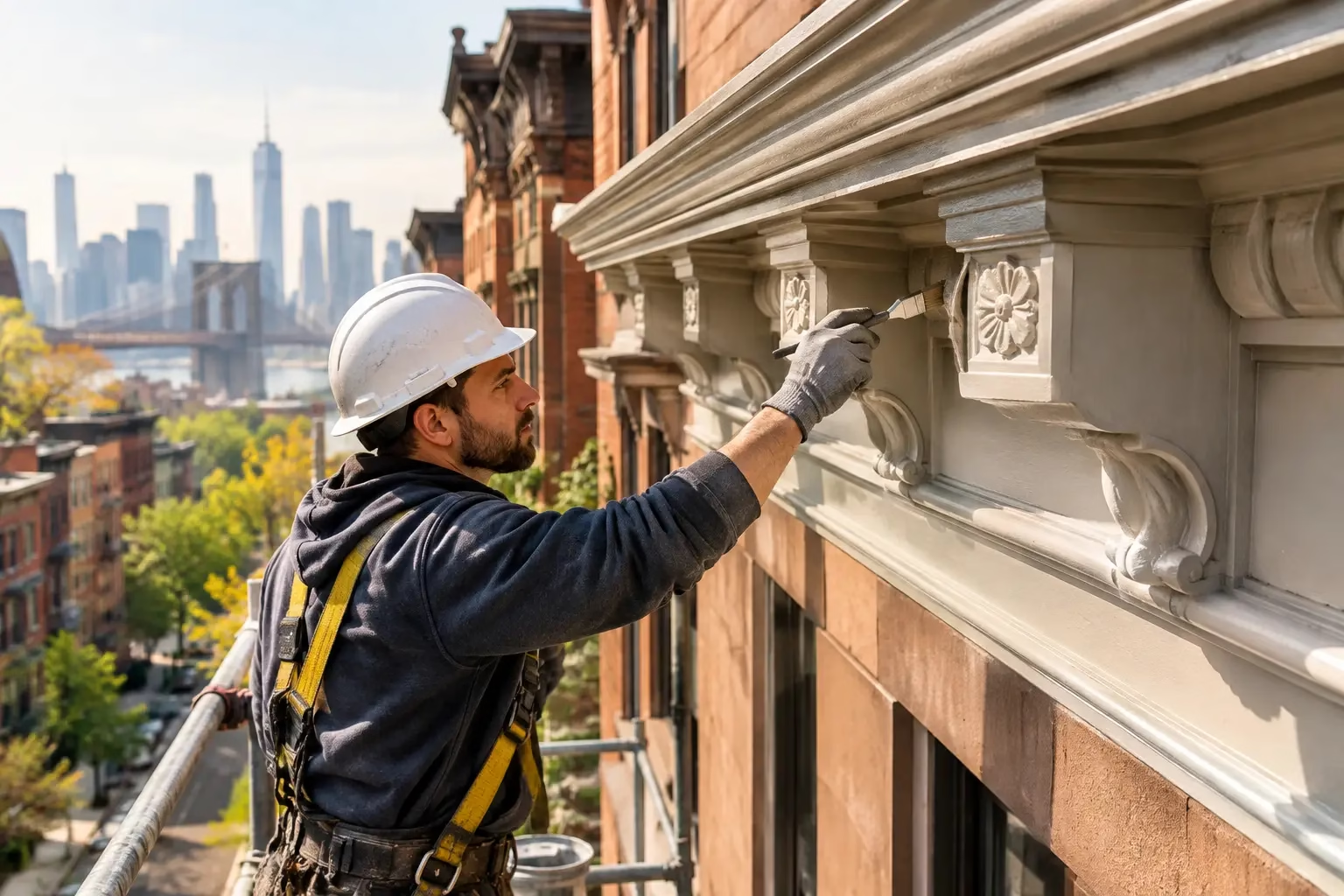
A failing cornice rarely starts as an obvious emergency. It may begin with a small crack, peeling paint, a loose metal section, or water staining near the top-floor ceiling. But on an NYC brownstone, mixed-use building, or older multifamily property, that small condition can turn into falling debris, masonry damage, water intrusion, and costly violations. A qualified cornice restoration specialist identifies what is actually failing before repairs become larger than they need to be.
Cornices are both decorative and protective. They finish the roofline, direct water away from the facade, and preserve the visual character of historic buildings throughout Brooklyn and Manhattan. When the material breaks down, the building loses more than curb appeal. It loses an important layer of weather protection.
Why Hire a Cornice Restoration Specialist?
A cornice is not a simple trim piece that can be patched with caulk and paint. Depending on the building, it may be made of galvanized metal, copper, sheet metal, terra cotta, wood, cast stone, or decorative cement. Each material fails differently, and each calls for a different repair method.
A specialist starts by examining the full condition of the cornice, including seams, fasteners, flashing, roof edges, masonry connections, drainage paths, and areas where rust or moisture has traveled behind the visible surface. A loose section can be a symptom of a larger issue, such as failed flashing, deteriorated wood framing, missing mortar, or repeated ice and water exposure.
For many property owners, the temptation is to paint over rust or patch the visibly damaged edge. That may improve the appearance for a short time, but it does not stop corrosion behind the metal or repair the source of water. Proper restoration addresses both the damaged cornice and the conditions that caused the damage.
What a Proper Cornice Inspection Looks For
The right scope of work depends on the age, design, material, and safety condition of the building. A detailed site inspection helps determine whether the cornice needs localized repair, partial replacement, full reconstruction, or temporary stabilization before permanent work begins.
A professional inspection commonly looks for these conditions:
- Rust-through, open seams, loose brackets, and missing fasteners on metal cornices
- Cracked or displaced terra cotta, stone, cement, or ornamental sections
- Deteriorated wood backing hidden behind metal cladding
- Water entry from roof flashing, gutters, leaders, or parapet walls
- Crumbling mortar and brick damage where the cornice joins the facade
- Areas at risk of falling that may require immediate protection or sidewalk safety measures
In older Brooklyn buildings, cornice problems often connect directly to roofing and facade conditions. If a roof edge is leaking or a parapet has open joints, repairing only the lower visible cornice can leave the new work exposed to the same moisture. One contractor who can coordinate cornice, roof, masonry, waterproofing, and painting work helps avoid that common mistake.
Best Budget Construction in Brooklyn & NYC
Best Budget Construction handles cornice restoration as part of a complete exterior repair approach. That matters for owners of brownstones, apartment buildings, commercial storefronts, and mixed-use properties that cannot afford to manage separate roofers, masons, painters, and metal workers for one connected problem.
Our work begins with an honest assessment of the condition. If a section can be repaired safely and effectively, we explain that option. If rust, structural deterioration, or repeated water exposure makes replacement the smarter long-term decision, we explain why. Property owners deserve a clear scope, realistic expectations, and pricing that reflects the work required, not vague promises.
For buildings in Park Slope, Brooklyn Heights, Cobble Hill, Bed-Stuy, and other brownstone-heavy neighborhoods, restoration also has an architectural side. A replacement section should match the profile, dimensions, and visual rhythm of the existing facade as closely as practical. The goal is not to make an old building look newly manufactured. It is to restore a durable, clean, well-finished cornice that belongs on the building.
Repair, Replacement, or Restoration: Which Is Right?
Localized repair is often appropriate when damage is limited to a small area and the surrounding material remains stable. This can include resecuring loose metal, sealing sound seams, replacing damaged flashing, repairing a minor decorative section, or treating early corrosion before it spreads.
Partial replacement may be needed when one run of metal, a corner return, or a badly damaged ornamental section has failed while adjacent portions remain serviceable. This approach can control cost, but only when the remaining material has enough life left to justify keeping it.
Full restoration or reconstruction is the better option when the cornice has widespread rust-through, multiple loose sections, severe water damage behind the cladding, or major loss of its decorative profile. It costs more upfront, but repeated patching on a failing system often costs more over several years. The practical decision is based on safety, material condition, building age, and the owner’s maintenance plan.
License & Insurance Credentials for All Services
Exterior restoration work in New York City requires careful planning, qualified labor, and proper jobsite controls. Cornices are high on the building, often above sidewalks, entryways, neighboring properties, and active commercial spaces. The work cannot be treated like a basic handyman repair.
Best Budget Construction provides License & Insurance credentials for all services and approaches every project with the level of accountability NYC property owners expect. That includes organizing the work around access requirements, protecting the work area, coordinating material removal, and completing repairs that support the broader condition of the roofline and facade.
A low estimate without proper credentials can become expensive quickly if work is incomplete, unsafe, or not covered. When comparing contractors, ask what materials will be used, how damaged substrate will be handled, whether flashing and drainage are included, and what portion of the cornice is being repaired versus simply covered. Clear answers before work begins are a sign of a contractor who understands the job.
100% OSHA Guidelines Compliant
Safety is part of the restoration scope, not an extra. Cornice projects may require scaffolding, lifts, controlled access, debris protection, and careful removal of unstable material. A safe work plan protects pedestrians, tenants, workers, vehicles, and the building itself.
Our crews work 100% OSHA guidelines compliant while maintaining an organized jobsite and a realistic work schedule. For occupied residential and commercial properties, communication matters just as much as construction skill. Owners and managers need to know when access is required, what areas will be protected, and how the work will affect daily operations.
Weather can affect exterior restoration, especially when roofing, masonry, coatings, or sheet metal fabrication are involved. A dependable contractor does not promise impossible dates just to win a job. The better approach is to schedule properly, protect exposed areas, and keep the owner informed if rain, high winds, or unexpected hidden damage changes the timeline.
How to Protect Your Cornice After Restoration
Once restoration is complete, regular attention can extend the life of the work. Keep roof drains, gutters, and leaders clear so water does not back up at the roof edge. Watch for peeling paint, orange rust stains, cracked sealant, or new gaps where the cornice meets brick or stone. These are early warning signs, not cosmetic details to ignore.
Annual exterior checks are especially valuable after severe storms and winter freeze-thaw cycles. If your building has an older flat roof, schedule cornice review alongside roof and facade maintenance. Catching a failed seam or flashing issue early is far more affordable than waiting for sections to loosen or water to damage the wall below.
Free Estimate Call (917) 674-9488
If your cornice is rusting, cracking, pulling away from the facade, or showing signs of water damage, get it inspected before the condition becomes a safety issue. Best Budget Construction provides practical restoration solutions for NYC owners who need quality work, straightforward pricing, and one contractor capable of handling the connected exterior repairs.
A well-restored cornice protects the building, preserves its character, and gives owners one less problem to worry about when the next hard rain or winter storm arrives.
