

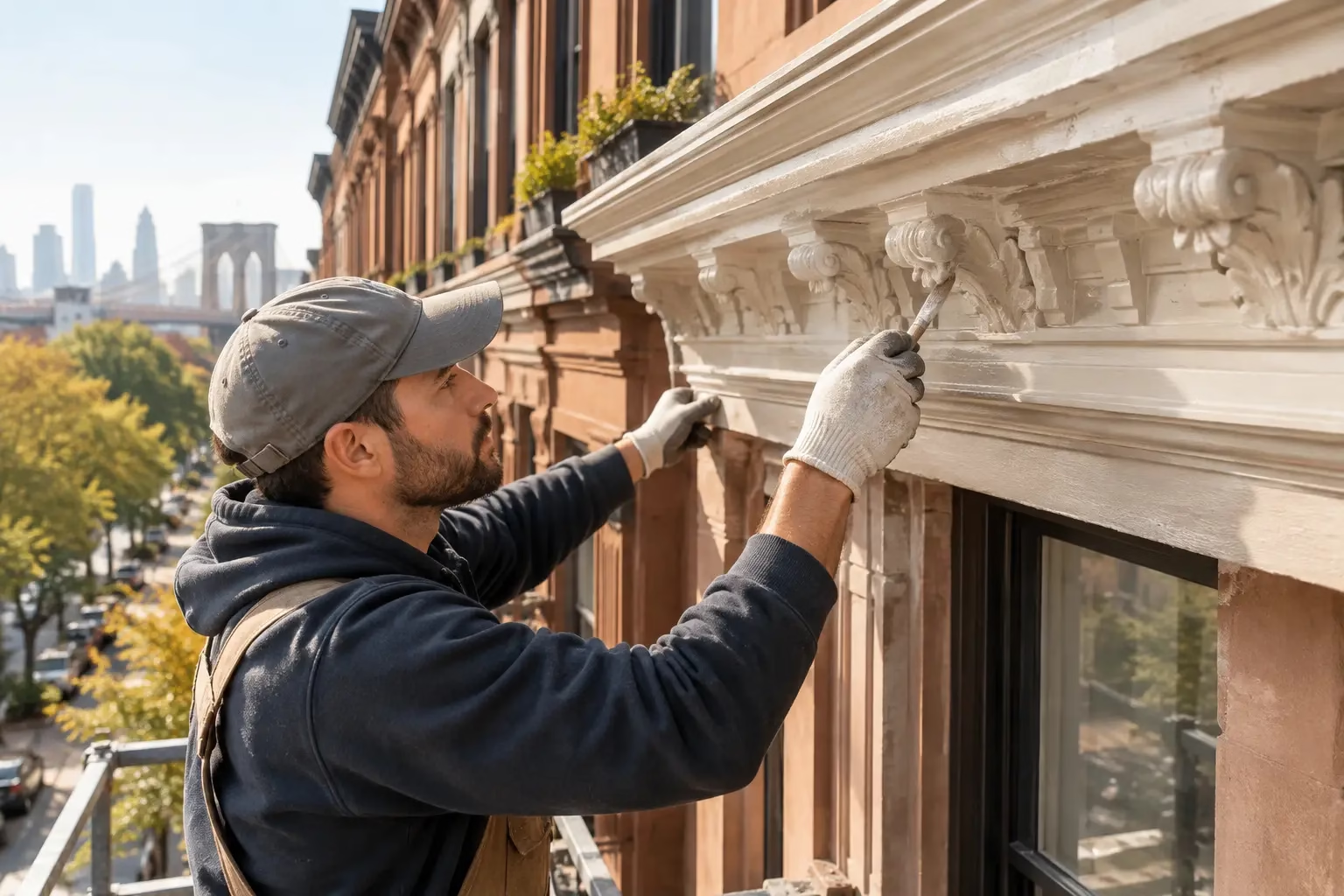
A decorative cornice can look like a small architectural detail from the sidewalk, but on an NYC brownstone or older commercial building, it is part of the exterior system protecting the roofline and facade. Knowing how to restore decorative cornice correctly means looking beyond cracked paint or missing trim. The real question is whether the damage is cosmetic, moisture-related, or a sign that the cornice has become unsafe.
For property owners in Park Slope, Brooklyn Heights, Bed-Stuy, Cobble Hill, and other older neighborhoods, cornice repair is often time-sensitive. Loose metal, rotted wood, failed joints, and crumbling ornament can create falling-debris risks, invite water behind the facade, and turn a manageable repair into a larger restoration project.
Start With a Close Cornice Inspection
A proper restoration begins with an exterior inspection from a safe access point. Do not lean out of an upper-story window or climb onto a roof edge to check damage. A cornice can appear sound from street level while its hidden supports, seams, or backing materials are badly deteriorated.
A contractor should identify what the cornice is made of before recommending repairs. NYC buildings may have pressed metal cornices, galvanized sheet metal, wood trim, terra cotta details, cast stone, fiberglass replacements, or combinations of several materials. Each one requires a different repair approach.
Look for these common warning signs:
- Rust staining, open seams, bubbling paint, or holes in metal cornices
- Soft wood, peeling layers, open joints, and missing decorative brackets
- Cracks, spalling, or pieces breaking away from masonry or terra cotta details
- Water marks inside the top-floor rooms, especially after wind-driven rain
- Sagging sections, loose ornament, or debris found on the sidewalk below
The location and pattern of the damage matter. A small rust hole below a failed roof flashing may be repairable. Widespread corrosion along the entire cornice, however, may mean water has been entering for years. Painting over either condition without correcting the water source is wasted money.
How to Restore Decorative Cornice Without Hiding Damage
The right restoration process is controlled, material-specific, and focused on long-term weather protection. There is no one repair that fits every historic cornice. The goal is to preserve sound original material where possible, replace failed sections where necessary, and make sure roof and wall water management are working together.
Secure the area before work begins
Safety comes first when material is loose or visibly unstable. Depending on the height, street exposure, and amount of deterioration, the job may require sidewalk protection, scaffolding, pipe scaffolding, or a lift. On busy Brooklyn streets and commercial corridors, access planning is as important as the repair itself.
Any loose sections should be secured or carefully removed before restoration starts. This is not a place for a quick ladder repair. A falling cornice piece can injure pedestrians, damage vehicles, and expose the owner to serious liability.
Remove failed coatings and damaged material
For metal cornices, restoration crews remove loose paint, rust scale, failed caulk, and unsound metal. The metal is then evaluated for thickness and structural integrity. Small perforations may be patched with compatible sheet metal, while larger areas can require newly fabricated sections shaped to match the original profile.
For wood cornices, the crew removes decayed material back to sound wood. Small localized defects may be repaired with exterior-grade restoration materials, but structural rot in a fascia board, bracket, or backing system usually requires replacement. Simply filling soft wood will not stop decay.
Masonry and terra cotta details need an equally careful approach. Cracked sections may be repaired when the material remains stable. Missing or severely damaged ornament can sometimes be replicated to preserve the appearance of the building. The repair material must be compatible with the existing facade so it does not crack, trap moisture, or fail prematurely.
Repair the water source, not just the cornice
Most cornice damage starts with water. Failed roof flashing, clogged gutters, broken leaders, open parapet joints, and poor roof drainage can send water directly into the cornice assembly. If those conditions remain, even excellent metalwork and paint will fail again.
A complete scope should inspect the roof edge, flashing, coping, gutters, leaders, parapet walls, and the upper facade. In older brownstones, it is common to find several related issues at once: a deteriorated cornice, open masonry joints, and a roof drainage problem feeding both.
This is where hiring a contractor with roofing, waterproofing, masonry, and facade restoration experience has real value. Coordinating separate trades can create gaps in responsibility. One crew repairs the cornice while another delays the roof leak, and the new work is exposed before the project is truly complete.
Prime, seal, and finish for NYC weather
Once repairs are complete, the cornice needs a coating system that fits the material beneath it. Metal should be cleaned, treated where needed, primed with a suitable rust-inhibiting primer, and finished with high-quality exterior coatings. Wood requires a durable primer and paint system that seals end grain, joints, and repaired areas.
Caulking is useful at properly prepared seams, but it should not be used as a substitute for correct metal flashing or structural repair. A heavy bead of caulk may make a seam look better for a season while moisture continues behind it.
Color selection also deserves practical thought. Dark colors can emphasize historic profiles but may increase heat movement in exposed metal. Lighter finishes can reduce heat gain, though they may show urban dirt more easily. The best choice depends on the building style, exposure, maintenance plan, and surrounding facade colors.
When Repair Is Enough and When Replacement Makes Sense
Not every damaged cornice needs full replacement. Local repairs are often the most budget-conscious option when deterioration is limited and the existing cornice remains secure. Patching a few rusted panels, rebuilding one wood bracket, or restoring a damaged corner can extend the service life of the original feature.
Replacement becomes more sensible when multiple sections are failing, the supporting structure is compromised, or repeated patching has left the cornice uneven and unreliable. For decorative metal cornices, custom fabrication may be needed to preserve the original profile. This costs more upfront than a flat replacement panel, but it can protect the architectural character that gives a brownstone or historic property its value.
Property managers should also weigh maintenance costs. A cheaper patch is not always the lower-cost choice if crews must return every year to treat new rust, seal new leaks, and repaint failed areas. A clear inspection and written scope help owners compare immediate expense against expected service life.
License & Insurance credentials for all services
Cornice restoration is elevated exterior work, often performed over sidewalks, entrances, parking areas, and public spaces. The contractor should carry proper licensing and insurance, use trained workers, and provide a clear explanation of access, protection, repairs, materials, and cleanup.
Ask direct questions before accepting an estimate. What is causing the damage? Which sections will be repaired and which will be replaced? Is roof flashing included? How will the sidewalk and nearby property be protected? What coating system will be used? A dependable contractor should answer these questions plainly, not bury the scope under vague language.
For landmarked properties or buildings in historic districts, the design and material choices may require additional review. Matching the original profile, dimensions, and finish can be essential. It is better to identify those requirements before fabrication begins than to redo work after an avoidable mismatch.
100% OSHA guidelines compliant Work at Height
Safe cornice work requires planning, not shortcuts. Proper scaffold setup, fall protection, controlled debris removal, and pedestrian protection help keep workers, tenants, neighbors, and passersby safe. Access equipment must fit the building conditions, especially on narrow Brooklyn streets where parked cars, trees, awnings, and overhead lines can complicate the job.
At Best Budget Construction, we approach cornice restoration as part of the full exterior envelope. Our crews assess the condition of the cornice and the connected roof, facade, masonry, waterproofing, and drainage details so repairs address the cause of deterioration, not only the visible damage.
Best Budget Construction in Brooklyn & NYC
A restored cornice should look right on the building and perform through rain, snow, summer heat, and freeze-thaw cycles. Whether your property needs targeted metal repair, wood restoration, custom replacement sections, facade work, or a coordinated roof-edge repair, the scope should be built around the building’s actual condition and your budget.
For owners of brownstones, multi-family buildings, and small commercial properties, early action is usually the best value. A loose seam or isolated rust spot is far easier to correct before water reaches framing, plaster, interior finishes, or the masonry below.
Free Estimate Call (917) 674-9488
If your cornice is peeling, rusting, cracked, sagging, or dropping debris, arrange an on-site evaluation before the next major weather event. A clear estimate can separate cosmetic maintenance from a safety-critical repair and give you a practical plan for protecting your property.
