

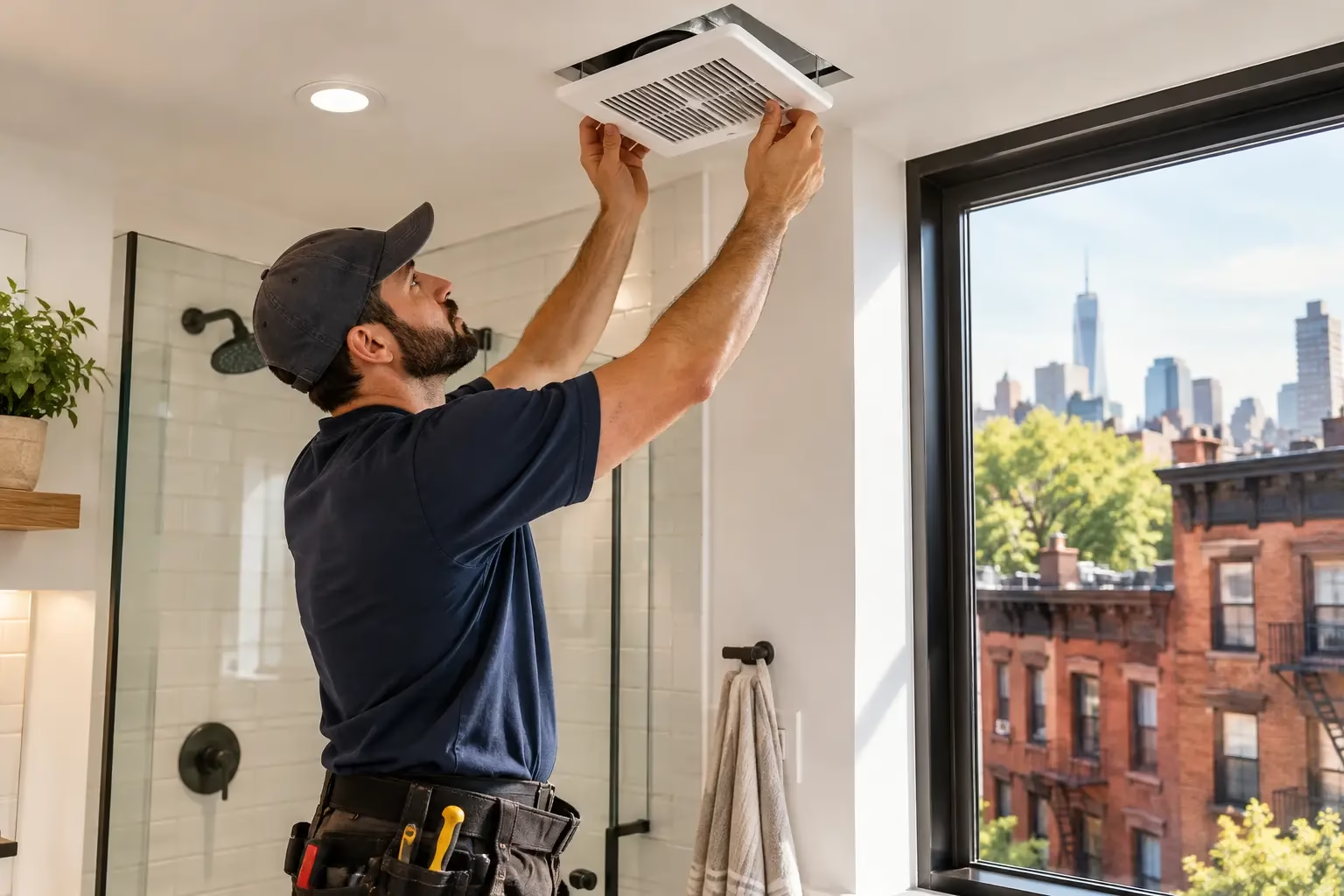
A bathroom fan that rattles for ten minutes and leaves the mirror dripping is not doing its job. In New York City apartments, brownstones, and multifamily buildings, moisture has nowhere to hide for long. It collects above ceilings, behind tile, around window trim, and inside exterior walls. The best bathroom ventilation upgrades remove that moisture at the source, move it safely outdoors, and do it quietly enough that people will actually use the system.
For property owners, this is more than a comfort upgrade. Better ventilation helps protect paint, grout, drywall, wood framing, and the investment you have made in a bathroom renovation. It can also reduce recurring mold odors and peeling finishes that lead to repeated repair calls.
Best Bathroom Ventilation Upgrades for NYC Bathrooms
The right upgrade depends on the size of the bathroom, the length and route of the duct, the building layout, and whether the space has a shower, tub, or both. A small fan replacement may be enough in a powder room. A full bathroom in a Brooklyn brownstone with a long duct run may need a better fan, new ductwork, and a properly designed exterior termination.
The first priority is exhaust capacity. Fan performance is measured in CFM, or cubic feet per minute. A fan that is too small cannot clear steam after a shower. A fan that looks powerful on the box can also underperform if the duct is undersized, crushed, disconnected, or routed through too many sharp turns. The fan and duct system must work together.
Quiet operation matters more than many owners expect. Loud fans are frequently switched off before they have cleared the room. A quality low-sone fan costs more than a basic builder-grade unit, but it can make the bathroom more pleasant and improve real-world moisture control. For rental properties, that can mean fewer tenant complaints and less damage from occupants avoiding a noisy fan.
A humidity-sensing control is another practical improvement. Instead of relying on someone to remember the switch, the fan starts when moisture rises and runs until the room dries out. Timer switches are also effective, especially when installed as part of a bathroom remodel. They keep air moving after a shower without leaving a fan running all day.
Start With the Fan Size, Not the Fancy Features
A high-end fan with Bluetooth, lighting, and a built-in speaker will not solve a ventilation problem if it is incorrectly sized or poorly ducted. Before choosing features, inspect the existing conditions. In older NYC properties, we often find flex duct that has sagged, vents that stop in a ceiling cavity, or long routes that restrict airflow. Those conditions need correction before a new fixture can perform as intended.
A contractor should consider the room’s square footage, ceiling height, number of fixtures, expected use, and duct distance. Larger bathrooms, bathrooms with separate toilet rooms, and bathrooms used by a full household may need more capacity than a basic calculation suggests. A steam shower requires special planning and should never be treated like a standard shower enclosure.
The duct should be as short and direct as the building allows. Smooth, properly supported metal duct is generally a stronger long-term choice than loosely installed flexible duct. Every unnecessary turn reduces airflow. Duct joints should be secured and sealed, and unconditioned runs may need insulation to limit condensation.
Vent Moisture Outside, Not Into the Building
The most important installation detail is where the air ends up. Bathroom exhaust must discharge outdoors through an approved route. Sending humid air into an attic, wall cavity, ceiling void, or crawlspace only moves the problem where it is harder and more expensive to find.
This is especially relevant in attached Brooklyn homes and multifamily properties, where roof access, shared walls, historic exterior details, and existing mechanical chases can limit options. A good contractor evaluates the route before opening walls or ordering equipment. In some buildings, the best solution is a roof termination. In others, a sidewall route or a properly managed existing shaft may be possible, subject to site conditions and applicable requirements.
Exterior terminations also need attention. A damaged cap can admit rain, pests, and cold air. A clogged termination can make a new fan seem weak. During a renovation, it makes sense to inspect the full path from grille to exterior hood rather than treating the fan as a stand-alone replacement.
When a Window Is Not Enough
Many older bathrooms have a window, but that does not automatically mean they are well ventilated. Windows are often closed in winter, blocked by privacy film, or located too far from the shower to remove steam quickly. They also cannot provide reliable ventilation when a unit is vacant, a tenant is away, or the bathroom is used late at night.
Mechanical exhaust gives owners more control. It is particularly valuable in interior bathrooms, basement bathrooms, and bathrooms where recurring mildew appears near ceilings or around the shower. If paint continues to peel despite regular repairs, the real issue may be excessive humidity and weak exhaust rather than the paint product itself.
A window and an exhaust fan can work well together. The window provides optional fresh air, while the fan provides consistent moisture removal. The practical goal is not to overbuild a system. It is to install one that fits the room and the building.
Upgrade the Light and Fan Together During Renovation
When ceilings are already open for a bathroom renovation, upgrading ventilation is far more efficient than returning later. This is the time to replace old wiring where necessary, improve the duct route, add a timer or humidity sensor, and coordinate the fan grille with recessed lighting or a new ceiling finish.
Combination fan-light units can be useful where ceiling space is limited. They should be selected carefully, since a light fixture does not make up for inadequate airflow. In compact NYC bathrooms, a separate quiet fan and properly placed lighting often delivers the better result, but it depends on the ceiling layout and available access.
For landlords and property managers, standardizing reliable fan models across units can simplify maintenance. Replacement parts, switches, and grilles are easier to source when every bathroom does not use a different system. The lowest upfront equipment price is not always the budget choice if it creates repeat service calls.
License & Insurance credentials for all services
Ventilation work can involve electrical connections, ceiling framing, duct installation, roof or exterior-wall penetration, and finish restoration. That is why the scope should be planned as construction work, not treated as a quick cosmetic swap. The contractor should verify the route, protect adjacent finishes, coordinate the necessary trades, and leave the bathroom clean and functional.
At Best Budget Construction, our approach is practical: identify the moisture source, inspect the existing fan and duct path, then recommend a solution that fits the building and budget. A simple replacement is appropriate when the system is sound. If the problem is inside the ductwork or at the exterior termination, we explain that before the work starts.
100% OSHA guidelines compliant
Bathroom ventilation upgrades may require ladder work, electrical safety procedures, confined ceiling access, roof access, and careful dust control in occupied properties. Safe jobsite practices protect residents, tenants, workers, and the building itself. This matters even more in tightly built NYC homes where access is limited and finished spaces sit directly below the work area.
Owners should also plan for realistic access. Some duct repairs require opening and restoring a small portion of ceiling or wall. A dependable contractor explains this possibility upfront rather than promising a no-opening installation that cannot be completed correctly.
Best Budget Construction in Brooklyn & NYC
Whether you are renovating a dated bathroom in Park Slope, correcting chronic moisture in a Brooklyn Heights rental, or improving an interior bathroom in a commercial space, ventilation deserves attention before mold, damaged finishes, and odors become larger repairs. We provide clear estimates, experienced renovation coordination, and workmanship built for the conditions of NYC properties.
Free Estimate Call (917) 674-9488
The best next step is a site review of the bathroom, fan, duct route, and exterior discharge point. Bring up recurring condensation, peeling paint, mildew, loud operation, or a fan that never seems to clear the mirror. A properly planned upgrade can protect the room long after the tile, fixtures, and paint are new.
