

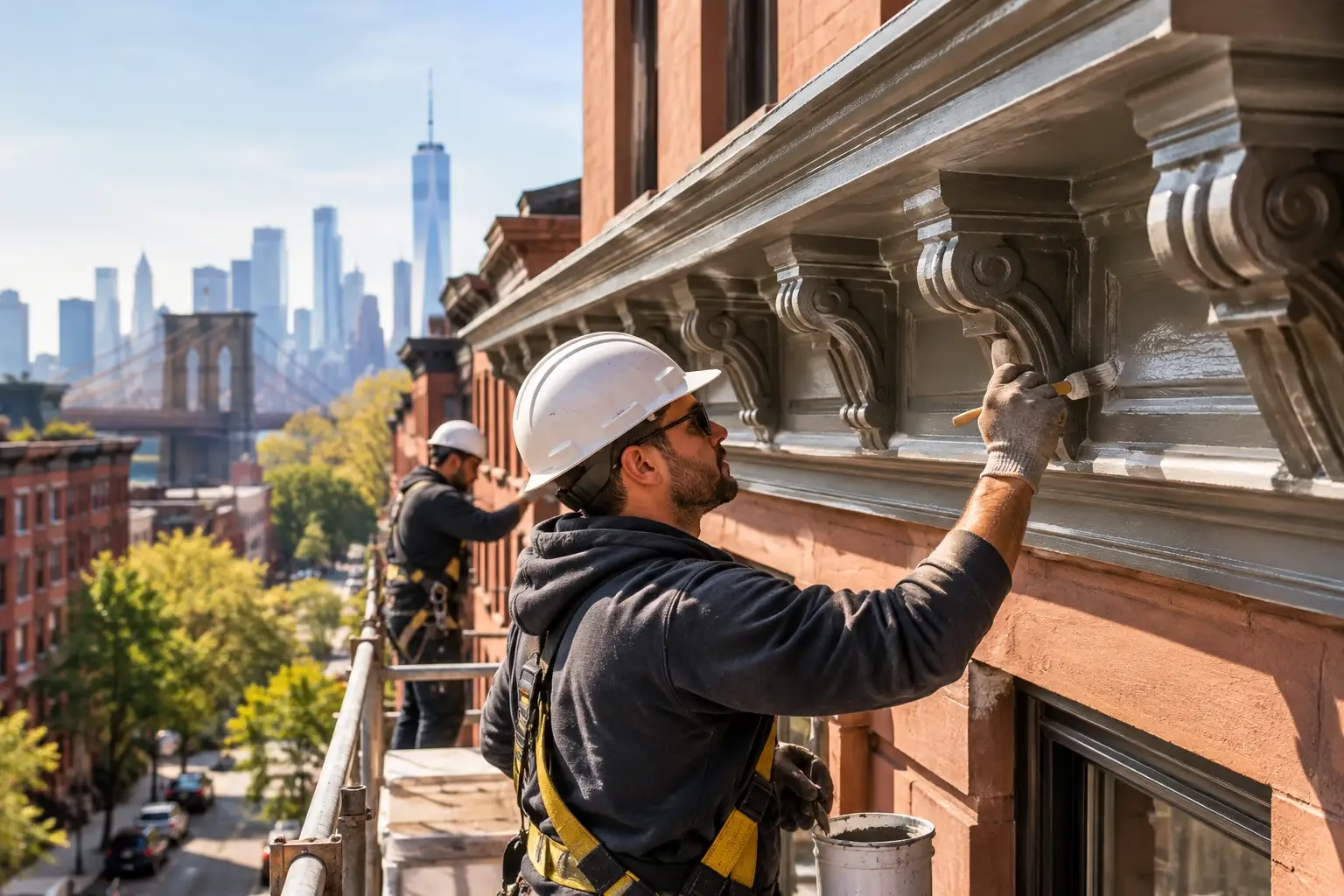
A cracked cornice is rarely just a cosmetic problem. On a Brooklyn brownstone, masonry apartment building, or older commercial property, loose metal, stone, or terra cotta at the roofline can become a public safety issue fast. Cornice restoration cost depends on what is failing behind the visible damage, how high the building is, and what it takes to complete the work safely from the street.
For NYC owners, the cheapest quote is not always the affordable quote. A small patch that skips hidden rot, flashing failure, or unstable anchoring can lead to repeated repairs, water damage, violations, and a larger bill later. The right approach is to inspect the full cornice line, identify the source of deterioration, and price the repair scope clearly before work begins.
What Does Cornice Restoration Cost in NYC?
There is no one flat rate for cornice work because each building has different materials, access conditions, and damage. As a general planning range, a localized repair to a small section of a cornice may run roughly $2,500 to $7,500. A larger section repair involving custom fabrication, masonry rebuilding, or extensive wood replacement can range from $8,000 to $25,000 or more.
Full cornice restoration on a multi-story brownstone, mixed-use building, or large facade can reach $25,000 to $100,000-plus. That broader range reflects the real variables: scaffolding, sidewalk protection, permits, structural repairs, specialty materials, painting, and the amount of original detail that must be recreated.
A proper site visit is the only reliable way to estimate the work. Two buildings can show the same peeling paint from the sidewalk, yet one may need minor metal patching while the other has decayed wood framing, failed roof flashing, and loose sections that require removal and rebuilding.
Typical cost ranges by repair scope
Small repairs are usually the least expensive when deterioration is limited and safe access is simple. Costs rise when the cornice must be opened up, removed in sections, or rebuilt to match historic profiles.
- Minor sealing, patching, and repainting: approximately $2,500 to $7,500
- Partial wood, metal, or masonry cornice repair: approximately $8,000 to $25,000
- Major reconstruction with custom details: approximately $25,000 to $60,000
- Full cornice line restoration on a larger or taller property: $60,000 to $100,000 or more
These are planning figures, not a substitute for an on-site quote. In Park Slope, Brooklyn Heights, Cobble Hill, and other brownstone-heavy neighborhoods, historic details and tight street conditions can affect the final number significantly.
The Biggest Factors Behind Cornice Restoration Cost
The condition of the material is the starting point. Traditional cornices may be built from galvanized metal, sheet metal, wood, cast stone, terra cotta, brick, or a combination of materials. Metal can rust through from the inside, wood can rot under old paint, and masonry can crack when water enters through failed joints or flashing.
Access is often the next major cost driver. A first-floor decorative feature is very different from a cornice located four stories above a busy sidewalk. Scaffolding, suspended access, permits, pedestrian protection, and setup time are real parts of a safe NYC project. A contractor who leaves these items out of an early quote may be offering a number that will not hold up once work starts.
The level of detail also matters. Straight runs of simple metal trim are less costly to reproduce than elaborate brackets, dentils, modillions, or decorative panels. On historic homes, replacement sections should match the existing shape and proportions as closely as possible. Custom fabrication takes skilled labor, but it protects the character and value of the property.
Finally, the cause of the damage affects the scope. If a leaking roof, clogged gutter, deteriorated parapet, or failed flashing caused the cornice to fail, repairing the face of the cornice alone will not solve the problem. The estimate should address the water source so the repair lasts.
Repair or Full Replacement: Which Makes Financial Sense?
Restoration makes sense when the majority of the cornice remains stable and the damaged areas are isolated. Skilled repair can preserve original material, maintain the building’s appearance, and cost less than removing an entire cornice line. This is often the best route for buildings with early-stage rust, localized wood rot, cracked mortar, or limited missing detail.
Full replacement becomes the smarter investment when deterioration is widespread. If metal has rusted through in several locations, wood framing has failed, masonry is unstable, or multiple previous patches are no longer holding, repeated spot repairs can cost more over time than a properly rebuilt section.
There is a trade-off. Replacement costs more upfront, especially when custom fabrication is necessary, but it can provide a cleaner long-term solution when combined with correct flashing, waterproofing, priming, and finish painting. A dependable contractor should explain both options instead of pushing a one-size-fits-all answer.
Best Budget Construction in Brooklyn & NYC
For property owners, the goal is not simply to cover cracks before the next rainstorm. The job must protect the building, the public below, and the original facade. Best Budget Construction approaches cornice repairs with a full exterior view, checking related areas such as roof edges, coping, gutters, brickwork, parapets, and waterproofing details.
That wider scope matters because exterior problems connect. A failing cornice may be tied to a roof leak. Open masonry joints above it may be allowing water behind the metal. A building that needs cornice repair may also benefit from brick pointing, facade restoration, painting, or sidewalk protection coordinated under one project plan rather than through several separate contractors.
License & Insurance credentials for all services
Cornice work is not a casual handyman repair. It involves elevated work, falling-object risk, exterior materials, and often public sidewalk exposure. Before choosing a contractor, owners and managers should confirm that the contractor can provide appropriate licensing and insurance documentation for the project.
Ask what is included in the written scope. A clear proposal should identify the damaged areas, the repair method, materials, access plan, surface preparation, priming and painting if applicable, debris removal, and any work needed to stop water intrusion. It should also state what conditions could lead to additional work, such as concealed rot or loose masonry found after the cornice is opened.
Transparent details help avoid the most common pricing dispute: an initial low number that does not include the work needed to make the repair safe and durable.
100% OSHA guidelines compliant
Safe access is part of the job, not an optional upgrade. On NYC exterior projects, proper protection for workers, residents, pedestrians, neighboring properties, and parked vehicles must be planned before materials come down. Depending on the building and site, this can include scaffolding, controlled work zones, sidewalk sheds, netting, debris handling, and safe material removal.
A contractor following 100% OSHA guidelines compliant practices is protecting more than the job schedule. It helps reduce preventable accidents, site disruptions, and liability concerns for owners. This is especially important on narrow Brooklyn streets and active commercial blocks where there is little room for error.
How to Keep Cornice Repair Costs Under Control
The best cost-saving move is early action. Once you see flaking paint, rust stains, cracks, sagging sections, open seams, or water marks below the roofline, schedule an inspection. Small defects allow water in. Water turns a manageable repair into a larger reconstruction project.
It also helps to coordinate related exterior work. If scaffolding is already needed for a cornice, it may be practical to inspect roof flashing, perform needed pointing, repair parapets, or paint adjacent trim at the same time. Combining compatible work can reduce repeat mobilization and access costs.
Do not choose based on price alone. Compare scopes line by line. One proposal may include only a surface patch, while another includes removal of failed material, rebuilding the substrate, custom replacement pieces, waterproofing, and finish paint. The second proposal may cost more initially but deliver the repair your building actually needs.
Free Estimate Call (917) 674-9488
If your cornice is showing rust, cracks, loose material, or signs of water damage, do not wait for a section to become a safety emergency. Call (917) 674-9488 for a free estimate and a practical assessment of the work. A clear inspection now can give you a realistic budget, protect the facade, and help keep a small exterior issue from becoming a major NYC repair.
