

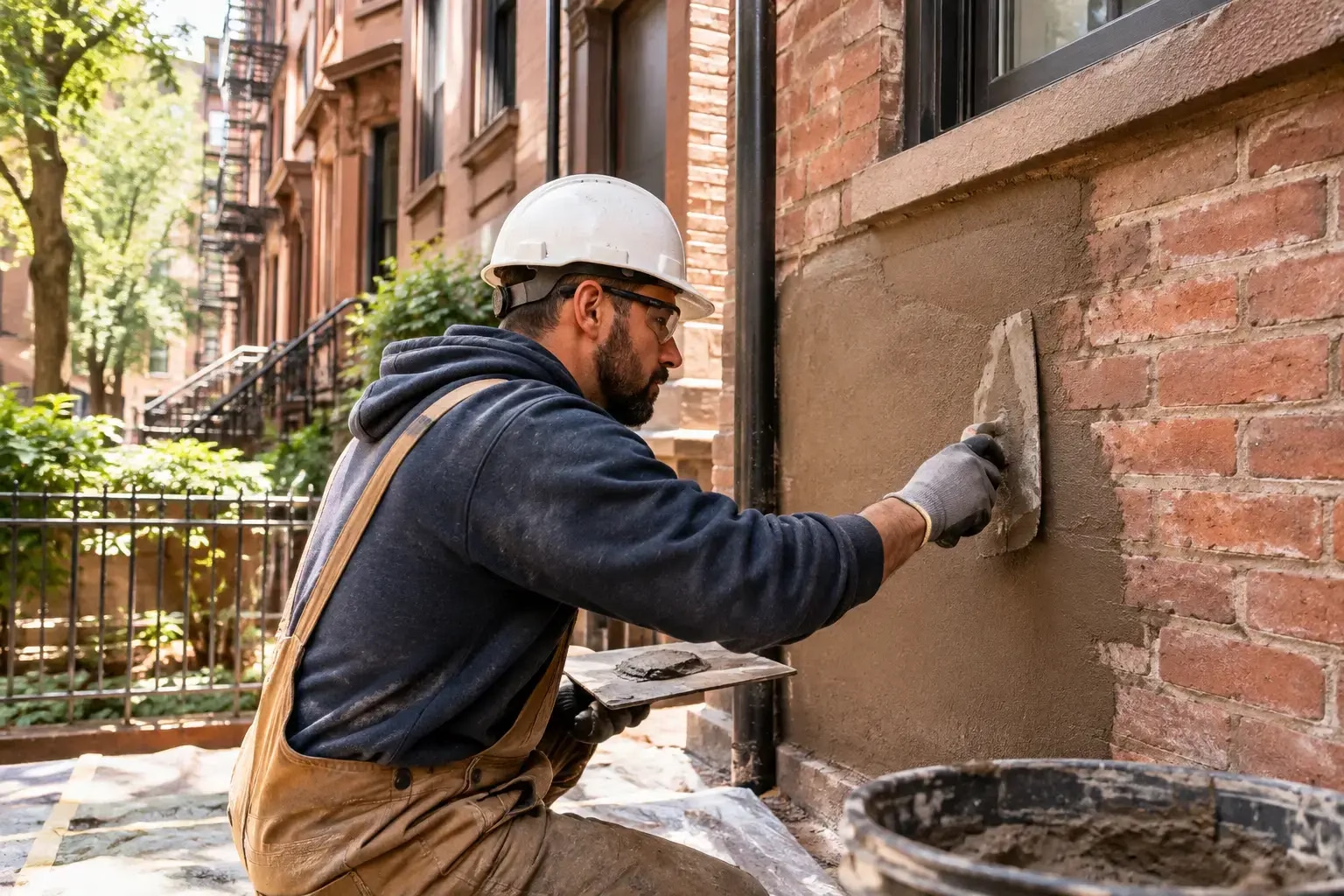
A Thorocoat brownstone rear wall can look like a straightforward paint job from the yard, but rear elevations often hide the moisture problems that cause expensive interior damage. On Brooklyn brownstones, these walls take years of rain, snow, roof runoff, window leaks, and limited sunlight. By the time paint is bubbling in a garden-level room or brick is crumbling around a rear window, the wall needs more than another coat of paint.
Thorocoat is commonly used as a protective masonry coating when the wall has been properly repaired and prepared. It can help create a more uniform appearance while adding a weather-resistant layer over sound masonry or stucco. The key word is sound. Applying any coating over loose mortar, active leaks, failing stucco, or trapped moisture only covers the problem temporarily.
What a Thorocoat Brownstone Rear Wall Needs Before Coating
A rear wall should be evaluated from the top down. Water does not always enter where staining appears. A crack below a third-floor window may be caused by failed flashing, an open cornice joint, a deteriorated roof edge, or a clogged leader several feet above it. In tight Brooklyn backyards, this investigation can be difficult, but it is the difference between a lasting repair and a repeat service call.
Before a Thorocoat application, a qualified contractor should check the condition of the masonry, mortar joints, parapet, window sills, lintels, roof connections, and drainage components. If the rear wall was previously painted, the existing coating must also be tested for adhesion. Peeling layers, chalking surfaces, and incompatible old paint can prevent a new coating from bonding correctly.
The work may include brick pointing, replacing damaged masonry, patching cement or stucco, repairing cracks, rebuilding failed areas around window openings, and sealing properly detailed transitions. The wall then needs adequate drying time. Coating wet masonry is one of the fastest ways to create blistering, peeling, and trapped moisture.
Why Rear Brownstone Walls Fail More Often Than Front Facades
The front facade gets attention because it is visible from the street. The rear wall often gets neglected until an owner sees water stains, loose plaster, moldy odors, or exterior material falling into the yard. That makes rear-wall maintenance a practical investment, especially for landlords and property managers responsible for occupied units.
Brownstone and older brick buildings move over time. Seasonal temperature changes, settlement, vibration, and moisture can open hairline cracks and weaken mortar. Rear walls also tend to have more penetrations than a front facade: kitchen vents, bathroom vents, AC sleeves, electric conduits, deck attachments, downspouts, and replacement windows. Every penetration is a potential water entry point if it is not flashed and sealed correctly.
Shade matters too. In Park Slope, Bed-Stuy, Brooklyn Heights, and similar dense neighborhoods, narrow side yards and neighboring buildings can keep a rear elevation damp long after rain. That slower drying cycle encourages biological growth and exposes weak coatings. A good coating system can help protect the surface, but it cannot correct a drainage issue or a leaking roof.
Signs the rear wall needs repair now
Property owners should not wait for a full failure. Watch for recurring paint bubbles, white powdery deposits on masonry, soft or cracked stucco, missing mortar, rust stains near lintels, wet spots around rear windows, and interior staining that worsens after heavy rain. A musty basement or garden-level apartment can also point to water moving through the rear elevation, although foundation conditions may be involved as well.
Small cracks are not always structural emergencies. Some are surface cracks that can be properly repaired as part of coating preparation. Wider, growing, stepped, or repeated cracks deserve closer inspection because they may indicate movement, failed masonry, or a problem at a lintel or parapet.
Thorocoat Application Is Only as Good as Surface Preparation
The most common mistake in rear-wall coating work is treating Thorocoat like standard exterior paint. A brownstone rear wall needs a clean, stable, dry surface. Loose material has to come off. Open joints need to be repointed. Failed patches need to be removed and rebuilt. Cracks need the right repair method, not simply a heavy brush application over the top.
Preparation usually starts with controlled cleaning to remove dirt, mildew, loose paint, and surface contaminants without damaging historic masonry. The crew then addresses the substrate. Depending on the wall, that can mean masonry repair, cement patching, stucco restoration, pointing, caulking at compatible transitions, or repairs around window and roof details.
Once repairs have cured and the surface is dry, the coating system can be applied according to the product requirements and the wall condition. Coverage, number of coats, weather conditions, and drying time matter. A rushed application during rain, freezing temperatures, or extreme humidity can shorten the life of the work.
There is also a trade-off to consider. Coatings can unify a patched or previously painted rear wall and offer practical weather protection. But on historic masonry, a coating should not be used to hide broad deterioration that requires restoration. If brick faces are breaking apart or mortar is deeply eroded, repair comes first. The right scope may be partial rebuilding and pointing rather than a coating-only solution.
License & Insurance credentials for all services
Exterior masonry and coating work involves ladders, scaffolding, roof access, neighboring property lines, and occupied apartments below the work area. Hiring the lowest quote without verifying credentials can become costly if a worker is injured, a neighbor’s property is damaged, or the repair fails after the contractor is gone.
Best Budget Construction approaches rear-wall work as part of the building envelope, not as a quick cosmetic paint job. Our team can coordinate the related work that often affects the result, including roofing repairs, masonry and cement work, brick pointing, stucco repair, waterproofing, professional painting, and cornice restoration. That means owners do not have to bring in one contractor for the crack, another for the roof edge, and a third for the final coating.
A clear estimate should explain what is being repaired, what preparation is included, what coating work is proposed, and what conditions may require additional work once loose material is opened. On older NYC buildings, hidden conditions are possible. Transparent communication protects the owner and helps prevent surprise changes halfway through the project.
Best Budget Construction in Brooklyn & NYC
For brownstone owners, the practical goal is simple: stop water from getting in, repair the wall correctly, and leave the rear elevation looking clean and maintained. That may involve a focused coating repair, or it may reveal a larger issue involving parapet masonry, rear roof flashing, damaged window surrounds, or failed pointing.
Our experience with aging Brooklyn properties helps us look beyond the visible peeling area. We work with homeowners, landlords, property managers, and small commercial property owners who need a contractor that can handle repair and finishing work without inflating the scope. A rear wall repair should be durable, organized, and completed with respect for tenants, neighbors, and the building itself.
100% OSHA guidelines compliant
Safe exterior work is not an optional extra. Proper site setup, fall protection, controlled access, debris handling, and protection for windows, landscaping, and rear-yard surfaces all affect the quality of a project. A professional crew plans for these details before materials go on the wall, especially where access is limited or occupied units sit directly below the work area.
Owners should also ask how the contractor will handle unexpected rain, protect fresh repairs while they cure, and keep water from entering exposed openings during the job. These are practical questions, and the answers tell you whether the work is being managed as a real exterior restoration project.
Free Estimate Call (917) 674-9488
If your rear wall has peeling coating, open mortar joints, cracks, water stains, or recurring dampness, get it inspected before another season of rain makes the repair larger. A site visit can determine whether a Thorocoat brownstone rear wall treatment is the right solution or whether masonry, roofing, window, or waterproofing repairs need to come first.
The best rear-wall project is not the one with the fastest coat of paint. It is the one that addresses the source of water, respects the condition of the masonry, and gives your NYC property a finish built to hold up.
