

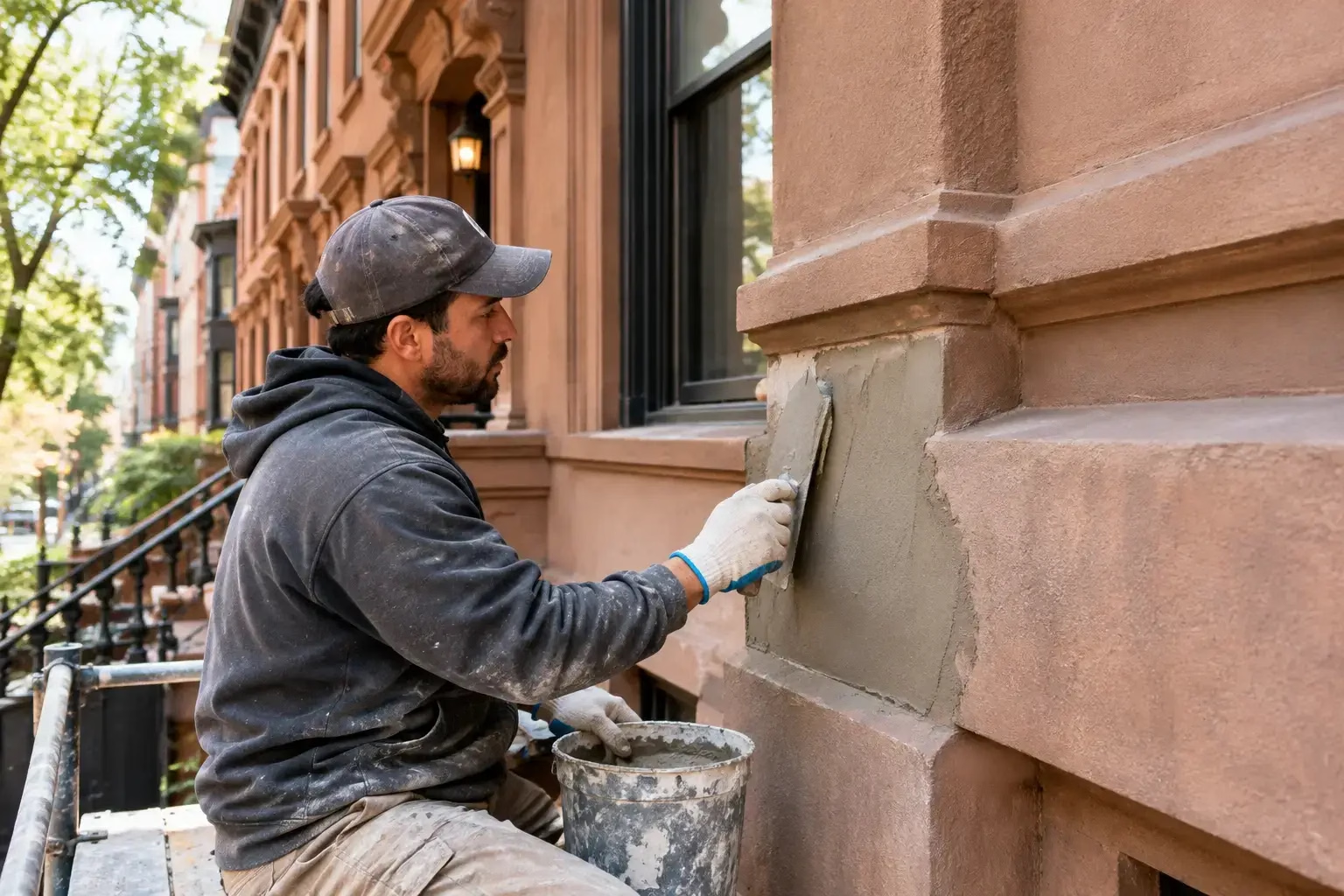
A small crack in a brownstone stucco facade can look like a paint problem from the sidewalk. After a few freeze-thaw cycles and hard rain, it can become a water-entry problem behind the finish. For brownstone stucco repair, Brooklyn property owners need more than a quick patch. They need a repair that addresses the failed material, protects the wall beneath it, and matches the character of the building.
Brooklyn brownstones in Park Slope, Brooklyn Heights, Cobble Hill, Bed-Stuy, and Carroll Gardens face a demanding combination of age, weather, street moisture, and prior repairs. Many facades have been patched repeatedly over decades using materials that do not move, breathe, or bond the same way as the original wall. The result is often cracking, bulging, staining, loose stucco, or areas that sound hollow when tapped.
What Brownstone Stucco Damage Is Telling You
Stucco is not just a decorative outer coat. On a brownstone or masonry building, it is part of the exterior protection system. When it is installed and maintained correctly, it sheds water while allowing moisture in the wall assembly to dry. When it fails, water can work behind the surface and affect masonry, steel lintels, wood framing, interior plaster, and paint.
Hairline cracking does not always mean the full facade needs replacement. Some cracking is limited to an aging finish coat or a small area where the substrate has moved. Wider, branching, or recurring cracks deserve closer attention, especially when they appear near window openings, cornices, parapets, or the base of the facade.
Watch for stucco that is separating from the wall, flaking paint that returns after repainting, rust-colored staining, damp interior walls, or pieces falling near the sidewalk. These are signs that a surface repair alone may not be enough. The repair scope should be based on the cause, not simply on what is visible from the street.
Brownstone Stucco Repair Starts With Proper Investigation
A dependable stucco contractor in Brooklyn should inspect the full condition of the facade before proposing a price. That means looking at the roof edge, coping, flashing, window sills, joints, brickwork, cornice, and drainage paths as well as the damaged stucco itself. Water often enters above the place where the damage shows up.
For example, a cracked patch under a second-floor window may be caused by failed sill flashing. Recoating that area without repairing the sill can make the wall look better for a season, but the moisture problem continues behind it. A similar issue can come from a leaking roof line, open mortar joints, deteriorated brick, or an unsealed penetration for a pipe or conduit.
The right scope depends on the building. A sound wall with localized damage may only need removal of loose material, substrate preparation, compatible base coats, finish matching, priming, and painting. A wall with extensive delamination may need a larger restoration plan that includes masonry work, waterproofing details, and replacement of failed sections. The lowest estimate is not always the affordable choice if it skips the work that prevents the repair from failing again.
What a Lasting Stucco Repair Includes
Good exterior work is methodical. First, loose, damaged, and unsound stucco must be removed to a stable edge. The exposed substrate is then evaluated for deteriorated masonry, rusted metal, damaged lath, or moisture issues. Those conditions need repair before new stucco is applied.
The repair material also matters. Older Brooklyn properties often need a compatible system that will bond correctly and perform with the existing wall. A very hard modern patch over softer historic masonry can create a weak transition and shift stress to the surrounding material. Matching the texture, profile, and color is important, but it should never come before building a sound base.
A proper repair commonly includes preparation, reinforcement where required, base coats, curing time, a finish coat, and protective paint or coating suited to the facade. Weather conditions affect the schedule. Cold temperatures, heavy rain, and high humidity can change curing conditions, so rushing exterior stucco work to meet an unrealistic date can create avoidable problems.
When Stucco Repair Should Include Masonry or Waterproofing
Brownstone facade issues rarely stay within one trade. If brick pointing is failing behind a stucco area, if water is entering through the roof line, or if a damaged cornice is sending water down the wall, a single patch will not solve the whole problem. This is where working with a contractor that can coordinate masonry, roofing, cornice restoration, cement work, painting, and waterproofing can save time and reduce finger-pointing between separate crews.
There is also a difference between waterproofing and trapping moisture. Some exterior coatings are appropriate for specific wall conditions, while others can seal moisture into old masonry and lead to more peeling or spalling. The right approach depends on the existing materials, the exposure of the wall, and where the water is entering. A contractor should explain the recommended system in plain language before work starts.
Landmarked buildings and buildings within historic districts may have additional requirements for visible facade work. Permits or approvals can affect the material selection, details, timing, and cost. An experienced local contractor can identify when the project needs more than a standard repair plan.
Choosing a Stucco Contractor Brooklyn Owners Can Trust
A contractor should be willing to walk the property with you, point out the cause of the problem, and provide a clear scope instead of a vague promise to “fix the stucco.” Ask what will be removed, how the wall will be prepared, whether adjoining masonry or flashing needs repair, how the finish will be matched, and what cleanup and site protection are included.
For landlords and property managers, communication matters just as much as workmanship. Exterior repairs can involve scaffolding, pedestrian protection, tenant access concerns, noise, and coordination with other maintenance work. A realistic schedule and a written scope help prevent surprises after the project starts.
Be careful with quotes that price only the visible patch without discussing water control, substrate condition, or matching. On the other hand, do not assume every crack requires a complete facade restoration. An honest assessment should separate immediate safety repairs from recommended preventative work and long-term restoration needs.
Best Budget Construction in Brooklyn & NYC
Best Budget Construction provides practical exterior repair and renovation services for homeowners, landlords, property managers, and commercial property owners. As a second-generation contractor with experience dating back to 2001, the team approaches brownstone stucco work with the understanding that appearance, weather protection, and budget all need to work together.
A clear estimate should identify the work being performed and help you understand where your money is going. Whether the job involves a localized stucco patch, facade restoration, brick pointing, waterproofing, roof-related repairs, or exterior painting, one coordinated team helps keep responsibility clear from inspection through completion.
License & Insurance credentials for all services
Property owners should never have to guess whether a contractor is prepared to work on an occupied NYC building. License and insurance documentation should be available for the project, along with a detailed scope and jobsite plan appropriate to the work. This protects the owner, residents, workers, and the building itself.
100% OSHA guidelines compliant
Exterior facade work requires serious attention to safety. Proper scaffolding, sidewalk protection, work-area control, fall protection, and daily jobsite practices are not extras. They are essential for protecting pedestrians, tenants, workers, and neighboring properties while repair work is underway.
Free Estimate Call (917) 674-9488
If you see cracking, missing stucco, water staining, or loose material on a brownstone facade, address it before the next wet season makes the damage more expensive. A site visit and clear estimate can help you decide whether the problem calls for a targeted repair or a broader restoration plan. The best time to inspect an exterior wall is when the first warning signs appear, not after a small failure turns into an emergency.
