

That low-ceiling basement with old pipes, patchy concrete, and a musty smell can either stay wasted square footage or become a useful part of your property. If you are searching for basement finishing contractors near me, you are probably not looking for theory. You want to know who can do the work safely, price it fairly, and finish it without turning your building into a long-term construction headache.
In New York City, basement work is rarely simple. Older homes, brownstones, tight access, moisture issues, and outdated mechanicals change the job fast. A finished basement that looks good on the surface but ignores waterproofing, insulation, code concerns, or ventilation can cost you much more later. That is why hiring the right contractor matters as much as the design itself.
What basement finishing contractors near me should actually handle
A real basement finishing contractor should do more than frame walls and install sheetrock. In many NYC properties, the first phase is problem-solving. Before any finish materials go in, the contractor should look at moisture entry, uneven floors, wall conditions, ceiling height, plumbing lines, electrical capacity, and how the space will actually be used.
If the basement has a history of dampness, that issue has to be addressed first. Paint and flooring do not solve water intrusion. The right contractor will talk plainly about waterproofing, drainage, sealing, and whether any structural or masonry repairs should be done before the finish work starts. This is especially important in older Brooklyn homes where basement walls and foundations have been through decades of weather, settlement, and patchwork repairs.
Once the conditions are understood, basement finishing usually includes framing, insulation, drywall, flooring, lighting, electrical updates, trim, painting, and sometimes bathroom or kitchenette work depending on the scope. In some cases, it also involves egress improvements, mechanical room separation, or layout changes to make the space legal and practical. Good contractors do not oversell what the space can be. They tell you where the limits are.
Why local basement experience matters in NYC
Searching for basement finishing contractors near me makes sense for one big reason – local experience changes outcomes. A contractor who understands suburban new-build basements may not be the right fit for a narrow Brooklyn townhouse, a mixed-use building, or an older property with masonry walls and limited access.
NYC basements come with their own realities. Materials often have to be carried through tight hallways or down narrow stairs. Noise, debris control, and building rules may affect scheduling. Older homes may hide plumbing surprises, outdated wiring, or signs of previous water damage behind finished walls. If a contractor has worked in neighborhoods like Park Slope, Brooklyn Heights, Bed-Stuy, or Carroll Gardens, there is a better chance they know what they are walking into before demolition even starts.
That local knowledge can save time and money. It helps with planning, material selection, and sequencing the job correctly. It also means fewer unrealistic promises.
What to ask before hiring a contractor
Most property owners make the same mistake when comparing basement contractors. They focus only on the bottom-line number. Price matters, especially if you are budget-conscious, but basement work needs to be compared scope against scope.
Start by asking whether the contractor is licensed and insured. That should not be optional. Ask how long they have been doing basement remodeling and whether they regularly work in NYC homes and mixed-use properties. Ask who will supervise the job, whether subcontractors are involved, and how change orders are handled if hidden issues come up.
You should also ask a very simple question that tells you a lot: what do you check before you start finishing a basement? A serious contractor will mention moisture, structure, mechanicals, insulation, and code-related concerns. A contractor who jumps straight to flooring colors and recessed lights may be skipping the hard part.
Timeline matters too, but it should be discussed honestly. Basement jobs can move quickly when conditions are straightforward. They can also slow down when repairs, permits, or unexpected corrections are needed. A dependable contractor gives you a realistic schedule, not a sales pitch.
Budgeting for a finished basement without getting burned
Basement finishing costs vary widely because no two basements start in the same condition. A clean, dry basement with decent ceiling height and updated utilities is one kind of job. A damp basement in an older building with cracked walls, old wiring, and poor lighting is another.
If one estimate is dramatically lower than the others, there is usually a reason. Sometimes the contractor left out prep work. Sometimes they are pricing low to get the job and planning to make up the difference through change orders. Sometimes they are not accounting for waterproofing, permits, or code-related upgrades that will surface later.
A better approach is to ask for a clear scope of work and review what is included. Are demolition and debris removal covered? Is insulation included? What type of flooring is being priced? Are painting and trim part of the number? If a bathroom is involved, are plumbing fixtures and electrical work included or not? Transparent pricing is one of the strongest signs that a contractor knows how to run the project properly.
Affordable does not mean cheap workmanship. It means getting solid work, clear communication, and a finished space that lasts.
The basement problems that should be solved first
A basement is different from a first-floor renovation because the hidden issues are often the real job. Moisture is the biggest one, but it is not the only one. Uneven slab floors, poor insulation, low-hanging ductwork, outdated electric panels, and exposed plumbing can all affect the final layout and cost.
Some owners want to move straight into design. That is understandable. You want the family room, office, gym, storage area, or rental-ready layout. But if the space smells damp in summer, gets cold in winter, or has signs of seepage after heavy rain, those problems need attention before finishes go in.
A good contractor will not treat those issues as side notes. They will build the job around them. That may mean adjusting materials, using more moisture-resistant assemblies, improving ventilation, or recommending waterproofing and repairs before decorative work starts. It depends on the property, and that honesty is worth paying for.
What a smooth basement project looks like
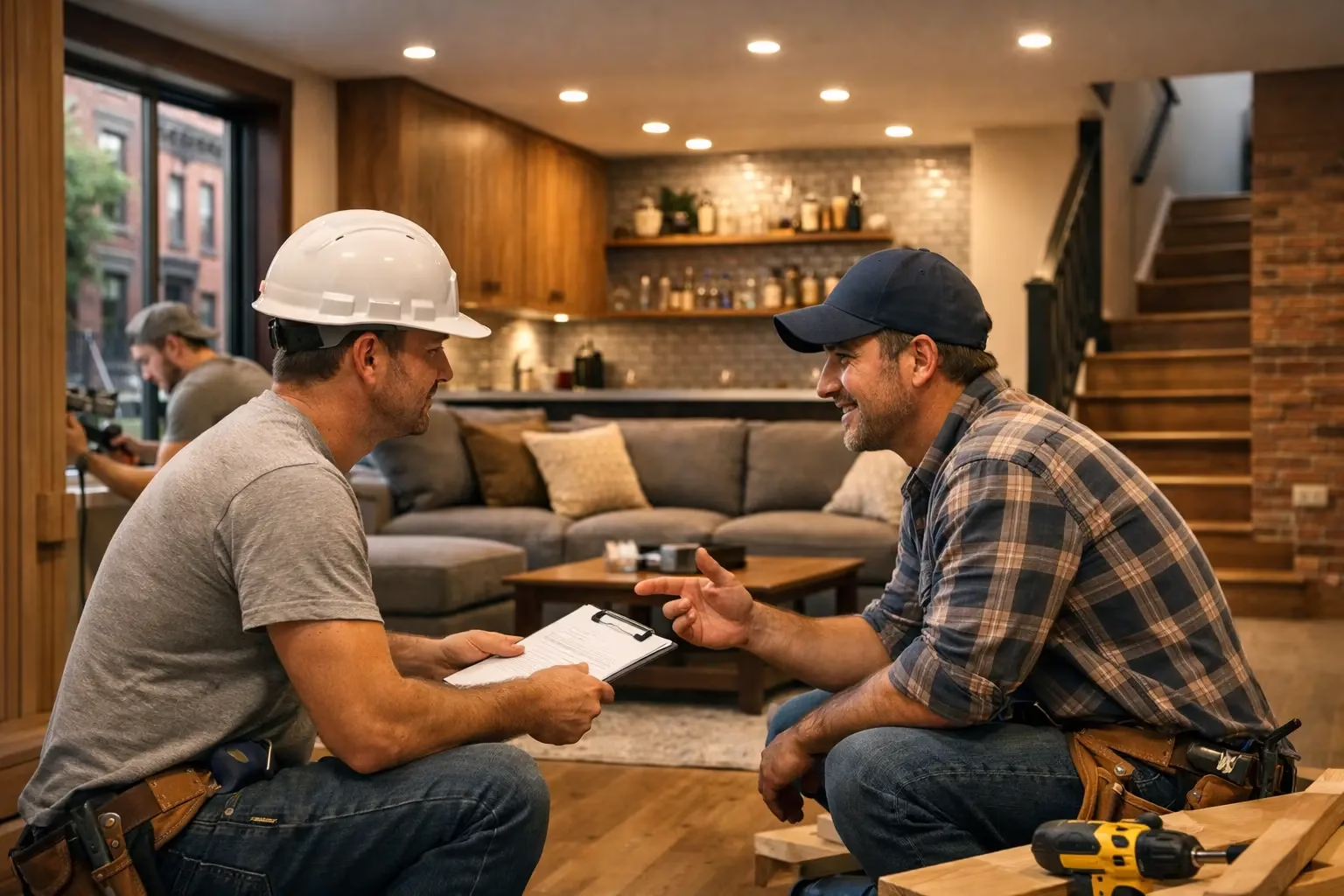
The cleanest basement projects usually start with a site visit and a realistic conversation. The contractor walks the space, asks how you want to use it, checks for visible problem areas, and explains what is possible within your budget. From there, you should receive a written estimate or proposal with a defined scope.
Once work begins, the project should move in a logical order. Prep and correction work come first. Framing, rough mechanicals, insulation, and wall systems follow. Then come drywall, finishes, flooring, painting, trim, and fixture installation. Communication should stay steady throughout the job, especially if existing conditions require adjustments.
The best experience is not always the fastest one. It is the one where the contractor shows up, keeps the site controlled, answers questions directly, and does not disappear when the hard parts begin.
Choosing a contractor who can handle more than one trade
Basement finishing often overlaps with other building needs. A basement with moisture may need waterproofing. An older home may need masonry repair, interior repair, painting, or electrical updates at the same time. That is why many NYC owners prefer a contractor who can manage several parts of the project instead of forcing them to coordinate multiple companies.
For buildings in Brooklyn and across NYC, that one-source approach can make the project easier to schedule and easier to control. It cuts down on finger-pointing between trades and helps keep the work aligned from demolition through final finish. For many property owners, that convenience matters just as much as the construction itself.
Best Budget Construction takes that practical approach. As a licensed and insured second-generation contractor serving NYC since 2001, the company handles basement remodeling along with interior repair, waterproofing, painting, masonry, and related building work that often affects basement projects in older properties.
How to know you are ready to move forward
If your basement is dry enough to evaluate, you have a clear use for the space, and you are ready to compare real scopes instead of guessing from online averages, you are ready to talk to contractors. The goal is not to find the fastest promise. It is to find a crew that understands the building, respects the budget, and knows how to finish the job without cutting corners.
A basement can become storage that finally makes sense, a family room that gives the house breathing room, or a work area that adds real daily value. The right contractor will help you get there by dealing with the unseen issues first and building the space the right way. When you start your search, look for experience, straight answers, and a written estimate you can actually trust. That is usually where a good basement project begins.
