

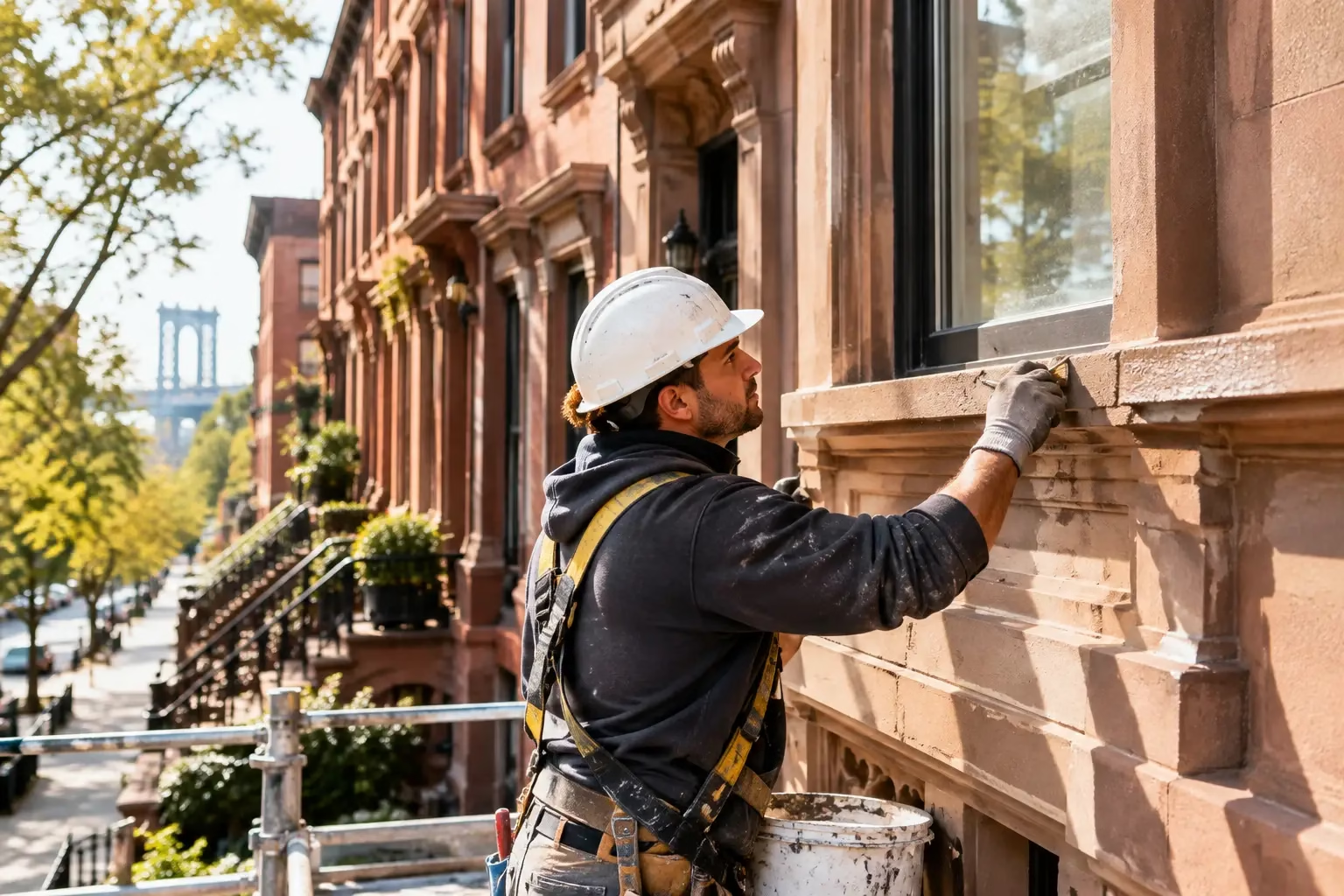
A failing facade rarely starts with a dramatic collapse. In Brooklyn, it often begins with a hairline crack above a window, brick dust on a stoop, a loose piece of brownstone, or paint that keeps peeling in the same spot. Facade restoration addresses those warning signs before moisture, movement, and neglected masonry turn a manageable repair into a larger safety and budget problem.
For owners of brownstones, multifamily buildings, mixed-use properties, and small commercial storefronts, the right work is not just about making the exterior look clean again. It is about protecting the wall assembly, preserving the building’s character, and repairing the source of deterioration rather than covering it up.
Facade Restoration With Best Budget Construction in Brooklyn & NYC
New York City facades take a beating. Freeze-thaw cycles open mortar joints, wind-driven rain finds weak flashing, years of paint trap moisture, and small roof or cornice failures allow water to travel behind the face of the wall. On older Brooklyn buildings, original brownstone and brick can be especially vulnerable when previous repairs used incompatible cement or sealants.
Proper facade restoration starts with a close inspection. We look at cracking patterns, spalled brick, missing mortar, loose brownstone, deteriorated lintels, failed caulking, water stains, and conditions around parapets, cornices, windows, and roofs. The goal is to determine whether the problem is cosmetic, localized, or connected to a wider water-management or structural issue.
That distinction matters. A few failed mortar joints may call for targeted brick pointing. A cracked stucco surface may need removal and rebuilding in affected areas. If water has entered behind masonry for years, repairs can involve brick replacement, waterproofing, flashing corrections, cornice work, and interior patching after the exterior is secured. A contractor who only paints the surface may make the problem look better for a season while moisture continues doing damage behind it.
In neighborhoods such as Park Slope, Brooklyn Heights, Cobble Hill, Bed-Stuy, and Carroll Gardens, restoration also needs to respect the building’s original appearance. Matching brick color, mortar profile, brownstone texture, and architectural details is part of good craftsmanship. The cheapest visible patch is not always the most affordable repair over time.
When Does a Building Need Facade Restoration?
Property owners should act when they see loose, cracked, bulging, or crumbling masonry. Open mortar joints, recurring water stains, rust marks near steel lintels, damaged decorative stone, and paint blistering are also signs that deserve attention. A sidewalk below the facade with brick chips or brownstone fragments is a clear reason to have the exterior inspected quickly.
Some conditions are obvious from the street. Others show up inside first, including damp plaster near exterior walls, staining at top-floor ceilings, drafty windows, or repeated leaks after heavy rain. These symptoms do not always mean the facade alone is at fault. Roof edges, parapet walls, chimneys, coping stones, and window perimeter seals can all contribute to the same issue.
For buildings taller than six stories, New York City facade inspection and safety requirements may apply. Smaller properties may not fall under the same inspection cycle, but owners still have a duty to maintain unsafe conditions. A practical site assessment can help identify what needs immediate repair and what can be planned as preventative maintenance.
Restoration Is Different From a Surface Repair
A surface repair focuses on appearance. Restoration addresses the condition beneath the finish and the building details that keep water out. That may mean carefully removing loose material, repairing the substrate, installing compatible replacement materials, repointing masonry, rebuilding damaged sections, and applying the appropriate protective finish only after the wall is sound.
There are times when a limited repair is the right choice. If deterioration is confined to one window lintel or a small parapet section, there is no reason to tear apart a stable facade. But when the same failure appears in several places, patching each spot separately can cost more than addressing the underlying cause in one coordinated project.
The Facade Restoration Process for NYC Properties
A dependable project begins with a scope that matches the actual condition of the building. Before work starts, access, protection, material needs, and safety requirements should be clear. On dense city blocks, that can include coordinating scaffolding, sidewalk protection, debris control, and work hours with the property owner or manager.
The work commonly follows a practical sequence:
- Inspect the facade, roofline, cornice, windows, and visible masonry to identify active failures and likely water entry points.
- Remove loose, damaged, or failing material without disturbing sound surrounding areas.
- Repair brick, stone, brownstone, stucco, mortar joints, lintels, and cement surfaces as the condition requires.
- Correct waterproofing details, flashing, caulking, coping, and drainage issues that caused or worsened the damage.
- Finish repaired areas to blend with the existing building and clean the jobsite thoroughly.
Material compatibility is a major factor in older buildings. Mortar that is too hard can damage softer historic brick or brownstone by forcing moisture to escape through the face of the masonry instead of the joint. The same is true of coatings. A coating chosen only for appearance can trap water if the wall is not properly prepared and allowed to dry.
This is where experience makes a visible difference years later. The repair should be built for the wall you have, not copied from a one-size-fits-all specification.
License & Insurance credentials for all services
Exterior construction carries real risk. Work above sidewalks, around pedestrians, and on aging masonry requires planning, trained crews, and responsible jobsite control. Owners should ask any contractor about licensing, insurance coverage, scope details, access requirements, and who is responsible for protecting the property during the project.
Best Budget Construction is a licensed and insured, second-generation contractor with experience dating back to 2001. Our team handles more than isolated facade patches. When a project also involves roofing, cornice restoration, brick pointing, stucco, waterproofing, sidewalk repair, painting, or interior water damage repairs, clients can work with one contractor instead of coordinating multiple trades.
That approach saves time, but it also helps prevent missed connections between systems. For example, repairing a cracked facade without correcting a leaking parapet or roof edge is not a complete solution. Coordinated work creates a clearer path from diagnosis to finished repair.
100% OSHA guidelines compliant Work Protects Your Property
Safety should not be treated as an add-on. Proper personal protective equipment, controlled work zones, scaffold procedures, debris management, and daily site awareness protect workers, residents, tenants, neighbors, and pedestrians. We perform work 100% OSHA guidelines compliant and plan each exterior project around the conditions of the site.
For occupied buildings, communication also matters. Tenants need reasonable notice when access, noise, dust, or temporary protection may affect their routine. Commercial owners may need work scheduled to reduce disruption to customers and deliveries. A professional contractor discusses these realities before the job is underway, not after complaints begin.
Budgeting for Facade Restoration Without Cutting Corners
Facade restoration costs depend on access, height, extent of damage, materials, decorative details, and whether water intrusion has affected adjacent building components. A ground-level brick repair is very different from restoring a brownstone bay, rebuilding a parapet, or working from a full scaffold installation.
The lowest estimate can become expensive when it leaves out access costs, material matching, waterproofing corrections, protection, cleanup, or necessary repairs discovered in plain view. On the other hand, not every building needs full restoration. A clear, itemized scope helps owners choose between urgent repairs, preventative work, and larger phased improvements based on their property and budget.
For landlords and property managers, early maintenance is usually easier to schedule and less disruptive than emergency repair after a leak or falling masonry complaint. Annual visual checks of mortar joints, parapets, cornices, roof edges, and window seals can catch issues while they are still localized.
Free Estimate Call (917) 674-9488
If your brick facade is shedding mortar, your brownstone has cracks or water damage, or an aging storefront needs exterior repair, get a clear assessment before the condition spreads. Best Budget Construction provides straightforward estimates for Brooklyn and NYC property owners who want dependable workmanship, honest recommendations, and a practical plan for moving forward.
A well-restored facade does more than improve curb appeal. It keeps rain where it belongs, protects the structure behind the wall, and helps your property remain safe, durable, and ready for the years ahead.
