

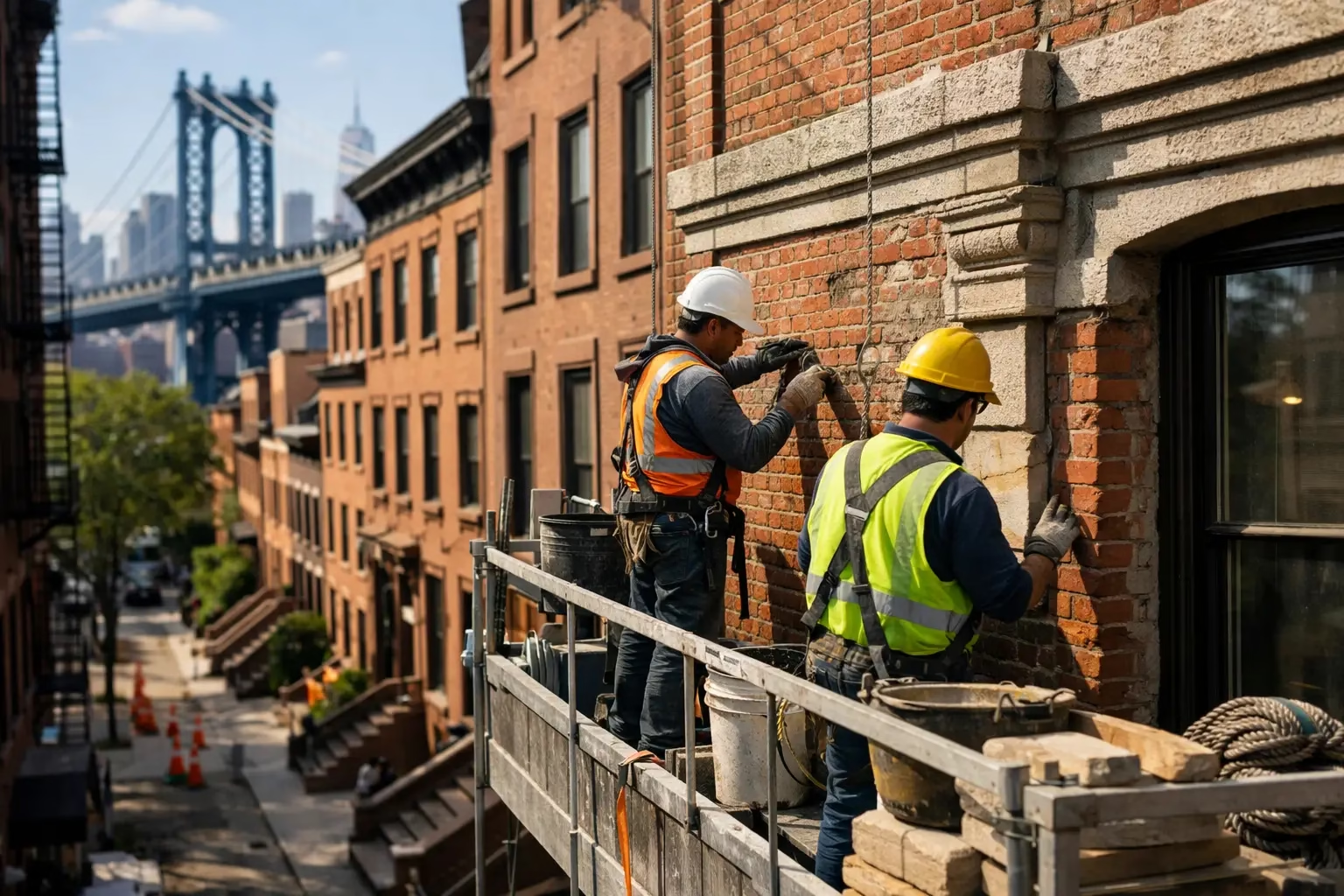
A small crack in brick or stucco rarely stays small for long in New York. One freeze-thaw cycle, one leaking parapet, or one missed maintenance season can turn a manageable repair into a much bigger job. If you are asking how much does facade repair cost, the honest answer is that pricing depends on the material, access, damage level, and how early the problem is caught.
For most NYC properties, facade repair can range from a few thousand dollars for localized patching to tens of thousands for larger masonry restoration, waterproofing, or structural work. On brownstones, mixed-material facades, and older brick buildings, the cost often goes up because the repair has to match existing details and address the real source of deterioration, not just the surface damage.
How much does facade repair cost for common projects?
The fastest way to understand cost is to look at the type of work involved. Minor facade repairs, such as sealing cracks, replacing a small number of damaged bricks, patching stucco, or repointing a limited section of wall, usually fall on the lower end. These jobs are often in the low-thousands if access is simple and the damaged area is contained.
Mid-range projects typically include larger repointing sections, brownstone patching, lintel repair, replacing multiple cracked bricks, waterproofing problem areas, or fixing bulging sections before they become unsafe. These jobs can move into the mid-thousands or higher, especially if the contractor needs sidewalk sheds, scaffolding, or detailed material matching.
At the high end are full facade restoration projects. That may include extensive brick pointing, brownstone resurfacing, cornice restoration, crack stabilization, masonry rebuilding, and waterproofing across a large exterior wall. If structural movement, deep water infiltration, or DOB-related safety issues are involved, costs climb quickly.
In practical terms, NYC owners often see facade repair costs break down something like this:
- Minor localized repairs: roughly $2,500 to $7,500
- Moderate facade repair and masonry restoration: roughly $8,000 to $25,000
- Large-scale or full facade restoration: $25,000 and up
These are broad working ranges, not quote substitutes. A small issue on a four-story Brooklyn brownstone with difficult access can cost more than a larger visible repair on an easier building.
What drives facade repair cost up or down?
The biggest cost factor is the cause of the damage. Cosmetic cracks are one thing. Water intrusion, failed mortar joints, rusted lintels, loose brownstone, and movement around windows are another. If the visible problem is tied to moisture getting behind the facade, the repair has to solve both the symptom and the source.
Access is another major variable. In Brooklyn Heights, Park Slope, Bed-Stuy, and similar neighborhoods, many buildings sit tight to the street with limited staging space. If the crew needs scaffolding, pipe staging, sidewalk protection, or special setup to work safely, labor and logistics add to the total. On taller buildings, access alone can be a serious line item.
Material type also matters. Brick repair is priced differently than stucco repair. Brownstone restoration usually requires more specialized surface preparation, patching, shaping, and finishing. Decorative trim, cornices, window surrounds, and historic details take more time to restore properly than a flat wall section.
Then there is the issue of how long the damage has been there. Early repairs are almost always cheaper. Once water gets in and starts breaking down masonry from the inside, the contractor may find hidden deterioration after opening the area. That is when a straightforward pointing job can turn into partial rebuilding, replacement masonry, or steel repair.
Brick, brownstone, and stucco all price differently
Brick facades are common across NYC, and many repairs center on repointing. If the mortar joints are deteriorated but the brick itself is mostly sound, the project may be relatively controlled. If the bricks are spalling, cracking, or separating, replacement adds labor and material costs.
Brownstone is a different category. A brownstone facade can look like it only needs patching, but once delaminated areas are opened, there may be more surface failure underneath. Matching profile, color, and texture takes skill. On older homes, especially in brownstone-heavy Brooklyn blocks, appearance matters almost as much as structural performance, so the repair has to hold up and look right.
Stucco can be less expensive for basic patching, but when large wall areas fail due to trapped moisture or poor prior work, repair costs increase. If the finish needs to be redone across broad sections for a uniform result, the price moves beyond a simple patch job.
Hidden costs property owners should expect
One reason facade work surprises owners is that the visible damage is not always the full job. Water often enters through coping stones, roof edges, parapets, failed sealant, window perimeters, or damaged flashing. If those issues are not corrected, the facade repair may not last.
Permits, site protection, debris handling, and cleanup can also affect price. On some projects, especially street-facing work, safety compliance is not optional. Licensed and insured contractors build those requirements into the estimate because cutting corners outside is a fast way to create liability.
Matching materials can also add cost. On older buildings, using the wrong mortar strength, the wrong stucco mix, or the wrong brownstone patching method can cause more damage later. A cheaper repair is not always the lower-cost option if it fails early or traps moisture in the wall.
When facade repair becomes urgent
If bricks are loose, the facade is bulging, pieces are falling, cracks are widening, or water is actively getting into the building, the repair should move quickly. Waiting rarely saves money. The longer a facade stays open to water, the more likely the damage spreads to interior walls, framing, steel components, and finishes.
This is especially true for landlords and property managers. A neglected facade can become a tenant complaint, a safety issue, and a much larger capital project all at once. For small commercial buildings, exterior deterioration also affects curb appeal and customer confidence. People notice when the front of a building looks neglected.
How to get an accurate facade repair estimate
The best estimates start with an on-site inspection. Photos help, but they do not always show movement, depth of cracking, moisture entry points, or how much area sounds hollow behind the surface. A contractor needs to see the condition up close and assess whether the job is isolated repair, restoration, or a combination of both.
A useful estimate should clearly explain what is being repaired, what materials are being used, whether access equipment is included, and if the price assumes hidden damage is limited to what is visible. That kind of transparency matters. It helps owners compare proposals fairly and understand why one bid may be lower than another.
If you own in Brooklyn or elsewhere in NYC, local experience matters too. Facade problems on city buildings are shaped by age, weather, traffic vibration, deferred maintenance, and prior patch jobs. A contractor who works regularly on brownstones, masonry buildings, cornices, and waterproofing issues is more likely to spot the real cause before the work begins.
Is facade repair worth doing now or later?
If the damage is active, now is usually cheaper than later. A controlled repair today may prevent reconstruction next year. That is the real cost difference most owners care about. Facade work is not just about looks. It is about protecting the structure, avoiding water damage, and keeping the building safe.
For owners trying to stay budget-conscious, the smart move is to repair the problem before it spreads and to hire a licensed, insured contractor who can handle both the facade and the related exterior issues around it. That could mean masonry, stucco, brownstone patching, lintel repair, waterproofing, or cornice work under one scope instead of hiring multiple trades and hoping they coordinate.
At Best Budget Construction, this is how we approach exterior repair across NYC – practical scope, clear pricing, and work that is built to hold up. If your facade is cracking, leaking, or starting to shed material, a site visit and a straight estimate can save you from a much larger repair later.
The best time to price facade repair is when the damage still looks smaller than it really is.
