

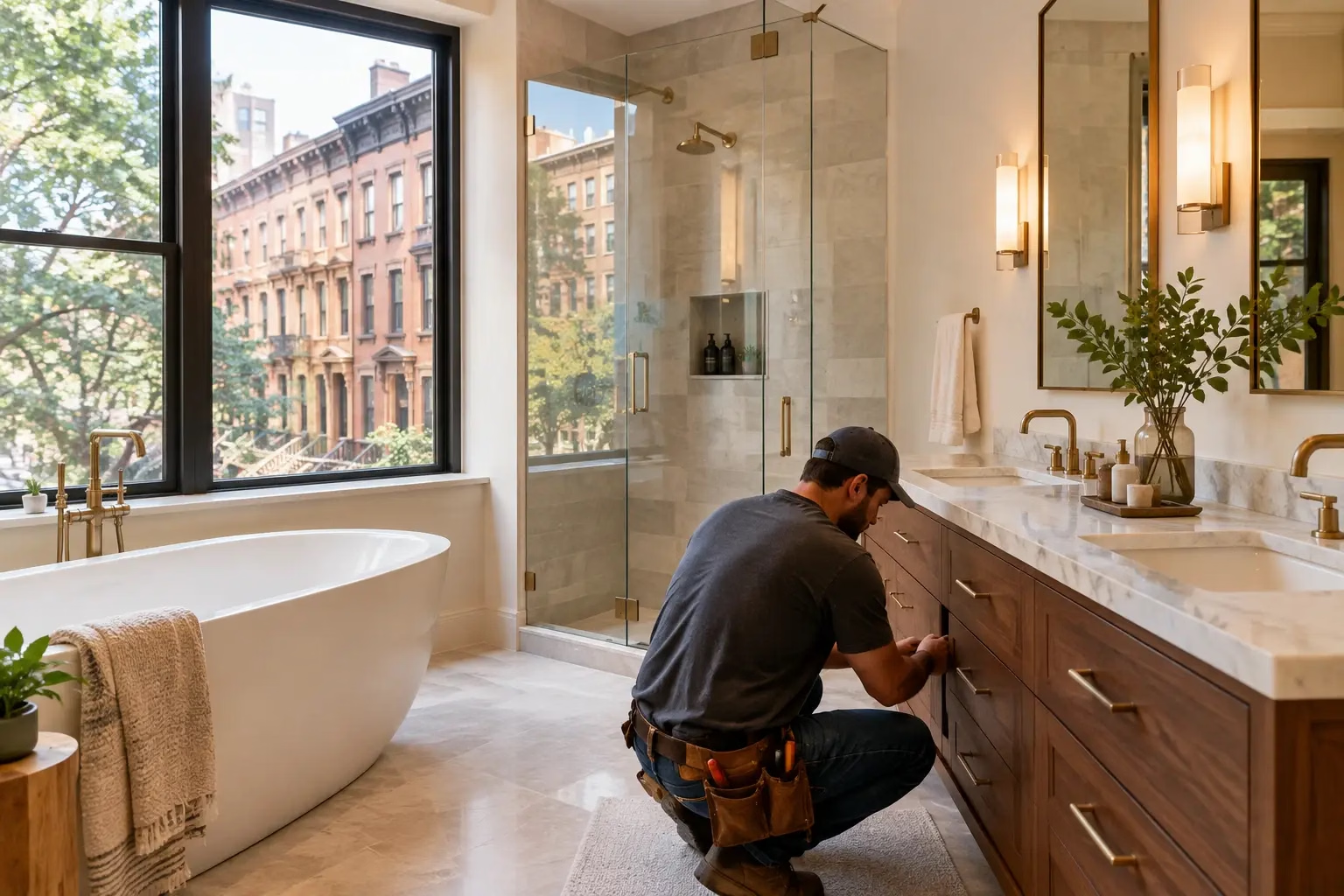
A luxury bathroom renovation in Manhattan is rarely just a matter of replacing tile and a vanity. Behind the walls, many apartments have aging plumbing, uneven surfaces, limited electrical capacity, strict building rules, and little room for delivery or debris removal. The finished room should feel calm and high-end, but getting there takes detailed planning, qualified labor, and a contractor who understands how NYC properties actually work.
For owners, landlords, and property managers, luxury means more than expensive materials. It means a bathroom built correctly: waterproofed where it counts, ventilated properly, easy to maintain, and finished with clean lines that still look good years from now.
What Makes a Manhattan Bathroom Feel Truly Luxury
A well-designed bathroom does not need to be oversized to feel upscale. In fact, many Manhattan bathrooms are compact. The difference is in the planning. Every inch needs a purpose, from the location of the shower controls to the depth of a recessed medicine cabinet.
Large-format porcelain tile can reduce grout lines and create a cleaner look. A floating vanity can make a narrow floor plan feel more open. Frameless glass, layered lighting, radiant floor heat, and quality fixtures add comfort without making the room feel crowded. Natural stone can be beautiful, but it also requires the right sealing and ongoing care. Porcelain often delivers a similar visual effect with less maintenance, which matters in rental properties and busy households.
The best material is not always the most expensive one. It is the one that suits the building, the way the bathroom will be used, and the maintenance level the owner is prepared to handle.
Start With Building Conditions, Not Fixture Shopping
Before choosing a soaking tub or imported tile, inspect what is behind the existing bathroom. Older Manhattan buildings can hide cast-iron pipes, deteriorated subfloors, previous water damage, poor ventilation, and electrical work that no longer meets current needs. A beautiful finish cannot compensate for a weak foundation.
In co-ops and condos, the building may require alteration agreements, insurance certificates, approved work hours, elevator protection, and specific procedures for shutting off water. Some buildings limit wet-over-dry changes, meaning you may not be able to move a toilet or shower as freely as a single-family homeowner could. These requirements can affect the layout, schedule, and cost, so they should be addressed before materials are ordered.
A clear site review also helps prevent a common renovation problem: discovering a major condition after demolition has already started. There are always unknowns in older properties, but experienced planning reduces surprises and gives the owner a realistic allowance for necessary repairs.
Luxury Bathroom Renovation in Manhattan Needs a Smart Layout
A luxury layout is one that works without wasted movement. In a small bathroom, that may mean replacing a bulky swing door with a pocket door if conditions allow, selecting a wall-hung toilet, or using a custom vanity sized exactly for the room. In a larger primary bath, it may mean creating separate zones for bathing, grooming, and storage.
Choose Features That Improve Daily Use
A rain shower head looks impressive, but water pressure and pipe sizing need to support it. A freestanding tub makes a strong design statement, but it takes up floor area and can be harder to clean around. Double sinks are useful for some households, yet a single larger vanity with better drawer storage may be the smarter choice in a tight space.
Good design is practical. Consider where towels will go, whether the vanity drawers can open fully, how the mirror lighting will work, and where a guest can place personal items. These small decisions are what make the room feel carefully built rather than simply decorated.
Plan Lighting and Ventilation Early
Bathrooms need more than one overhead fixture. A balanced lighting plan generally includes ambient light for the room, task lighting at the mirror, and accent lighting where it adds warmth or safety. Dimmable fixtures can change the atmosphere without changing the room.
Ventilation deserves the same attention. A properly sized, vented exhaust fan helps control humidity, protect finishes, and reduce the risk of mold. In an apartment building, routing and building requirements can limit the options, so this should be reviewed before the final plan is approved.
Waterproofing Is Where Good Renovations Earn Their Value
The most expensive tile in the world will not save a shower that was not waterproofed correctly. Water management is the hidden work that protects neighboring units, ceilings, framing, and your investment.
A proper shower build includes a sound substrate, waterproof membrane, sealed corners and penetrations, correctly sloped surfaces, and careful testing before tile installation. The shower pan must direct water toward the drain. Niches, benches, and glass-door connections require special attention because these areas are frequent sources of leaks when rushed.
For property owners, this is a major reason to avoid choosing a contractor only on the lowest initial number. A low quote that leaves out prep work, permits, protection, disposal, or waterproofing details is not an affordable renovation. It is a future repair bill.
License & Insurance credentials for all services
Bathroom work can involve plumbing, electrical, tile, carpentry, painting, demolition, and building coordination. Hiring a licensed and insured contractor gives owners a clear point of responsibility across the project instead of forcing them to manage separate trades on their own.
Ask direct questions before work begins. Who is supervising the job? What is included in the written scope? How are change orders handled? What protection will be used in hallways and common areas? How will dust, debris, and daily cleanup be managed? Straight answers to these questions are a better sign than vague promises about a quick, cheap job.
Best Budget Construction in Brooklyn & NYC approaches bathroom projects with the same hands-on discipline required for older urban properties. That means reviewing existing conditions, defining the scope, coordinating the work, and keeping the client informed when a building condition changes the plan.
100% OSHA guidelines compliant
Safety is not separate from quality. Controlled demolition, appropriate protective equipment, secure work areas, and organized material handling help protect workers, residents, and the property itself. This is especially important in occupied apartments, brownstones, and multi-unit buildings where common spaces must remain safe and usable.
A professional crew should also respect building rules, approved work hours, elevator procedures, and noise limitations. On-time delivery matters, but rushing through critical stages such as plumbing testing, waterproofing, or curing time is not a shortcut worth taking. The schedule should be realistic enough to protect the finished result.
Budgeting Without Cutting the Wrong Corners
The cost of a Manhattan bathroom renovation depends on the layout changes, access conditions, material selections, permit needs, plumbing and electrical upgrades, and hidden repairs found after demolition. Moving plumbing, installing custom glass, adding heated floors, or rebuilding damaged framing can all change the final investment.
There are smart ways to control costs without lowering the standard of the work. Keeping the toilet and major plumbing fixtures in their current locations can reduce labor and building coordination. Choosing high-quality porcelain over delicate natural stone may lower maintenance costs. Investing in a durable vanity cabinet and reliable shower valve is usually wiser than overspending on decorative hardware.
A transparent estimate should separate the major parts of the work and explain what is included. Owners should also keep a reasonable contingency for older-building conditions. It is better to plan for the possibility of concealed repairs than to make decisions under pressure after a wall is opened.
Free Estimate Call (917) 674-9488
A bathroom should add value to the property, make daily routines easier, and hold up under real use. Whether you are updating a compact Manhattan apartment bath, preparing a rental unit, or renovating a primary suite, start with an honest site review and a scope built around the building conditions. Call (917) 674-9488 for a free estimate and a practical conversation about what it will take to do the work right.
