

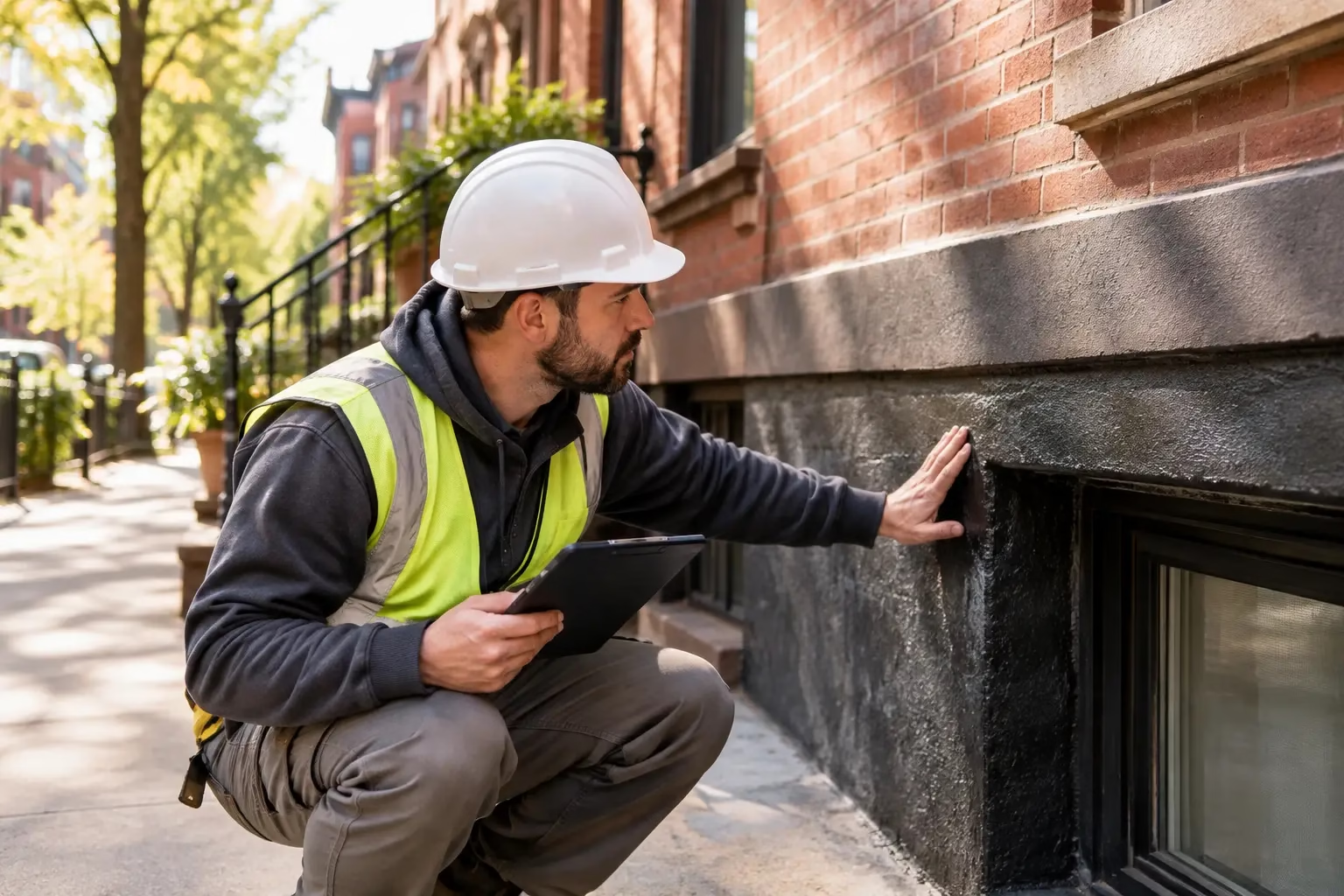
A wet basement wall, peeling paint near a parapet, or recurring leaks after heavy rain can make every contractor review feel urgent. But waterproofing company reviews are only useful when you know what the reviewer hired the company to fix. In Brooklyn and across NYC, water can enter through roofs, masonry joints, foundation walls, window openings, sidewalks, drains, and failing exterior coatings. A five-star review means more when the work matches the problem on your property.
Property owners should not choose a waterproofing contractor based on star ratings alone. Read the details, ask direct questions, and make sure the proposed repair addresses the source of the water instead of covering the visible damage inside.
How to Read Waterproofing Company Reviews
Start by looking for reviews that explain the original condition, the scope of work, and what happened after the repair. A short comment saying “great job” may reflect good customer service, but it does not tell you whether a contractor repaired a masonry crack, installed drainage, rebuilt a leaking parapet, or applied an exterior waterproofing system correctly.
The strongest reviews usually mention specific conditions: rainwater entering a garden-level apartment, moisture behind a brownstone facade, leaks at roof flashing, or a basement wall that stayed dry through a major storm. Those details show that the customer had a real water issue and can help you compare their situation with yours.
Pay attention to timing as well. Waterproofing work should be judged after rain, seasonal temperature changes, and normal building movement. A review written the day a project ends is useful for judging cleanup, communication, and professionalism. A review written months later can say more about whether the repair held up.
For brownstones, row houses, mixed-use buildings, and older multifamily properties, look for reviewers who describe similar construction. A basement in a detached suburban home does not face the same conditions as a Brooklyn property with adjoining foundations, aging brickwork, limited drainage, and years of patched exterior repairs.
Reviews Should Describe the Scope, Not Just the Price
Affordable work matters, especially for landlords and homeowners managing several needed repairs. Still, a low quote is not automatically a good waterproofing quote. Reviews can reveal whether the contractor explained the scope before starting or simply offered a broad promise to “seal everything.”
A reliable review often describes practical details such as inspection findings, preparation, repairs to damaged masonry, crack treatment, membrane or coating work, drainage corrections, flashing, and cleanup. The exact solution depends on where the water is getting in. Exterior waterproofing may be the right answer for one building, while roof repairs, pointing, stucco restoration, or correcting a sidewalk slope may solve the problem at another.
Be cautious when reviews praise a contractor mainly for being the cheapest. There is nothing wrong with value pricing, but waterproofing fails when preparation is skipped. Coating over loose paint, deteriorated mortar, open joints, or active leaks does not create a lasting repair. The surface needs to be properly evaluated and repaired before waterproofing materials are applied.
A good estimate should explain what is included and what could change if hidden damage is uncovered. That is especially relevant in historic Brooklyn neighborhoods, where water damage behind a facade or below a finished basement can be more extensive than it first appears.
License & Insurance credentials for all services
Reviews should not replace basic contractor verification. Before authorizing work, ask whether the company is licensed and insured for the services it performs. Waterproofing projects can involve ladders, scaffolding, excavation, roof access, masonry removal, power equipment, and occupied spaces. Proper coverage protects the owner, tenants, workers, and the building.
A dependable contractor will not act offended by these questions. They should be prepared to discuss their qualifications, provide credentials when appropriate, and explain who will perform the work. If a review mentions that a company showed up on time, protected the property, communicated clearly, and completed the agreed scope, that is valuable. But it should support your due diligence, not replace it.
For a commercial property or an occupied multifamily building, also ask how the contractor plans to manage access, dust, debris, noise, and safety around residents or customers. Waterproofing may sound like a single trade, yet the job often touches several building systems and requires careful coordination.
100% OSHA guidelines compliant
Safety should be part of the review process, particularly when repairs involve roofs, elevated facades, cornices, or exterior masonry. Look for comments that mention orderly job sites, protected walkways, respectful crews, and professional cleanup. These details often reflect a contractor who plans the work instead of improvising once the crew arrives.
OSHA-compliant practices are not just paperwork. On a dense NYC block, safe staging and site control help protect pedestrians, tenants, neighboring properties, and workers. This matters when waterproofing involves scaffold access, roof edges, facade repairs, or removal of failed material.
Ask the contractor how safety will be handled for your specific property. The answer should be clear and practical. If the company cannot explain its plan, vague online praise should not be enough to move forward.
Best Budget Construction in Brooklyn & NYC Reviews Need Local Context
Local experience changes the quality of a waterproofing recommendation. In Park Slope, Brooklyn Heights, Cobble Hill, Bed-Stuy, and similar neighborhoods, older masonry buildings often have layered repair histories. A visible damp spot may be connected to failed pointing, cracked stucco, deteriorated coping, roof drainage, or a leaking window opening several feet above it.
That is why property owners should value reviews describing diagnosis, not only fast completion. A contractor who identifies the actual route of water can recommend a repair that fits the building. Sometimes that means targeted masonry restoration and waterproofing. Other times, the proper answer is roofing work, gutter correction, facade repair, or basement drainage. The right contractor should tell you when a waterproofing coating alone is not enough.
Best Budget Construction approaches these projects as part of the building as a whole. With experience across waterproofing, roofing, masonry, stucco, brick pointing, facade restoration, and interior repair, the goal is to correct the condition causing the damage and avoid sending an owner from one specialist to another.
Questions to Ask After Reading Reviews
Once you narrow down your options, use the reviews to build better questions for your estimate appointment. Ask what caused the water entry, what repair system is being proposed, how the surface will be prepared, and whether related damage is included in the scope.
You should also ask how long the work is expected to take, whether tenants need to be notified, and how unexpected conditions will be handled. A professional contractor cannot promise that no hidden damage exists, particularly in aging NYC buildings. They can explain how they will document it, price it fairly, and get your approval before performing additional work.
Finally, ask for a written estimate with a clear scope. The estimate should make it easier to compare contractors on work performed, materials, access needs, and project conditions – not just the bottom-line number.
Free Estimate Call (917) 674-9488
If water is entering your basement, staining an interior wall, damaging a facade, or returning after every storm, do not wait for a minor issue to become a larger repair. Bring photos, point out when the leak occurs, and share any past repair history during the estimate. The more clearly the condition is identified at the start, the more useful the proposed waterproofing solution will be.
A good contractor review can open the door, but the estimate conversation should give you confidence. Choose the company that can explain the cause, show you the repair plan, respect your budget, and stand behind the work on your NYC property.
