

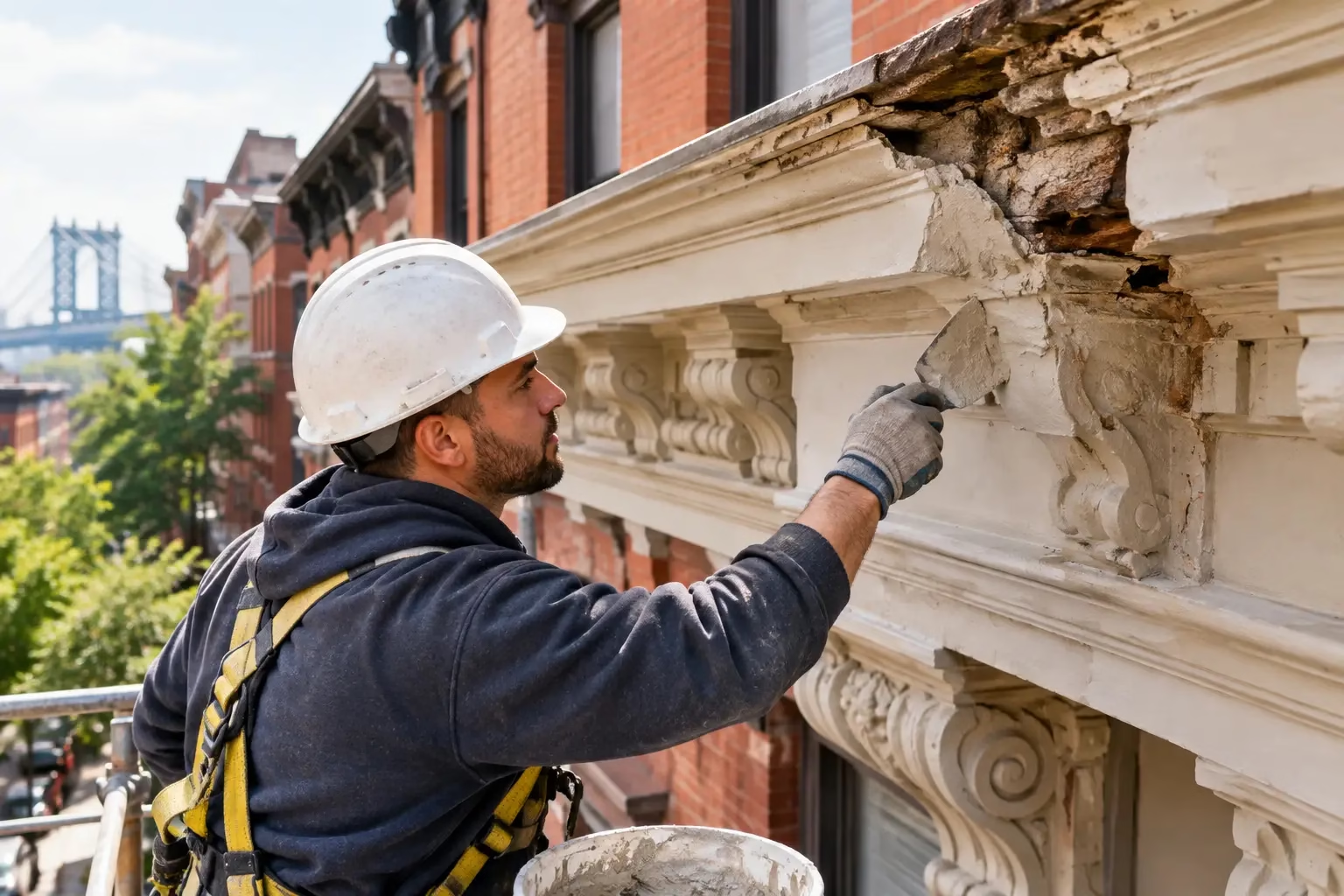
Water damaged cornice restoration is not a paint job. When water gets behind a metal, wood, terra cotta, or masonry cornice, it can quietly rot framing, corrode fasteners, loosen decorative pieces, and create a falling-object hazard over the sidewalk. On a Brooklyn brownstone or mixed-use building, the visible stain is often the smallest part of the problem.
A cornice sits at one of the hardest-working points on a building. It takes direct rain, snow, wind, freeze-thaw movement, roof runoff, and years of neglected maintenance. The right repair starts by finding where the water is entering, then restoring the cornice so it can protect the facade again.
What Causes Water Damage at a Cornice?
In our experience, a failed roof edge is often behind a damaged cornice. Water may be entering through worn flashing, open seams at the coping, missing sealant, blocked gutters, broken leaders, or a roof membrane that has reached the end of its service life. Once water has a path, it follows gravity and can travel farther than property owners expect before it shows up as peeling paint or sagging material.
Older NYC buildings add another challenge. Original cornices may have layered repairs from different decades, with patches covering concealed deterioration. A previous coating can make the surface look solid while the substrate behind it is soft, rusted, or separated from the structure.
Look for recurring stains below the roofline, bubbling paint, cracks at joints, rust streaks, loose brackets, open seams, crumbling mortar, or pieces on the roof or sidewalk. Inside the top-floor rooms, ceiling stains near exterior walls can also point to a roofline leak. Do not assume the issue is cosmetic just because the damage looks limited from street level.
Water Damaged Cornice Restoration Starts With the Source
A lasting repair has two jobs: stop the water and repair what the water damaged. Completing only one of those jobs is how the same issue returns after one wet season.
The first step is a close visual assessment of the roof edge, cornice, facade connection, gutters, leaders, flashing, and adjacent masonry. Depending on the building height and conditions, that may require safe ladder access, scaffolding, or a lift. For buildings in historic districts, the existing profiles and visible materials should also be documented before restoration begins.
After identifying the source, the work generally includes removing loose or failed material, exposing concealed damage, and determining what can be repaired versus what must be replaced. Sound original sections are worth preserving whenever possible, especially on Brooklyn brownstones with detailed architectural profiles. But patching severely rotted wood or heavily corroded metal is usually a short-term fix that costs more over time.
Repair Methods Depend on the Cornice Material
There is no one material or one repair method for every building. A practical scope should match the cornice construction and the condition found after opening damaged areas.
Wood Cornices
Wood cornices are common on older homes and can suffer hidden rot where trim meets roof flashing or masonry. Restoration may involve removing decayed sections, replacing damaged framing and trim with properly sized material, rebuilding decorative details, priming exposed wood, sealing joints, and applying an exterior paint system.
The trade-off is simple: selective repairs can preserve more original fabric and control cost, but only when the remaining wood is dry and structurally sound. If rot extends through several layers, a larger rebuild is the safer investment.
Sheet Metal Cornices
Galvanized metal, copper, and other sheet-metal cornices can develop open seams, pinholes, failed coatings, and rusted fasteners. Proper work may include fabricating replacement sections, repairing or replacing flashing, securing the assembly, sealing compatible seams, treating corrosion, and coating the completed surface where appropriate.
Metal work must allow for movement. A rigid patch installed without attention to expansion, drainage, and connection details can crack or separate. The finish matters, but the folds, seams, and roof tie-in are what keep water out.
Terra Cotta and Masonry Details
Decorative terra cotta, brick, stone, and cast elements can crack when water enters joints and freezes. Repairs may require resetting loose pieces, replacing severely damaged units, rebuilding backing, repointing failed joints, and repairing the waterproofing details above the ornament.
Matching the original profile and mortar is especially important on visible facades in areas such as Park Slope, Brooklyn Heights, Cobble Hill, and Bed-Stuy. A fast patch with the wrong material can trap moisture or stand out from the street. Good restoration respects the building while correcting the failure that caused the damage.
Why Painting Over a Damaged Cornice Fails
Fresh paint can make a cornice look better for a short time, but paint does not stop an active leak, replace rotted backing, or reattach loose material. In fact, coating wet or deteriorated surfaces can hide conditions that continue to spread behind the finish.
Painting belongs near the end of the restoration process, after the roof-edge issue has been corrected and repairs have cured properly. The right primer, preparation, and exterior coating help protect the completed work, but they are not a substitute for flashing, drainage, and sound construction.
Best Budget Construction in Brooklyn & NYC
For property owners, the real concern is not just how the cornice looks after work is complete. It is whether the repair is safe, durable, clearly explained, and coordinated with related needs such as roofing, brick pointing, facade restoration, waterproofing, and exterior painting.
Best Budget Construction approaches water-damaged cornices as part of the building envelope, not as an isolated trim problem. That matters when a roof leak has also stained interior plaster, damaged masonry joints, or affected a parapet. One coordinated scope helps avoid the common problem of hiring separate crews that each repair only their own portion while the original water path remains.
Before work begins, property owners should receive a clear explanation of the observed damage, recommended repairs, materials, access requirements, and any conditions that may affect the final scope. On older buildings, concealed damage is possible, so honest communication about what may be found after removal is essential. Affordable work should never mean vague work.
License & Insurance credentials for all services
Exterior cornice work involves elevated access, falling-debris protection, and careful coordination around sidewalks, neighboring properties, and occupied spaces. Hiring a qualified contractor with License & Insurance credentials for all services protects the owner and supports a safer jobsite.
Ask how access will be handled, whether loose material will be secured before repair begins, and how the crew will protect the public below. For commercial properties and multi-family buildings, scheduling and tenant communication should also be part of the plan.
100% OSHA guidelines compliant
Safe access is not an optional add-on for high exterior work. A 100% OSHA guidelines compliant approach includes proper fall protection, controlled work areas, appropriate equipment, and trained crews who understand the risks of working at roof level. The exact setup depends on the building height, street conditions, and the extent of deterioration, but safety should be addressed before materials come off the cornice.
When to Repair and When to Restore the Full Cornice
A localized repair may be the right choice when the leak source is clear and the damage is limited to a small, accessible section. It can stop deterioration quickly and preserve a larger amount of original material.
Full restoration becomes more sensible when damage is recurring across multiple elevations, the cornice has widespread rot or corrosion, decorative elements are loose, or earlier patches have failed. It is a larger project, but it can be more economical than repeated emergency repairs, repainting, and sidewalk hazard cleanup.
The best decision comes from the building’s actual condition, not from a one-size-fits-all recommendation. A property owner should be wary of anyone who promises a permanent fix without inspecting the roof edge and the cornice connection.
Free Estimate Call (917) 674-9488
If you see peeling paint, rust streaks, cracking, loose trim, or water stains near your roofline, address it before the next heavy rain turns a repair into a larger facade problem. A careful assessment can identify the water source, explain the right restoration scope, and help you plan work around your budget and building needs.
A damaged cornice rarely improves on its own. Fix the path of the water, restore the material correctly, and give your building the protection and street presence it was built to have.
